


Israeli aircraft carried out eight strikes on the runway of the Abu al-Dhuhur military airport before dawn on Tuesday, causing damage to its infrastructure. It was the first such attack on the site since the fall of Bashar al-Assad's regime in December 2024 CE, corresponding to Jumada al-Akhira 1446 AH.
The targeting of the Abu al-Dhuhur military airport in eastern Idlib countryside was not merely another strike on a Syrian military facility; its timing and location carry political implications that extend beyond the airport itself, placing three parties with close ties to Washington before a new test: Israel, Turkey and Syria.
The strike is especially sensitive because the airport lies in an area linked to Turkish influence in northern Syria, at a time when Ankara is working to consolidate its military and political presence in the country, while the administration of U.S. President Donald Trump seeks to prevent the new Syria from becoming an open arena of confrontation between its regional allies and partners.
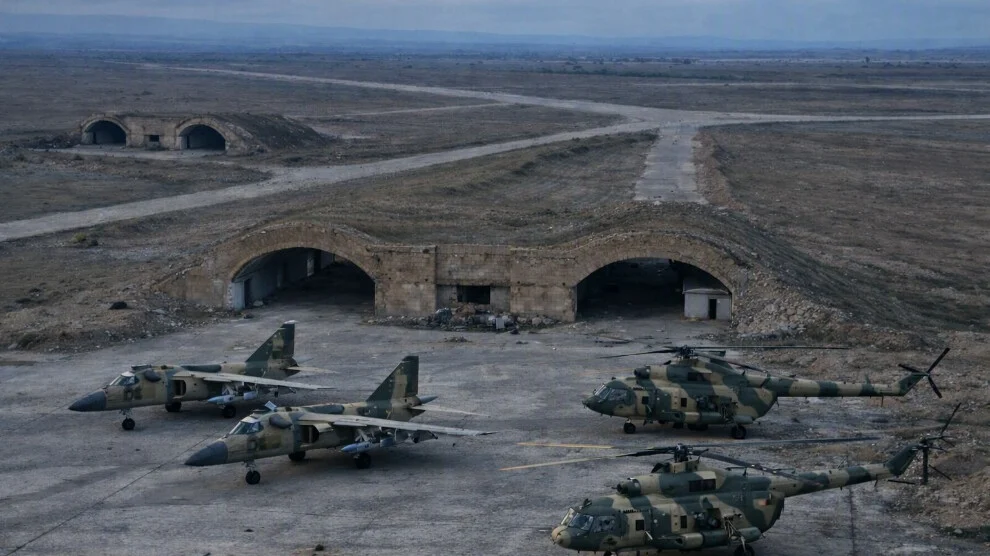
An Israeli Justification: Preventing Turkish Military Expansion
According to what the website Axios reported citing U.S. and Israeli officials, the government of Prime Minister Benjamin Netanyahu informed the Trump administration that the strike aimed to prevent the strengthening of the Turkish military presence at the Abu al-Dhuhur base.
This account makes the airport part of a broader struggle over the shape of military arrangements in Syria, rather than a separate military target.
According to the account relayed by the website, Israeli concerns relate to the possibility that the facility could become a base for Turkish forces, which Tel Aviv regards as a development that could change the balance of power in northern Syria and give Ankara greater capacity for military movement near areas of strategic sensitivity.
The strike thus appears to send a double message: on the one hand, it is directed at any force attempting to establish a military presence at the site; on the other, it carries a direct warning to Turkey that rebuilding Syrian military capabilities or using old bases could meet a military response if Israel judges that its security interests are being affected.
Anger in the White House, but No Red Lines
The strike did not pass quietly in Washington. According to Axios, the attack angered senior officials in the White House, as the U.S. administration found itself facing an Israeli move that could raise tensions between U.S. partners at a time when Washington is trying to de-escalate the region.
Accordingly, any strike on a facility that could fall within Turkish military calculations in Syria places the U.S. administration before a difficult equation: how can Washington maintain its close alliance with Israel while at the same time preventing another ally, Turkey, from being drawn into a new military confrontation?
At the same time, the crisis reveals the limits of the White House's ability to impose real constraints on Israeli movements.
Even as dissatisfaction grows within the U.S. administration, Axios's reading suggests that Washington is rarely prepared to set clear red lines for Netanyahu, which allows Israel a wide margin of military movement, even when some moves conflict with broader U.S. calculations.
Abu al-Dhuhur: A Base Born of the Syrian War
The significance of the current bombardment cannot be understood without returning to the history of the Abu al-Dhuhur airport, which during the years of the Syrian war turned from an air force base into one of the most prominent symbols of the struggle over northern Syria.
The airport lies about 40 kilometres east of the city of Idlib, near the town of Abu al-Dhuhur, in an area of geographic and military importance, as it falls within the zone where roads and axes linking Idlib with Hama, Aleppo and the Syrian badia intersect.
Estimates of its size vary, but sources that have addressed its history indicate that it is one of the largest military air installations in northern Syria, comprising runways, hangars and multiple military facilities.
Its importance stems more from its location than from its current technical condition. The airport suffered extensive damage during the years of war and has not returned to full service in the form it had before the war.
Yet old military facilities do not necessarily lose their value once they go out of service, as they can be rehabilitated and turned into points of deployment, supply or observation, which explains the sensitivity of any military movement around them.
Three Years of Siege Before the Base Fell
Abu al-Dhuhur was among the most prominent sites of confrontation between Syrian regime forces and opposition factions in the early years of the war.
After a siege that lasted for years, opposition factions took control of the airport in September 2015 CE, corresponding to Dhu al-Hijja 1436 AH, thereby bringing down one of the most important air bases belonging to the regime in northern Syria.
The fall of the base at the time was a major military and symbolic blow, given its location and its capacity to support air operations in the area.
However, control did not last long at the strategic level. In January 2018 CE, corresponding to Jumada al-Ula 1439 AH, Syrian regime forces, backed by heavy Russian air cover, recaptured the airport after a broad military advance in the eastern Idlib countryside.
The operation followed the seizure of a number of areas surrounding the airport, culminating in the military facility under intensive air cover.
Abu al-Dhuhur thus returned to regime control, but it remained a damaged installation, before the map of control in the area changed again in the following years.
From Assad's Base to a Site in Post-Assad Syria
The political and military transformation that Syria witnessed at the end of 2024 CE, corresponding to Jumada al-Akhira 1446 AH, marks a turning point in the history of the airport.
With the fall of the Assad regime, old Syrian air bases entered a new phase of uncertainty, after the military structure that had run them collapsed, and the former facilities became part of the calculations of new and regional powers.
In northern Syria, these calculations gain greater weight because of the broad Turkish presence, as Ankara holds extensive military and political influence in Idlib, Aleppo and other areas.
Hence the importance of the latest strike: it is the first Israeli targeting of the airport since the fall of the Assad regime, and it occurs in an area no longer governed by the old equation between regime and opposition, but has become part of new arrangements in which Damascus, Ankara, Washington and Tel Aviv overlap.
Abu al-Dhuhur Is Not the Only Syrian Base on the Target List
The targeting of Abu al-Dhuhur comes within a broader context of strikes that have hit Syrian air and military facilities over the years.
Israel has focused in particular on bases that it considers capable of providing a foothold for military activity it regards as a threat to its interests.
Among the most prominent of these facilities:
T4 (Tiyas) Airbase: The Knot of the Syrian Badia
The Tiyas air base, known as T4, lies in the eastern countryside of Homs between Homs and Palmyra, and is among the largest Syrian air bases.
The base has gained added importance because of its location in the badia, its proximity to strategic roads and areas and gas fields, as well as its use during the war years by Syrian forces and its link at various periods to Russian and Iranian presence.
For this reason, the base has become a recurring target of Israeli strikes, including attacks during 2025 CE, corresponding to 1446 AH.
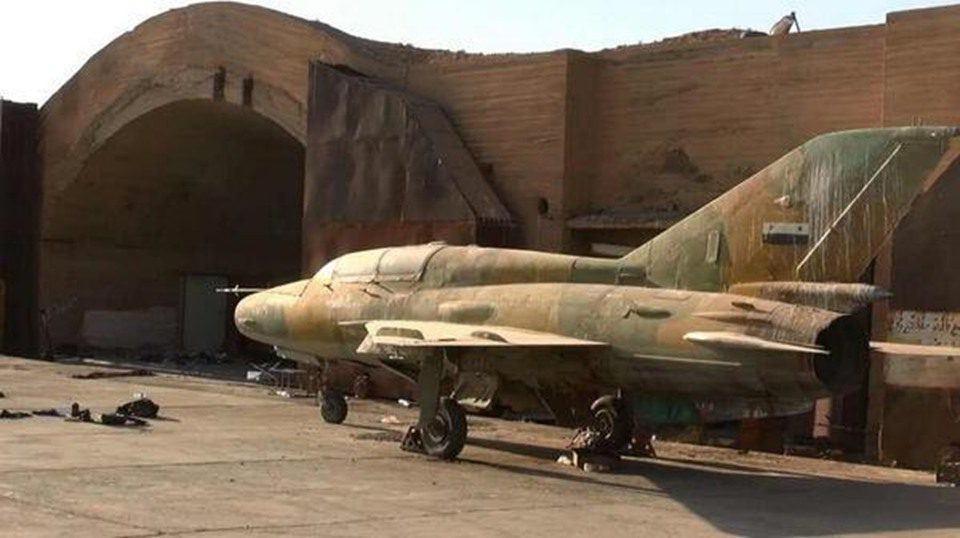
Hama Airport: An Operational Base in the Centre of the Country
Hama military airport was among the most prominent combat airports belonging to the former Syrian air force. Its location west of the city of Hama gave it great importance in managing air operations towards the centre and north of the country, and made it a military facility of operational value during the war years.
Estimates indicate that the airport played a prominent role in combat sorties from 2016 CE, corresponding to 1437 AH, benefiting from its relatively central position.
For this reason, the airport remained among the facilities receiving considerable military attention, especially as Israeli targeting of Syrian air facilities intensified.
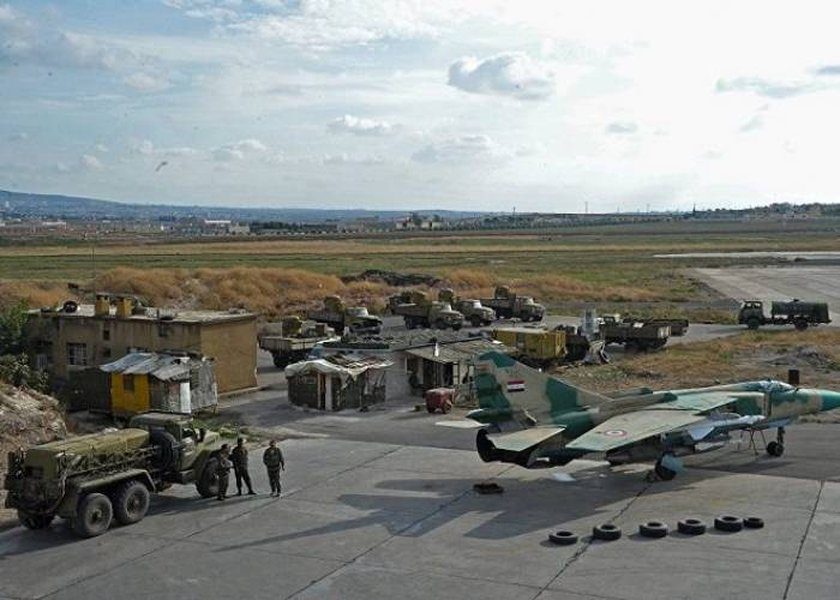
Palmyra: The Gateway to the Badia
Palmyra military airport lies in the eastern countryside of Homs near the historic city, and enjoys an importance that goes beyond its direct aerial function.
Its location in the heart of the Syrian badia places it close to areas rich in resources, notably gas and phosphate, and gives it the capacity to reach wide areas of central and eastern Syria.
In spring 2025 CE, corresponding to Rabi al-Akhir and Shawwal 1446 AH, the airport was among the air installations targeted in the operations that struck the Syrian military infrastructure.
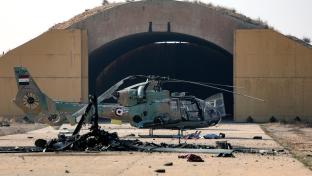
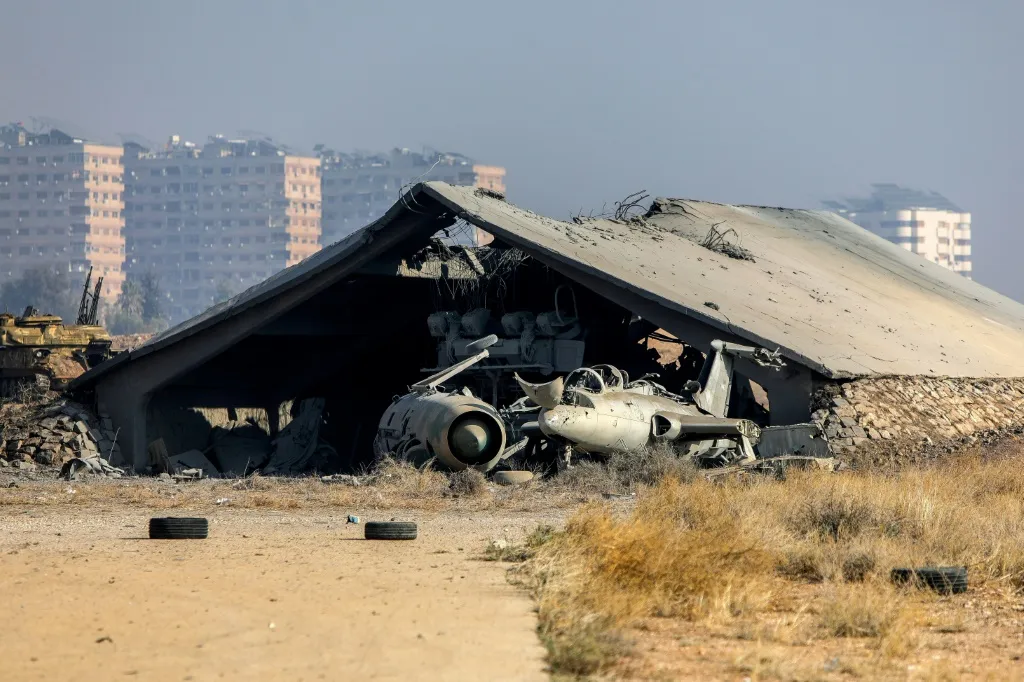
Mezzeh: The Base Closest to the Heart of Damascus
Mezzeh military airport differs from Abu al-Dhuhur and Palmyra in location and function. The airport lies south-west of Damascus, near highly sensitive military and security centres, which gave it particular importance within the capital's defence system.
The site includes a long runway, hangars, fortified shelters and military facilities, which made it one of the most sensitive Syrian air installations during the war years.
For this reason, the airport in turn was subjected to repeated Israeli strikes, as part of a military network located around the Syrian capital.
Shayrat: The Base for Heavy Fighter Aircraft
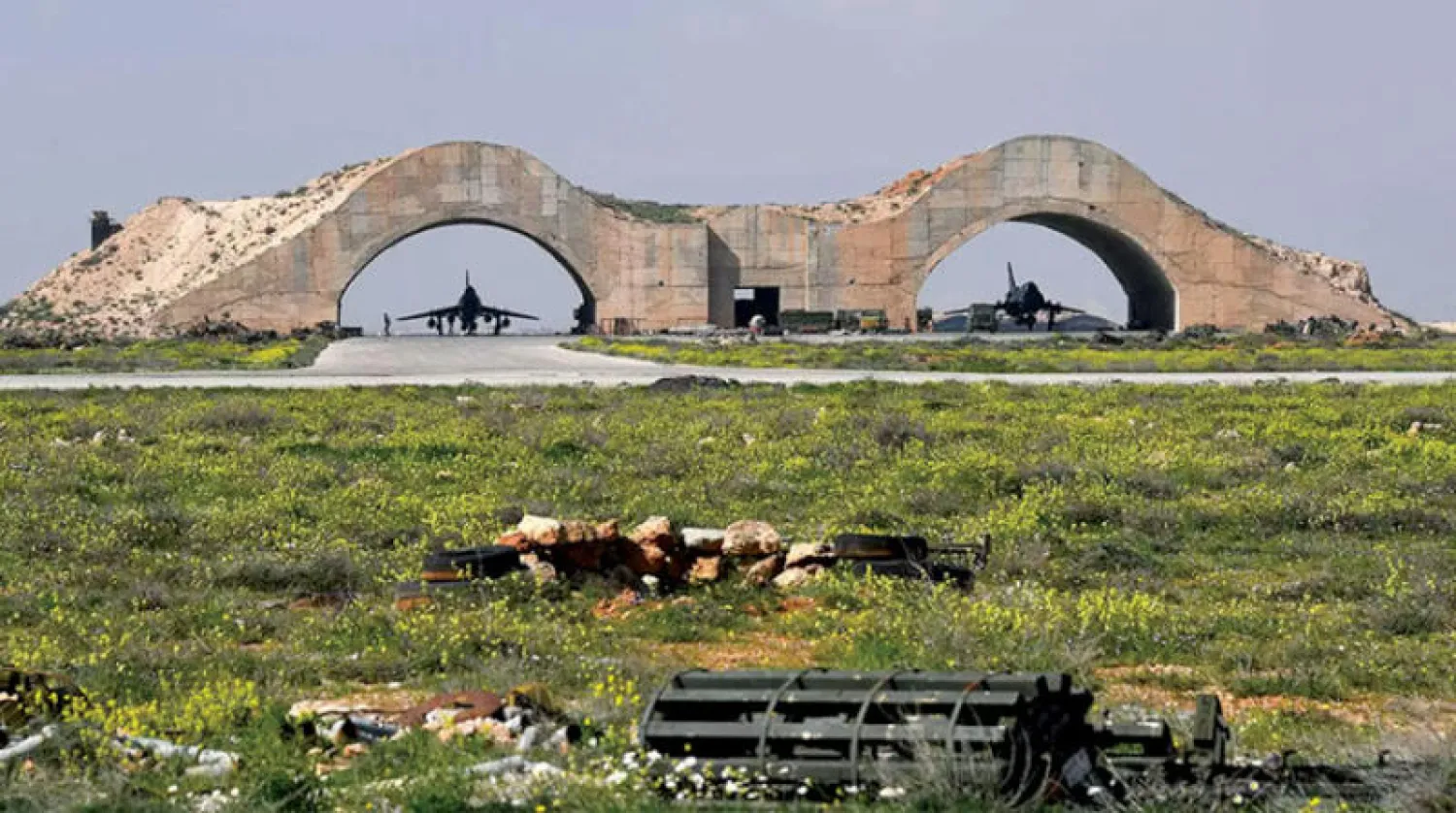
Shayrat military airport lies about 31 kilometres south-east of Homs and was among the most important Syrian air bases.
The airport includes two runways and a large number of concrete hangars. Its operation was linked to Sukhoi and MiG combat aircraft, in addition to radar and defensive equipment.
These capabilities give it particular importance within the network of air bases in central Syria, which also made it one of the facilities that came under attack.
Other Airports That May Return to the Spotlight
Alongside the bases that have already been attacked, other air installations may gain growing importance as the Syrian military map is reshaped.
Among them is the Menagh military airport north of Aleppo, which has a sensitive location because of its proximity to the areas of Azaz, Tal Rifat and Afrin and to the Turkish border.
The site's importance is heightened by its geographic position in an area where Syrian and Turkish interests intersect, making it a likely candidate to become part of future military calculations in the north.
Qamishli airport in Hasakah governorate also stands out, as does Hmeimim air base on the Syrian coast, as the most important air installations that could play influential roles in any forthcoming military arrangements.
Why Abu al-Dhuhur Is a Bigger Issue Than Just an Airport
The danger of the latest development lies in the fact that the bombardment is not taking place within the old Syria that was under the control of a single regime, but within a new Syria in which multiple centres of influence are taking shape.
The airport lies in an area of importance to Turkey, while Israel regards it as a site that could turn into a military point with an impact on its regional security, and Washington views the stability of Syria and its relations with Ankara and Damascus as interlinked files.
Thus the relatively small runway at Abu al-Dhuhur has become part of an equation far larger than its geographic footprint.
The Israeli strike carries a message to Damascus and Ankara, but at the same time it has placed Washington before a new reality: Tel Aviv's continued military operations inside Syria according to its own security assessments, even when the U.S. administration fears that this could lead to friction with its other partners.
The Struggle for Influence Over an Abandoned Runway
Abu al-Dhuhur airport may seem less important today than when it was an active air base, but military geography does not disappear when aircraft leave service.
The site, which links northern Syria with its centre and opens towards the badia, and which lies close to areas of Turkish influence, could at any moment become a card in the new arrangements of power.
From this vantage point, the eight strikes appear to be more than the destruction of a runway; they are an attempt to influence the future of a facility that could become part of the military infrastructure of the new Syria.
On the other side, the anger the operation provoked within the White House reveals that the contest over Syrian bases is no longer purely a Syrian affair, but has become part of a wider rivalry among Washington's own allies and partners.
While the U.S. administration seeks to consolidate a new political reality in Damascus, Israel seeks to ensure that this reality does not become a new source of threat on its borders or a space for growing Turkish military influence.


