


Image description: A Rohingya survivor is carried on a bamboo stretcher to a hospital in a refugee camp in Cox's Bazar, Bangladesh, after being rescued last week from a capsized boat.
In a new human tragedy that reflects the dangers of irregular migration routes, hundreds of migrants are feared dead after an overcrowded boat sank in the Andaman Sea while on its way from Bangladesh to Malaysia, according to United Nations and media reports.
The boat, a dilapidated and crowded fishing vessel, set out in early April from the Teknaf area in southern Bangladesh with some 250 people on board, including refugees from the Rohingya minority as well as Bangladeshi migrants, some of them children.
After only a few days at sea, the boat capsized in harsh conditions, leaving its passengers facing death in open waters. So far, only 9 people have been rescued, raising fears that the rest of the passengers have perished.
A Survivor's Account
Imran, a 17-year-old refugee, according to the New York Times, describes the terrifying journey, saying he remained stranded at sea for two days and a night, clinging to a piece of wood until he was rescued.
He explained that the boat was so crowded that passengers could only sleep sitting up, while groups were pushed in one after another into a narrow hold designated for fish, causing repeated fainting spells due to suffocation. He praised God for his survival.
A Harsh Humanitarian Background
More than one million Rohingya have lived in crowded refugee camps in Bangladesh since 2017, after fleeing persecution in Myanmar.
They face difficult living conditions, including food shortages, a lack of job opportunities, and weak essential services.
The crisis has recently worsened after food aid was cut to low levels, with monthly support per person not exceeding a few dollars, pushing many to risk their lives in search of a better future.
Forced Migration and Smuggling Networks
Reports indicate that many sea voyages are not undertaken voluntarily but through smuggling networks that exploit refugees, deceiving them with promises of work or forcing them to pay ransoms.
Survivors reported that the trip's organizers promised them they could pay the costs later after reaching Malaysia.
In a worrying development, no large-scale official rescue operations by countries in the region have been recorded after the boat sank, despite the days that have passed since the incident.
Malaysian authorities announced that the site of the incident does not fall within their maritime responsibility, but they are monitoring the situation in case survivors or bodies reach their waters.
This tragic disaster reflects the harsh reality faced by refugees, who are forced to choose between remaining in unbearable conditions or risking their lives on journeys that may prove fatal.
Amid declining international support and ongoing crises, observers warn of the recurrence of such incidents unless urgent measures are taken to address the root causes of the crisis and provide safe humanitarian alternatives for those fleeing suffering.
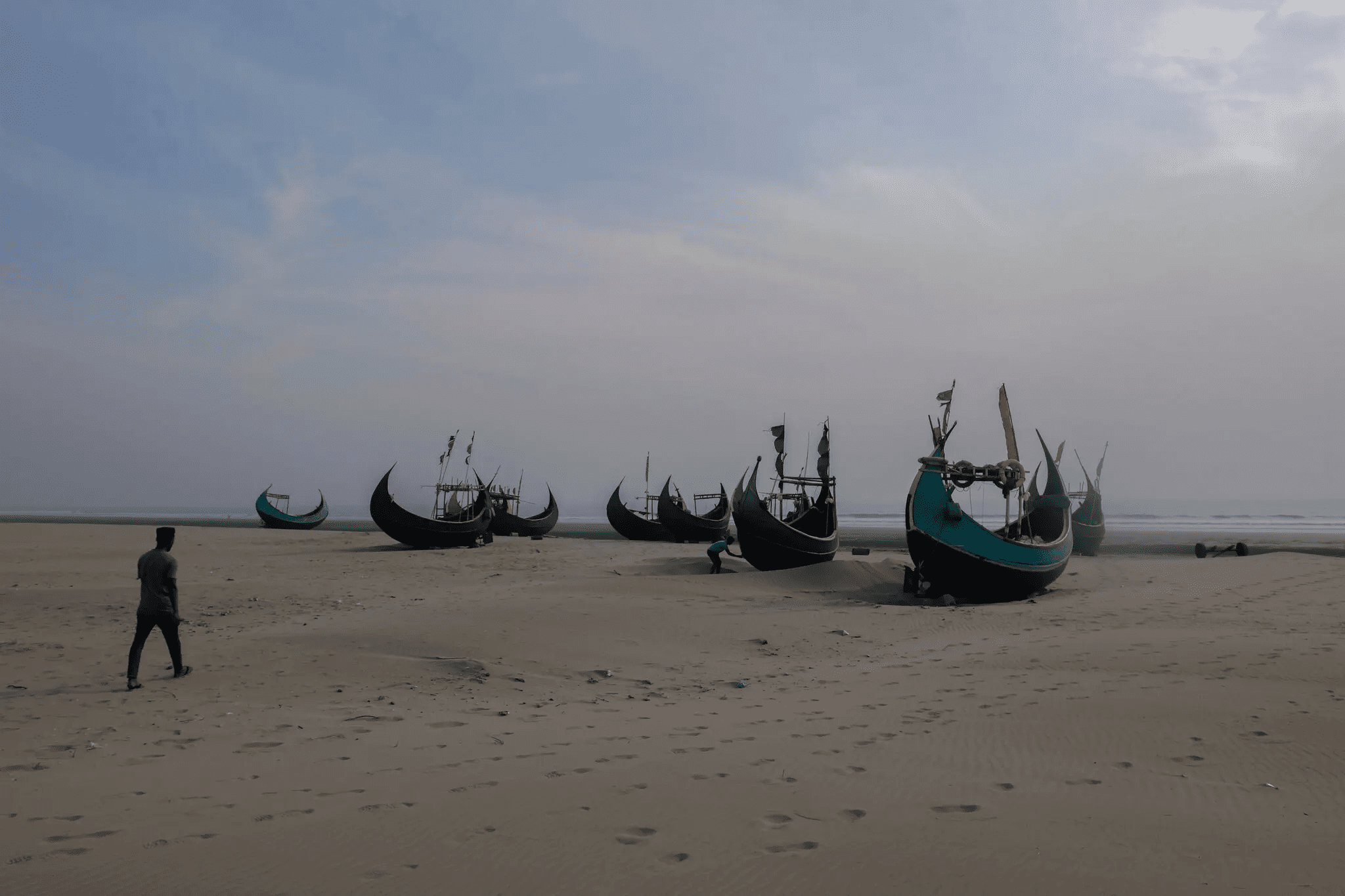
Numerous boats with high, curved bows are moored on a wide sandy beach. Fishing boats on a beach near the Teknaf camps in Bangladesh, where the migrants began their sea journey. (Photo: Associated Press)
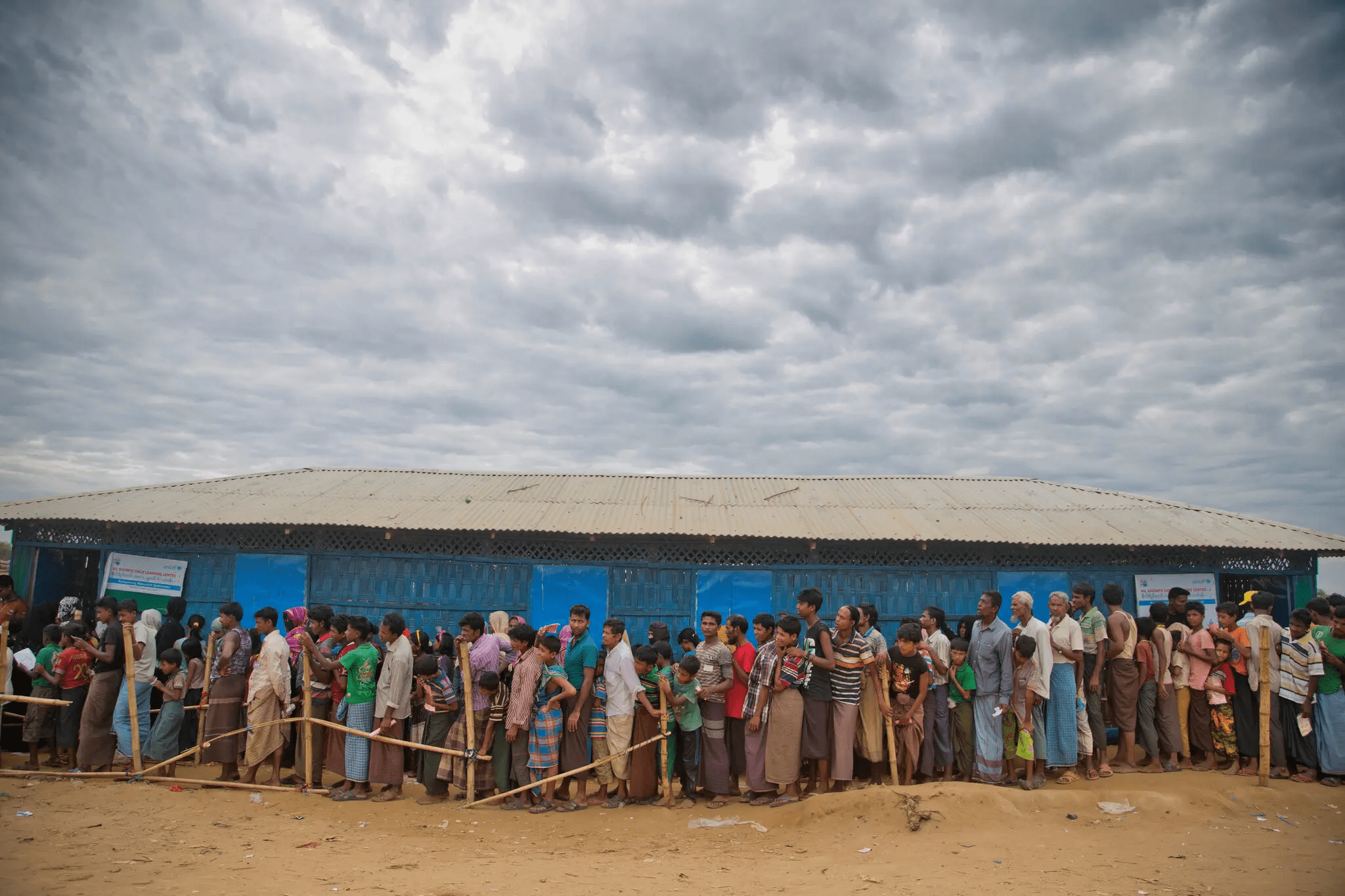
A queue for aid distribution in the Kutupalong camp. Earlier this month, food aid in refugee camps was reduced to the equivalent of only 7 US dollars per person per month, following cuts to aid budgets in the United States and elsewhere. (Photo: Associated Press)


