


Amid the ongoing war between the Sudanese Army and the Rapid Support Forces, the Sudanese Army has sent major military reinforcements to strategic desert areas in the north of the country, in a step that indicates preparations to open a new theatre of operations toward the tripartite border area between Egypt, Libya and the Darfur region.
According to local sources quoted by the Sudan Tribune, the Sudanese Armed Forces began about a week ago moving large numbers of soldiers and military vehicles to desert areas in Northern State adjacent to the Darfur region, as part of movements aimed at strengthening control over remote areas of military and logistical importance.
Military convoys were stationed over the past days in the Khanag and Rahib areas of Northern State, amid indications that the movements target the establishment of a new operational axis extending toward the tripartite border area between Sudan, Egypt and Libya, along with an expansion of deployment in North Darfur.
This area holds major strategic importance due to its position linking northern Sudan with the Darfur region, in addition to its proximity to the Libyan border, where the Sudanese Army accuses forces linked to retired Libyan General Khalifa Haftar of supporting the Rapid Support Forces and facilitating the delivery of supplies through desert areas.
Attempt to cut Rapid Support Forces supply routes
The Sudanese Army and its allies say the aim of the new deployment is to cut the supply lines used by the Rapid Support Forces to obtain weapons and fuel through the desert areas stretching from Libya, taking advantage of the difficulty of monitoring these vast areas.
The movements also include strengthening the army's presence in areas within North Darfur, among them Tina, Umm Barro, Karnoi, Kulbus and Jebel Moon, areas of military importance due to their proximity to the front lines and supply routes.
The army assigned the task of coordinating desert movements between the Armed Forces and allied armed factions to Brigadier Bakhit Abdelkarim Dabjo, leader of the Justice and Equality Movement – Peace Faction, who recently appeared alongside prominent military commanders of the Joint Force in an undisclosed desert area.
These movements come after the Sudanese Army announced in June 2025 the evacuation of the tripartite border area with Egypt and Libya as part of defensive arrangements, following its accusation that forces loyal to Haftar had infiltrated Sudanese territory and supported the Rapid Support Forces.
Electricity crisis strikes Sudan, as Khartoum cites several factors, including the halt of Ethiopian supplies
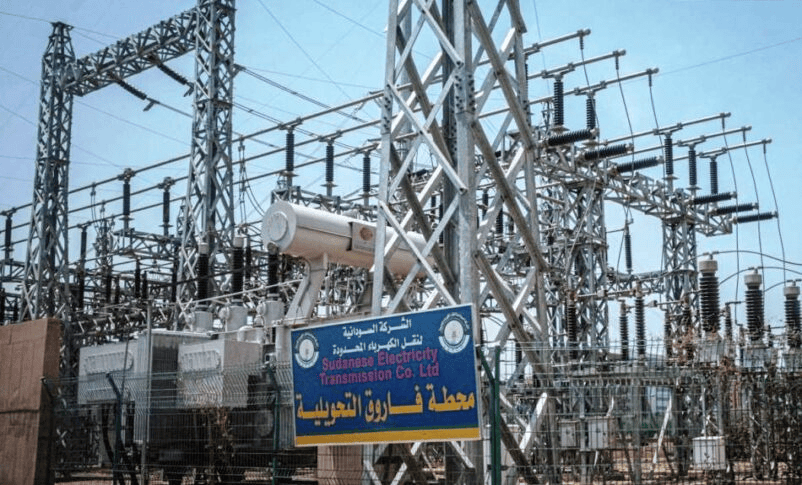
In another development, the Sudanese Ministry of Energy and Oil announced that the power outage crisis gripping the country is due to a set of factors, most notably the halt of electricity supplies coming through the electrical interconnection with Ethiopia, in addition to the extensive damage inflicted on infrastructure during the war.
The ministry said that hours of power cuts have risen sharply in Khartoum and a number of states, with outage periods in some areas exceeding 18 hours a day, adding to the suffering of residents amid high temperatures and the return of displaced people to their areas.
The ministry explained that the decline in electricity generation is due to several main power stations being taken out of service for maintenance, along with difficulties in providing the fuel and spare parts needed by thermal plants.
It also pointed to power generation stations, electricity transformers and transmission lines being subjected to attacks, sabotage and theft during the war, which reduced the capacity of the national grid to provide stable electricity.
The ministry confirmed that rehabilitation efforts are ongoing, noting that more than 260 megawatts have been returned to the grid after maintenance operations, with the available capacity expected to rise to more than 600 megawatts once the ongoing projects are completed.
Infrastructure and crossings war
Recent developments reveal that the Sudanese war is no longer confined to control of cities and inhabited areas, but has extended into a contest over desert corridors and supply lines, especially in border areas with Libya, Chad and Egypt.
While the army seeks to tighten its grip on the northern and western regions and cut the supply routes of its opponents, the government faces another challenge in restarting essential services, foremost among them electricity, which has become one of the largest daily crises for Sudanese since the outbreak of the war.
These movements indicate the possibility that confrontations will move in the coming phase to new areas in North Darfur and the desert, at a time when prospects for a political settlement remain unclear amid continued military escalation.


