

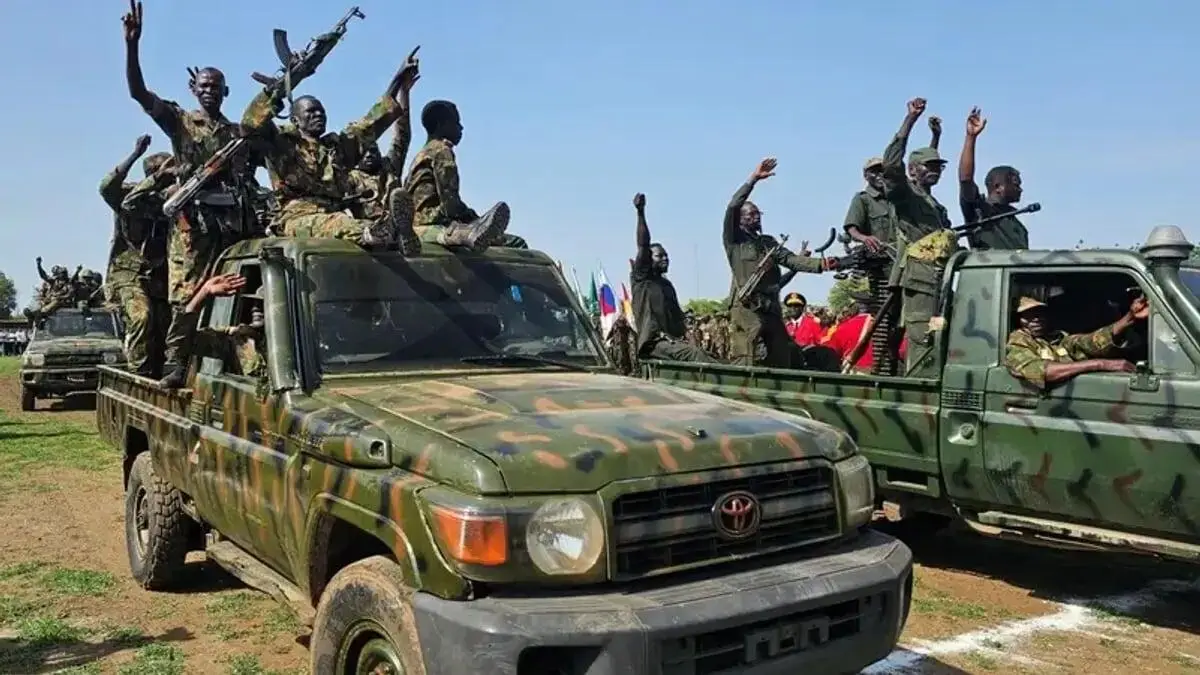
The war in Sudan is entering a phase in which military, political and economic pressures on the Rapid Support Forces (RSF) are mounting, as the Sudanese army's battlefield gains in the Kordofan region widen and divisions and disputes grow within the alliances that for years formed one of the pillars of the RSF's military strength.
In an analysis published on 17 November 2026 by the conflict monitoring organisation ACLED, researcher Ali Mahmoud Ali examined the implications of the Sudanese army's recent advance in West Kordofan for the cohesion of the RSF and its ability to hold the areas under its control.
The significance of this assessment lies in its linking of battlefield developments with the structural crisis facing the RSF, at a time when questions are increasing about the future of the war in Darfur and Kordofan.
A Battlefield Shift in Kordofan
According to the organisation's data, the Sudanese army and the forces allied with it have regained control of more than 30 villages and towns in the states of North Kordofan and West Kordofan since the beginning of November of this year.
These gains came within a military campaign that began in July 2026, after the army recovered wide areas of central Sudan.
The recapture of the city of El Khuwei on 13 November marked an important turning point in these developments, while pressure on the RSF increased in West Kordofan, including in the city of En Nahud, the second most prominent city in the state after its capital, El Fula.
The researcher argues that these developments represent a noticeable shift in a region parts of which had remained under RSF control since May 2025, and that the continued battlefield losses, coinciding with internal splits, increase the fragility of the forces' position.
Defections: A Crisis Beyond the Loss of Commanders
The challenges facing the RSF are not limited to the loss of territory; they extend to the nature of the alliances on which its military and social structure was built.
In a complementary ACLED study, prepared by researchers Ali Mahmoud Ali and Nihad Al-Tayeb, the organisation examined the defection of commanders Ali Rizq Allah, known as "Al-Safna", and Al-Nour Al-Qubba, and their joining of the Sudanese army.
These defections carry particular significance given that the commanders belong to the Mahamid of the Rizeigat, that is, to one of the social environments on which the RSF relied in building its alliances.
Analytically, the defection of a field commander in a armed formation that depends on local and tribal ties differs in its impact from the defection of an officer within a central military institution; its repercussions may extend to the networks of social loyalty and political relations on which that commander's influence rests.
This does not mean that all members of a single tribal group adopt a unified political or military position; a distinction must be drawn between local communities and the armed formations that attract some of their members.
War Economy: When Resources Decline, Loyalties Fracture
The organisation's study offers an important economic explanation for the growing disputes within the RSF, namely the forces' reliance on decentralised alliances that are shaped by material benefits and local interests.
With the loss of areas of greater economic importance in central Sudan, the ability of the RSF leadership to keep some of its alliances cohesive has come under increasing pressure.
The organisation recorded a rise in internal fighting between groups allied with the RSF since October 2025.
It also documented the continuation of looting and the kidnapping of traders for ransom in some areas of West Kordofan and South Darfur, as one means of raising funds for local armed formations.
This aspect of the war reveals the close relationship between the economy and the cohesion of armed groups: when the resources that helped build alliances decline, maintaining the loyalty of the various parties becomes more difficult.
Hence, the study of the balance of power in Sudan should not be confined to the area of territory each party controls, but should also include its ability to administer the areas under its control, to maintain the cohesion of its forces, and to manage the relationship between its central and local leaderships.
Fractures Within the Political and Military Alliance
The disputes are not confined to the traditional components of the RSF; according to the organisation's study, they extend to its relations with some armed movements within the "Sudan Foundation Alliance".
South Kordofan witnessed disputes and clashes during 2026 between allied parties, including formations affiliated with the RSF and the Sudan People's Liberation Movement–North led by Abdelaziz al-Hilu.
These disputes highlight the difficulty of turning a military alliance that brings together parties with diverse political and social backgrounds into a stable political project.
Agreeing to confront a common adversary does not necessarily mean agreeing on the form of the state or on the distribution of power and wealth, or on the management of land and resources.
From this standpoint, the political and social cohesion of alliances becomes a factor no less important than their military capability, especially when they suffer accumulated battlefield losses.
Drones: A Shift in the Nature of a War Without End
Despite the changes on the ground, the decline of one party's control on land does not necessarily mean the loss of its ability to continue fighting.
An earlier ACLED assessment, issued on 13 August 2026, indicated that the war had entered a third phase, in which aerial operations and drones were becoming increasingly important as ground confrontations moved to new areas.
The organisation's data showed that RSF drone attacks declined from 44 incidents in June to 25 incidents in July, a decrease of 43%.
In contrast, the organisation recorded 70 incidents of targeting civilians by forces allied with the RSF during July, the highest monthly number of such incidents it had registered in 2026 up to the date of that assessment.
These findings indicate that military shifts that weaken one party to the war do not necessarily lead to an improvement in humanitarian conditions, particularly if aerial attacks and violence against civilians continue.
Will the Breakup of the RSF End the War?
Among the most important warnings in the organisation's study regarding the internal divisions within the RSF is that the disintegration of these forces may change the nature of the war rather than end it.
The study notes that continued external support, the accumulation of local grievances, and the presence of cross-border armed networks may sustain violence in other forms even if the central RSF leadership's capacity to manage its formations declines.
Here lies a dilemma facing Sudan in the phase following the major battles: how to move from restoring military control to restoring state authority, and from dismantling armed formations to addressing the conditions that allowed them to emerge and expand their influence?
If an armed force disintegrates without effective arrangements for disarmament, reintegration of combatants, accountability and the protection of local communities, the risk that violence will reconstitute itself in the form of smaller and more fragmented conflicts remains.
This question carries added weight in Darfur and Kordofan, where conflicts over resources and land intertwine with historical grievances and social divisions that the war has aggravated.
The Regional Dimension: A War That Crosses Sudan's Borders
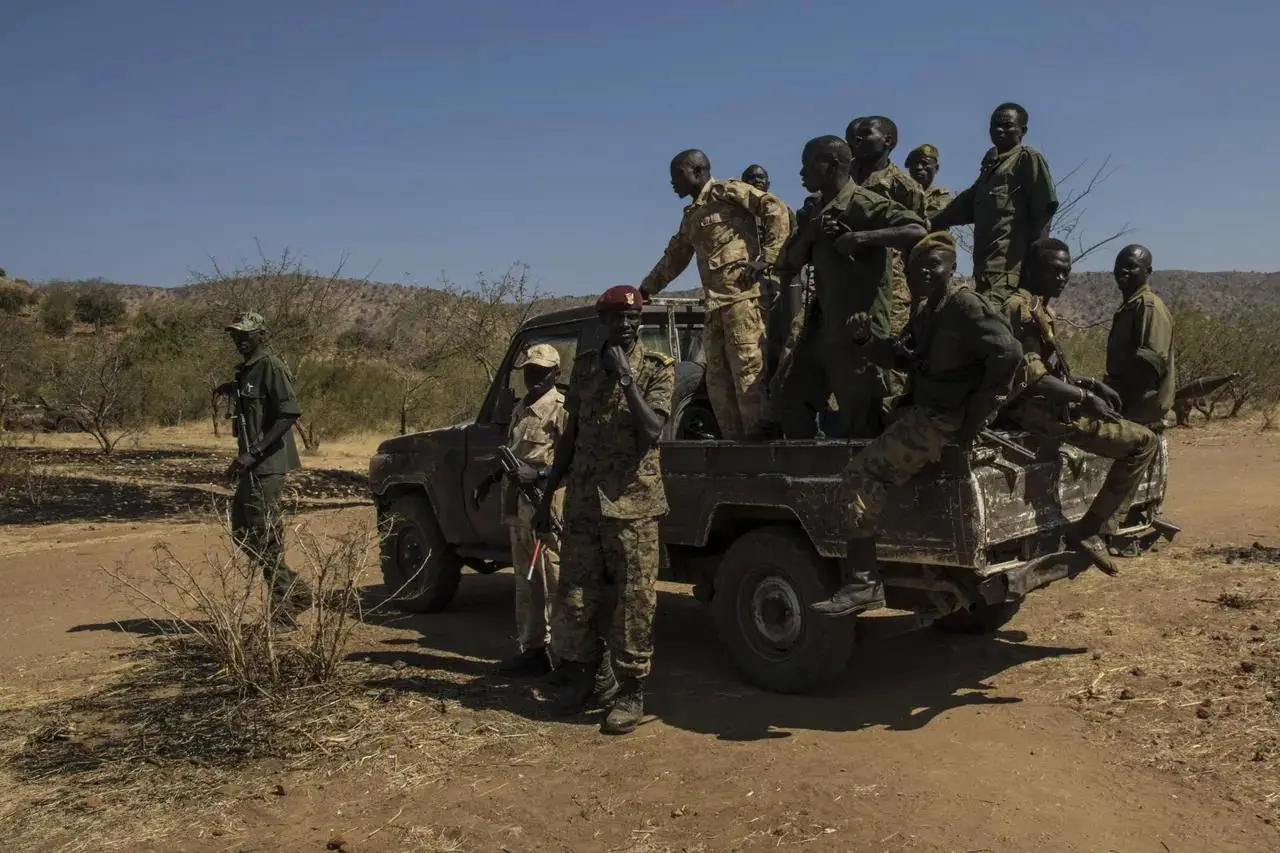
The repercussions of the conflict extend beyond Sudan's borders, given the economic and social ties that cross into neighbouring countries.
The ACLED study warns that the fragmentation of armed alliances may push some fighters and local leaders into other regional conflicts, particularly while external support networks and illicit economies persist.
The study also points to the role of external support linked to allies of the UAE in the region in sustaining the RSF's ability to continue the war.
These assessments reflect the researchers' view within the organisation and do not mean that all forms of external support, or the nature of relations between regional actors and armed groups, have been documented to the same degree.
From a strategic standpoint, the stability of Sudan is also tied to the ability of neighbouring states to prevent armed conflicts from spilling across their borders and to curb interventions that fuel the continuation of the war.
Civilians at the Heart of the Equation
Despite the importance of battlefield gains and defections in understanding the future of the conflict, the most relevant measure for the interests of the Sudanese people remains the extent to which these shifts affect civilian security, the possibility of the return of displaced persons, and the restoration of essential services.
The organisation has expressed concern about the consequences of intensified air raids on the population in Kordofan.
Protecting civilians, preventing reprisal attacks, securing access for humanitarian aid, and ensuring that local communities are not held responsible for the actions of armed groups remain among the most important challenges accompanying any change in control on the ground.
Conclusion: Between Military Decision and the Restoration of the State
Recent developments in Kordofan reveal an important shift in the balance of the Sudanese war, in which the army's advance coincides with growing economic pressures and internal divisions within the RSF.
Yet recovering territory does not automatically mean restoring stability, and the weakening of an armed formation does not necessarily mean the end of all forms of violence associated with it.
Sudan's ability to move beyond the war remains tied to addressing its political, social and economic legacy, restoring national institutions, ensuring accountability for crimes, and creating conditions for the return of millions of displaced persons and refugees.
The challenge is not limited to ending military confrontations; it extends to preventing the reproduction of the conditions that turned weapons, local loyalties and foreign interventions into tools for competition over power and wealth.
Between the present military shifts and the future of the Sudanese state, protecting society from a new round of conflict remains the most important test of any path toward stability.


