


The war in Sudan is witnessing rapid developments across the fronts of Kordofan, Darfur and the Blue Nile, with the Sudanese army announcing control of the strategic city of Sudari in North Kordofan, an escalation in drone warfare and civilian casualties in El Obeid and Al-Mazroub, alongside new waves of displacement within the country and an unprecedented acceleration in the crossing of Sudanese into Chad.
While military operations continue to shift control lines in Kordofan, the humanitarian crisis in Darfur is deepening, with more than 3,400 new displaced people arriving in Tawila during September amid shortages of food, water and medicine, while the Tina border crossing with Chad has been reopened to facilitate the entry of aid.
Army Announces Control of Sudari
The most prominent field development came on Friday 25 September 2026 (14 Rabi al-Akhir 1448 AH), when the Sudanese army and allied forces announced control of Sudari in North Kordofan after battles with the Rapid Support Forces.
The army said it inflicted losses on the Rapid Support Forces in personnel and equipment, while Radio Tamazuj reviewed recordings published via platforms linked to the army showing soldiers from the Sudanese Armed Forces and elements of the Joint Force celebrating inside Sudari. No immediate comment was issued by the Rapid Support Forces on the loss of the area.
Sudari is of military importance due to its location in the north-west of North Kordofan and on roads linking Kordofan with Darfur, making control of it influential on the movement of forces and supply lines toward the west.
This follows a series of gains announced by the army and its allies in North Kordofan in the preceding days, while other areas, including Um Badr and Al-Mazroub, remain within Rapid Support Forces areas of influence according to the latest available field information.
Drone Warfare Reaches Displacement Centres in El Obeid
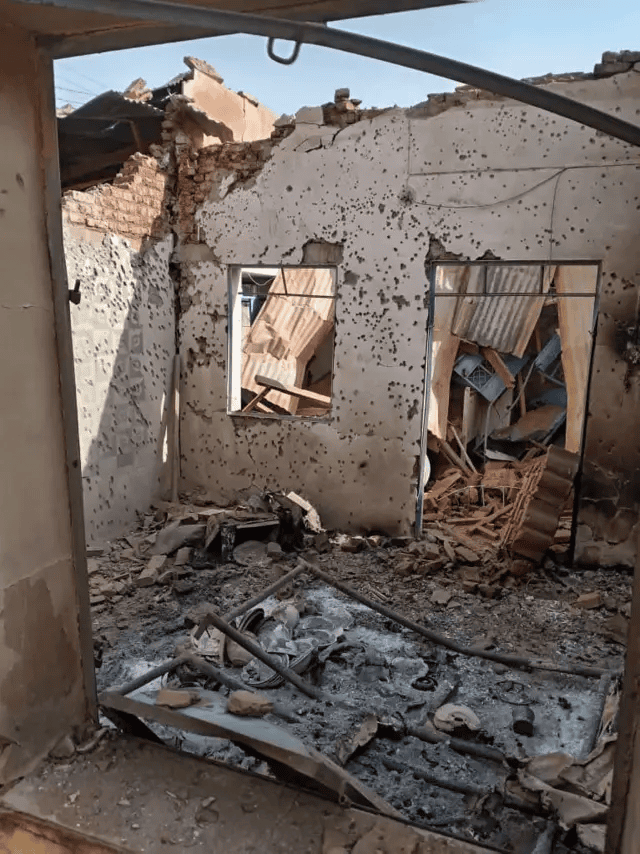
In a parallel development, the government of North Kordofan State and the state security committee said that drones belonging to the Rapid Support Forces targeted civilian sites in the city of El Obeid on Friday 25 September, resulting, according to the authorities, in the deaths of two civilians and injuries to 20 others.
The authorities said loitering munitions hit a centre sheltering displaced families from the fighting areas, in addition to other civilian facilities.
Local sources reported that the strikes hit areas in north and central El Obeid, including a temporary shelter near the police hospital, a fuel station, a passenger bus and a house in Arafat neighbourhood.
No immediate comment was issued by the Rapid Support Forces on the accusations, and Sudan Tribune was unable to independently verify the death and injury toll; the Rapid Support Forces' responsibility for the attack therefore remains an official accusation issued by the North Kordofan authorities rather than the outcome of an independent investigation.
This is the second attack El Obeid has suffered in less than a week, indicating the transformation of drones into one of the most prominent weapons of war on the Kordofan front.
Opposing Account: Army Accused of Killing Civilians in Al-Mazroub
On the other side of the front, the Tasis alliance, aligned with the Rapid Support Forces, accused the Sudanese army of carrying out a drone strike on Al-Mazroub in North Kordofan on Friday morning.
The alliance said the drone hit a residential area, resulting, according to its account, in the deaths of nine civilians and injuries to 24 others.
However, the toll and the identity of the party that carried out the strike could not be independently verified, and no immediate response was issued by the Sudanese army to the accusation. Local accounts with differing tolls have also emerged, which calls for caution in adopting a final figure for casualties before additional sources appear.
The attacks on El Obeid and Al-Mazroub reveal an increasingly dangerous pattern in the war, as both sides rely increasingly on drones and loitering munitions, while reports of casualties in residential areas recur.
More Than 330,000 Books Destroyed by Drones
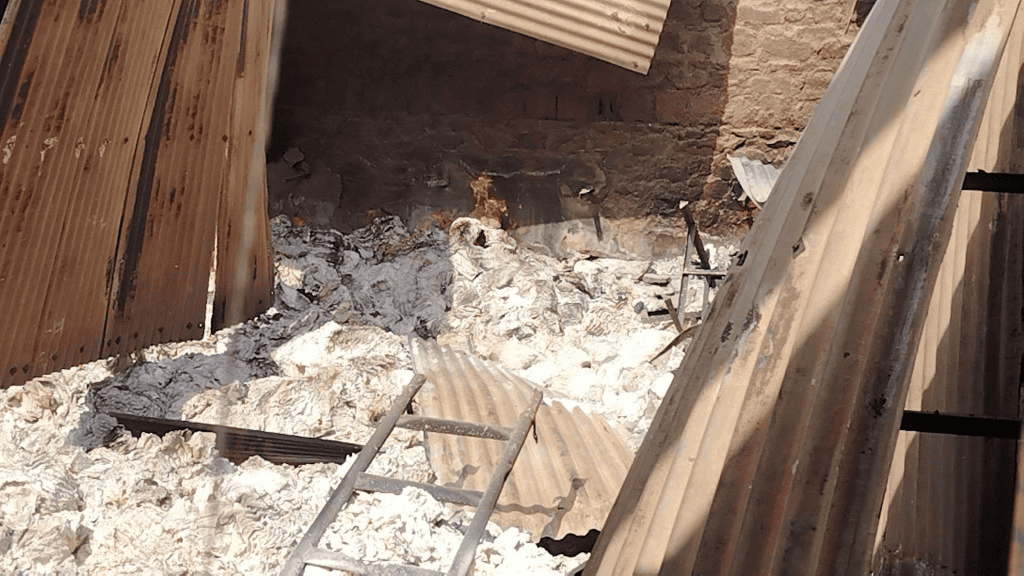
Earlier, drone warfare had also hit the education sector in North Kordofan, after the United Nations Children's Fund (UNICEF) announced that strikes targeting two warehouses in Shiekan locality on 20 September destroyed more than 292,000 textbooks and 40,000 revision books in Arabic language and mathematics, in addition to other educational materials.
The materials were intended for distribution to children at the start of the new school year in October, including to schools in West Bara, Bara and Um Dam.
UNICEF did not identify the party responsible for the strikes, and therefore the attack cannot be attributed to the army or the Rapid Support Forces on the basis of the UN statement.
Rapid Support Forces Commander Defects With Dozens of Fighters
On the shifts within the warring forces, the Sudanese army announced that a Rapid Support Forces commander named Al-Tayib Al-Wahidu had joined it on Friday, together with about 50 fighters and five armed vehicles.
The group arrived in Omdurman, where it was received by military and security officials, while Al-Wahidu said his decision came in protest against what he described as violations within the Rapid Support Forces, and called on other fighters to abandon the fighting.
No immediate comment was issued by the Rapid Support Forces on the group's defection or on its commander's account of the reasons for it.
This follows other defections in recent months, including groups of Rapid Support Forces fighters joining the army in different states.
Darfur: More Than 3,400 New Displaced Arrive in Tawila
In Darfur, the displacement movement toward the area of Tawila in North Darfur continues, as it has become one of the main reception areas for civilians fleeing the fighting.
The General Coordination for Displaced and Refugees in Darfur said that 634 families comprising about 3,407 people had arrived in Tawila since the beginning of September, including 121 families in the latest wave of displacement.
According to the coordination body, most of the new arrivals are women, children and the elderly, and some had been displaced several times before reaching Tawila after fleeing areas including Tora, Dar al-Salam, Dar Sumayat, Alawna and Kafud.
However, arrival in Tawila has not ended the families' suffering; the coordination body warned of severe shortages of food, clean water, medicine and shelter, and of the spread of malnutrition among children and mothers, amid weak sanitation and healthcare services.
A humanitarian update also reported that bread disappeared from Tawila markets for four consecutive days after bakeries had stopped operating since 18 September amid disputes linked to rising prices.
Reopening of the Tina Crossing to Bring in Aid
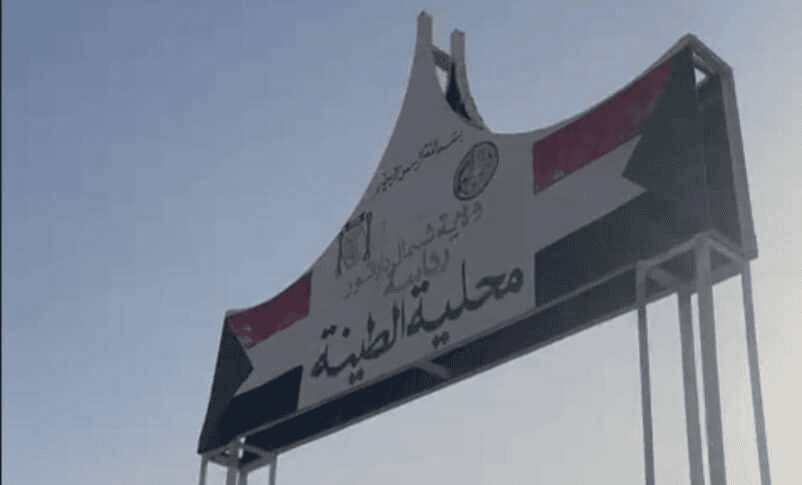
In a development that may partially ease the humanitarian pressure, regional authorities in Darfur announced on Friday 25 September the reopening of the Tina border crossing with Chad to humanitarian aid, alongside the resumption of operations of the humanitarian coordination office in the border town.
The crossing is an important route for delivering food, medicine and shelter supplies to North Darfur, including Kabkabiya, Al-Serif, Kutum, Karnoi, Umm Barru, Sortoni and other areas.
The regional humanitarian aid coordinator, Abdel Baqi Mohamed Hamid, said the road from Forchana in Chad to Tawila via Tina can be covered within a day or less, compared with about four days via the Adre road to the south.
According to the official, 60 aid trucks entered North Darfur via Tina during the week, while another 35 trucks entered via Al-Dabba heading to other areas of Darfur.
The official warned at the same time that most hospitals in Darfur have stopped working, while the remaining local health facilities are unable to cope with growing needs.
Deaths and Displacement in Local Clashes in South and East Darfur
Violence in Darfur is not limited to direct confrontation between the army and the Rapid Support Forces. An update from the United Nations Office for the Coordination of Humanitarian Affairs reported that clashes broke out on 19 September in Abujah market in the Qreida area of South Darfur, resulting, according to humanitarian partners, in the deaths of 13 people and the displacement of more than 400 others.
On the same day, clashes at the Al-Borsa market in the city of Al-Daein in East Darfur led to injuries and the closure of part of the market, while other confrontations in Nyala resulted in injuries.
These events occurred several days earlier, but their details were included in the humanitarian update issued on 24 September, and therefore should not be described as having taken place on the day the report was issued.
More Than 55,000 Sudanese to Chad, and Refugee Flows Jump Twentyfold
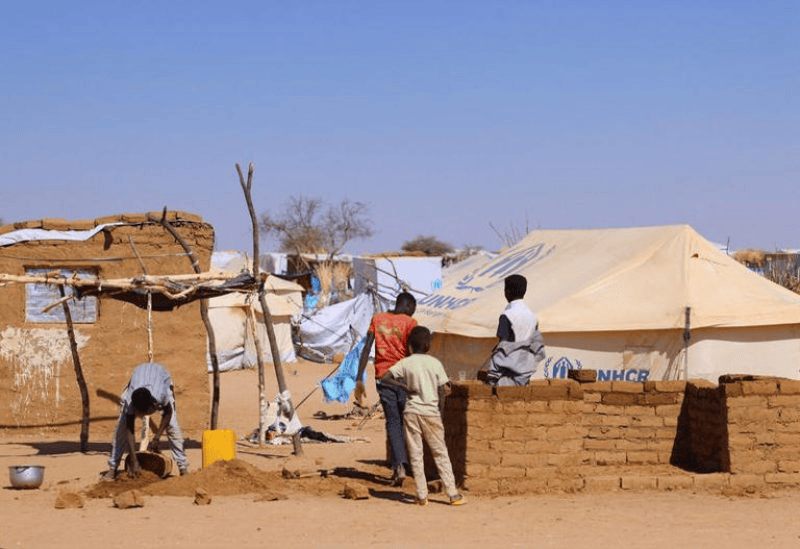
Outside Sudan, the Office of the United Nations High Commissioner for Refugees (UNHCR) revealed on Friday 25 September a sharp acceleration in the flow of Sudanese into Chad.
UNHCR said more than 55,000 Sudanese refugees have arrived in eastern Chad since the beginning of 2026, while the number of those crossing during the last week rose to more than 400 people per day through the Adre and Tina areas, about twenty times the daily rate recorded in previous months.
Since the outbreak of the war in April 2023, about one million Sudanese refugees have crossed into Chad.
UNHCR warned that assistance is not keeping pace with the scale of needs, noting that the regional response plan for Sudanese refugees has so far received only 18% of the required funding of $1.6 billion. More than 190,000 refugees are living in difficult conditions near border areas in Chad.
Hunger Widens, and 14 Areas Face Risk of Famine
The displacement wave coincides with a continuing deterioration in food security. The Food and Agriculture Organization of the United Nations (FAO), in its update issued on 24 September, said that about 19.5 million people, more than 40% of the population covered by the analysis, were projected to face crisis levels or worse of acute food insecurity, including about five million at the "Emergency" level and 135,000 at the "Catastrophe" level.
The organisation warned that 14 areas in North Darfur, South Darfur and South Kordofan face the risk of famine during the lean season under the worst-case scenario based on escalating violence and displacement.
The World Food Programme also reported that the cost of the local food basket in Sudan rose by 13% within one month, making it harder for families to obtain their basic needs.
Blue Nile: New Emergency Measures and Spread of Dengue and Malaria
In the Blue Nile State, Governor Ahmed Al-Omda Badi issued a decision extending the state of emergency for three months, citing what he described as security and criminal conditions and recommendations of the state security committee.
The decision grants the army, police and security agencies powers to take measures under the emergency law, while a separate order prohibits the movement of motorcycles within Ed Damazin and Roseires from 5 pm to 6 am, with exemptions for security forces, official duties and authorised humanitarian missions.
This comes amid renewed confrontations in parts of the Blue Nile between the army on one side, and an alliance including the Rapid Support Forces and the Sudan People's Liberation Movement–North on the other.
On the humanitarian side, residents of Ed Damazin and Roseires reported rising cases of dengue fever and malaria in recent days, amid continued rains, water accumulation, and shortages and rising prices of some medicines.
The state health ministry has not yet provided an updated official toll of cases, and therefore the latest information on the scale of the spread remains based on residents' testimonies and local medical sources.
Nuba Mountains: Looting of Veterinary Vaccine Storage
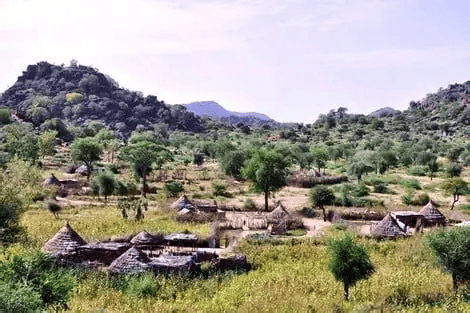
In South Kordofan, an official in the animal health sector said that the Nuba Mountains has completely lost the cold chain system used to store and transport veterinary vaccines and medicines as a result of looting linked to the war.
He said the lost stock of vaccines and medicines had been designated to cover the needs of 14 localities for six months, warning of the impact on livestock, on which large numbers of residents depend as a source of livelihood and income.
International Push to End the War, but Disputes Persist
Politically, sessions of the United Nations General Assembly witnessed a new attempt to unify international mediation tracks, as the African Union and the United States chaired a joint meeting that brought together, for the first time, the Quad and the Quintet mechanisms concerned with Sudan.
The Chairperson of the African Union Commission, Mahmoud Ali Youssouf, called for an immediate humanitarian truce and a cessation of hostilities as a prelude to a permanent ceasefire, affirming that the war cannot be resolved militarily.
He also called for an end to external military support to the warring parties, and for the launch of a comprehensive Sudanese political process leading to the restoration of constitutional order while preserving Sudan's unity and sovereignty. Participants agreed to work toward a roadmap that links humanitarian action to the cessation of fighting and to civilian dialogue.
Meanwhile, the crisis over the United States not issuing a visa to the Chairman of the Sovereignty Council and army commander Abdel Fattah Al-Burhan to take part in person in the General Assembly meetings continued.
Reuters had quoted a Sudanese diplomatic source and a well-informed analyst as saying that the issuance of the visa appeared linked to Al-Burhan's acceptance of a US proposal for a 90-day ceasefire, while the US State Department did not officially confirm this. UN Secretary-General António Guterres expressed concern, and the United Nations said it had raised the issue with Washington.
A War Widening Humanitarianly Even as Front Lines Shift
Developments in recent days reveal two parallel tracks in Sudan: a military advance by the army and its allies in North Kordofan toward the roads leading to Darfur, alongside escalating use of drones and long-range attacks; and a continuing humanitarian deterioration that does not stop at lines of control.
While control over towns such as Sudari changes hands, displaced people in El Obeid are being shelled, other families are fleeing toward Tawila, and hundreds cross into Chad daily, while humanitarian resources shrink, food prices rise and the risks of disease increase.
As a result, Kordofan is increasingly becoming a new centre of military gravity in the war, while Darfur remains the centre of one of the heaviest aspects of the humanitarian crisis, with UN warnings that continued fighting, widening drone use, and disrupted agriculture and services could push additional areas into higher levels of hunger and displacement.


