


Sudan is witnessing an important shift on the ground in recent days, as the bulk of fighting has moved to the Kordofan region, where the Sudanese army and its allied forces have launched one of their largest operations in months towards areas controlled by the Rapid Support Forces (RSF), while drone warfare has expanded to the city of El Obeid and Blue Nile State.
In parallel with the military escalation, diplomatic efforts have returned to the forefront in New York to push for a three-month humanitarian truce, while the latest figures show that more than 14 million people have been forced to flee since the outbreak of the war, and nearly 20 million Sudanese are suffering from hunger.
The following is an overview of the situation as of Tuesday, 22 September 2026 CE, corresponding to 11 Rabi al-Akhir 1448 AH.
Where has the war map now reached?
Khartoum is no longer the centre of the war as it was during the first two years of the conflict.
After the Sudanese army recaptured the capital and Al-Jazirah and consolidated its control over most of the north, east and centre of the country, Sudan has effectively become divided into broad spheres of influence: the army retains most of the north, east and centre, while the RSF controls most of Darfur and large parts of western Kordofan, and fighting continues in northern and southern Kordofan and Blue Nile.
The fall of El Fasher, capital of North Darfur, to the RSF in October 2025 CE (Rabi al-Akhir 1447 AH) gave it control over most of the Darfur region, while Kordofan has become the main dividing zone between the two sides' spheres of influence.
Hence the current operations in northern Kordofan carry an importance that goes beyond seizing small villages: the army seeks to push the RSF westward and open roads from central Sudan towards Darfur, while the RSF needs to maintain its corridors between Darfur and Kordofan.
The army launches a broad operation in northern Kordofan
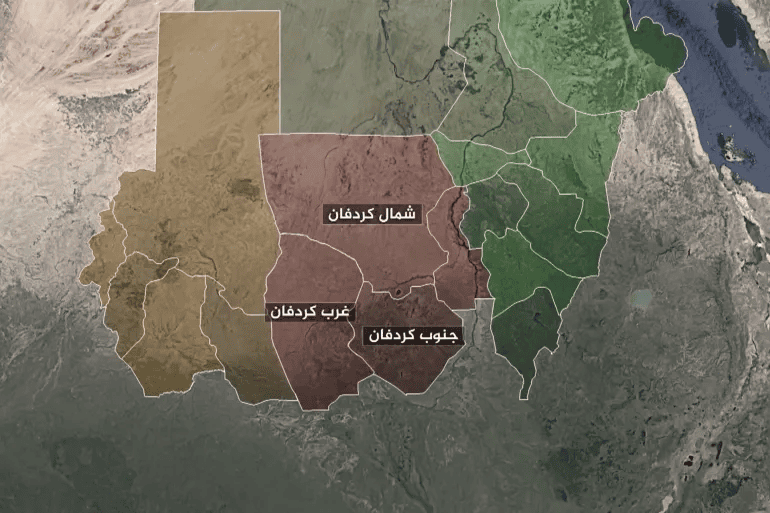
On 17 September 2026 CE, corresponding to 6 Rabi al-Akhir 1448 AH, the Sudanese army announced that it had recaptured 11 areas west of the city of El Obeid after battles with the RSF, including Sharshar, Al-Qulayaat, Al-Luqad, Al-Kukaiti and areas surrounding Al-Mazrub.
The army said its forces, together with movements from the "Joint Force" allied with it, continued advancing westward and pursuing RSF elements towards the Darfur border. It was not possible to independently verify the full extent of the gains announced by the army.
Military sources later reported on 17 September that army forces had also taken control of Al-Farshaya and Al-Mamsuka in southern Kordofan, two areas located on the road linking El Obeid with the city of Al-Dilling, indicating that the operation is not confined to a single axis.
Government forces in northern Kordofan are trying to push their adversaries away from El Obeid and cut the "Darb al-Arbaeen", a desert route the RSF has used to move fighters and equipment between Darfur and central Sudan.
However, the battlefield picture remains fluid, and the RSF has not collapsed in the area; rather, it has regrouped its forces in areas including Hamrat al-Sheikh, Umm Badr, Sodari and the areas extending towards western Kordofan. There are also conflicting accounts regarding control of some points, which makes declaring the battle for northern Kordofan decided premature.
Thousands of civilians flee Hamrat al-Sheikh
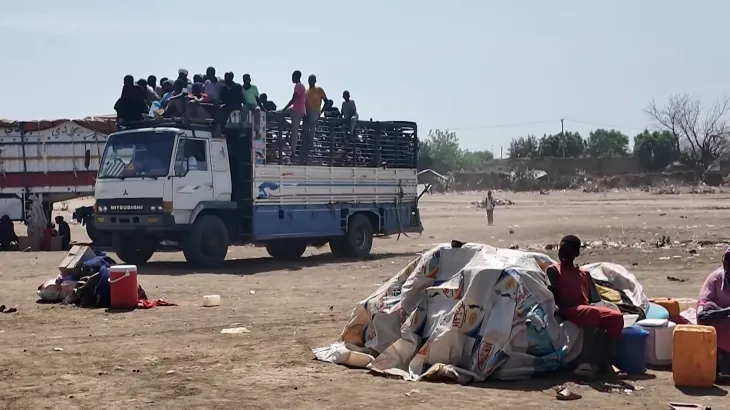
The military advance has been accompanied by a new wave of displacement.
On 20 and 21 September, corresponding to 9 and 10 Rabi al-Akhir 1448 AH, rights and local groups reported that thousands of residents had begun fleeing the Hamrat al-Sheikh area, some towards Al-Debba in the Northern State, and others towards areas controlled by the army such as Bara and Jabrat al-Sheikh.
The group "Emergency Lawyers" said the RSF had deployed fighters and military vehicles in residential neighbourhoods, prompting residents to leave their homes for fear of the fighting reaching them. The RSF has not responded to these allegations.
In Umm Badr, the Dar Hamar emergency room said an RSF attack on a gold market on 20 September, corresponding to 9 Rabi al-Akhir, killed five people and wounded 27 others. This toll comes from local activists and has not been confirmed by an independent body.
El Obeid back in the crosshairs of drones
While the army moves west of the city, El Obeid, capital of North Kordofan and one of the army's most important centres in western Sudan, was hit by a new wave of drone attacks.
On 20 September 2026 CE, corresponding to 9 Rabi al-Akhir 1448 AH, the army said it had repelled drone attacks attributed to the RSF that targeted sites including the headquarters of the Fifth Division and the vicinity of El Obeid airport, as well as government areas. It also announced the downing of an "FH-95" drone in another area of the state.
Notably, drones have become one of the main features of the new phase of the war.
The United Nations Fact-Finding Mission said in a report issued in early September that more than 1,000 people were killed in drone attacks during the first half of 2026, and that both sides used drones in strikes that hit hospitals, markets, schools and civilian areas. The investigators concluded there were indications of possible war crimes by both sides.
A new front widens near Ethiopia
Fighting is not confined to western Sudan.
Blue Nile State, on the border with Ethiopia, has become a more active front in recent months, after the RSF and its ally, the "Sudan People's Liberation Movement-North" led by Abdelaziz al-Hilu, entered areas in the south of the state.
Earlier in the year the alliance had taken control of Kurmuk, Qaisan and military sites near the Ethiopian border, while the army is trying to prevent its expansion northward towards Ad-Damazin.
On 18 September, corresponding to 7 Rabi al-Akhir 1448 AH, the army said it had repelled a joint attack by the RSF and the SPLM-N near Al-Kaili, and announced the destruction of vehicles and the downing of drones. The other two parties did not respond to that account, and the casualty figures could not be independently verified.
The United Nations says that some 100,000 people were displaced within Blue Nile State between January and August 2026, with a significant increase in displacement since late May, while drone attacks have targeted fuel stations and infrastructure in the state.
Darfur: the war has not ended with the fall of El Fasher
As for Darfur, although the intensity of major battles has declined compared with the period before the fall of El Fasher, the humanitarian and security crisis remains severe.
On 19 September, corresponding to 8 Rabi al-Akhir 1448 AH, a displaced persons coordination body said more than 2,300 people had arrived in the town of Tawila in North Darfur since the beginning of the month, most of them women and children, fleeing fighting, hunger and rising food prices.
Tawila faces acute shortages of food, drinking water, shelter and healthcare, amid local warnings of deteriorating malnutrition in parts of northern and central Darfur.
In another human rights development, the "Sudan Doctors Network" said on 20 September that a relief volunteer named Al-Tayeb Al-Tom Morsal died inside Shala prison in El Fasher, after nearly a year of detention by the RSF. The network says thousands of people are held in the prison and other detention sites, amid shortages of food and healthcare and allegations of torture. The RSF has not commented on these allegations.
A United Nations fact-finding mission had concluded in July 2026 that the killing, rape, abduction and starvation committed during the siege and capture of El Fasher included acts that, according to the mission, amount to genocide. The RSF rejected these allegations.
More than 14 million displaced and nearly 20 million hungry
The humanitarian crisis remains the most constant element amid military shifts.
UN Secretary-General António Guterres said on 16 September, corresponding to 5 Rabi al-Akhir 1448 AH, that more than 14 million people have been displaced by the war, warning that the flow of weapons and external support is prolonging the fighting and increasing the suffering of civilians.
According to the latest figures from the World Food Programme, nearly 20 million people in Sudan are suffering from hunger. However, the programme's budget allocated to Sudan has fallen this year to about $206 million, compared with $645 million the previous year, and the programme says it needs nearly $300 million more to maintain its current level of operations.
The programme currently reaches about four million people with partial food assistance, although its plan targets five million of the most in need.
The economy weighs even on areas far from the front lines
Even areas that are not witnessing direct fighting are suffering the effects of the war.
In Al-Qadarif in eastern Sudan, dozens of citizens took to the streets on 20 September, corresponding to 9 Rabi al-Akhir, in protest against rising food prices and deteriorating living conditions, and protesters closed one of the main roads with burning tyres.
In the parallel market, the Sudanese pound has improved to a limited extent in recent days after sharp collapses, and was traded on 20 September at around 7,300 pounds to the dollar, compared with 7,600 a few days earlier. However, the large gap between the parallel market and official bank rates reveals the continued turbulence in the currency exchange market and the economy.
Mining disasters added another tragedy to the Sudanese week: the collapse of a traditional gold mine near Al-Nuhud in western Kordofan killed at least 82 people according to the latest toll reported by the Associated Press, and 11 other workers were killed and about 30 injured in another mine collapse in the northeast of the country.
A new attempt to halt the war... but no agreement yet
Diplomatically, the Sudan issue has returned strongly to the sessions of the United Nations General Assembly in New York.
On 21 September, corresponding to 10 Rabi al-Akhir 1448 AH, the US President's adviser for Arab and African affairs, Massad Boulos, held a meeting with Egyptian Foreign Minister Badr Abdelatty and the foreign minister appointed by the authorities allied with the army, Mohieldin Salim.
Boulos said Sudanese people urgently need a "humanitarian truce" that opens the way to a comprehensive civilian dialogue and a united, peaceful Sudan.
The United States, within a group that includes Egypt, Saudi Arabia and the UAE, is pushing for a 90-day humanitarian truce, to be followed by broader political negotiations. However, there is so far no agreement between the army and the RSF on implementing it.
The main disagreement in previous negotiations concerned the conditions for a ceasefire: the army demanded a full withdrawal of RSF forces from the cities and areas they have occupied, while the American proposal envisaged more limited and gradual withdrawals.
Also in New York, civilian forces led by former prime minister Abdalla Hamdok called on the Security Council to impose a humanitarian truce and to extend the arms embargo imposed on Darfur to cover all of Sudan. In response, the government allied with the army warned the United Nations against dealing with the RSF in a manner that could grant it political legitimacy.
Where is the war heading?
The most prominent current development is that the army is trying to leverage its control of Khartoum and the centre to move westward, and northern Kordofan appears to be the gateway to this strategy. If it manages to consolidate its gains and open roads towards western Kordofan and Darfur, it may impose a new military phase on the RSF.
But this scenario has not yet materialised.
The RSF still controls most of Darfur and large areas of western Sudan, and has an increasing capacity to use drones and strike cities and facilities far from the front lines. In the south and southeast, its alliance with the forces of Abdelaziz al-Hilu has added another front in southern Kordofan and Blue Nile.
Thus, as of 22 September 2026 CE (11 Rabi al-Akhir 1448 AH), Sudan appears far from a near military resolution: two armies and opposing spheres of influence, fronts moving from Kordofan to Blue Nile, a widening drone war, and millions of civilians trapped in one of the worst humanitarian crises in the world. As efforts for a truce are renewed, there is so far no sign that either party is prepared to abandon its bet on improving its position on the ground before negotiating.


