


Fighting has escalated in Sudan, with the Sudanese army announcing that it repelled an attack by Rapid Support Forces (RSF) in the Jabra al-Sheikh area of North Kordofan state, alongside other field and political developments that reflect the continuation of the conflict that has been ongoing since April 2023.
According to military sources who spoke to the Anadolu Agency, RSF forces launched an attack on Jabra al-Sheikh and the villages surrounding it on Thursday morning. The army and its allied forces were able to repel the attack and, according to the sources, inflicted heavy human and material losses on the attackers, while government forces continued to pursue RSF fighters who withdrew from the area.
Jabra al-Sheikh holds field significance within the ongoing battles in the three Kordofan states: North Kordofan, South Kordofan and West Kordofan, which over the past months have become one of the most prominent battlegrounds between the two sides.
New Battle in Blue Nile
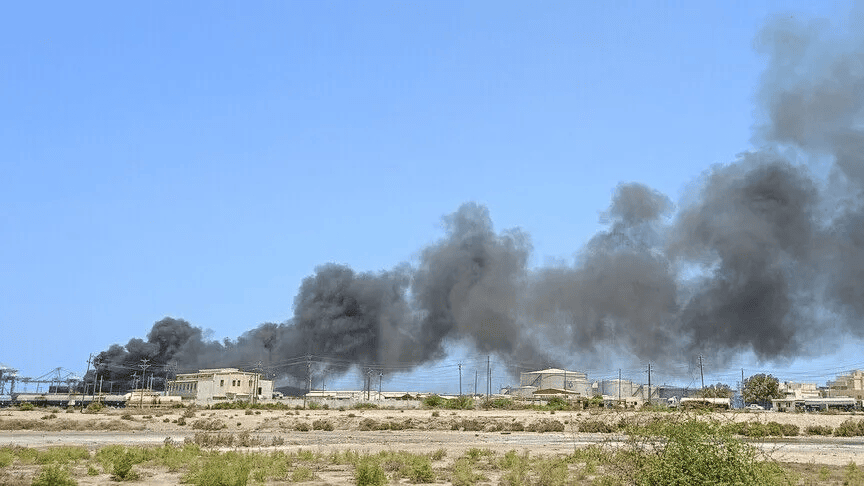
In a parallel development, the RSF announced that it had taken control of the city of Kurmuk in Blue Nile state after fighting with the army, and described the city as strategically important.
Kurmuk lies near the Ethiopian border and controls supply routes, military corridors and land roads extending toward Ethiopia and South Sudan, which makes control of it highly significant in the military calculations of both sides.
However, the claim of control comes amid conflicting accounts on the ground. The Sudanese army had announced on 8 July that it had retaken Kurmuk after about three months of RSF control of the city, in cooperation with its ally, the Sudan People's Liberation Movement.
Defections Hit RSF Ranks
In another development, the Sudanese authorities announced that 21 commanders and 270 fighters had defected from the Rapid Support Forces and joined the army, along with the handover of 37 armoured vehicles.
This step follows a series of defections in recent weeks, involving military, political and field figures linked to the RSF, which indicates the pressure the paramilitary force is facing in a number of combat zones.
The governor of the Kordofan region appointed by the RSF, Hamad Mohamed Hamid Khalifa, also announced his resignation and defection from the forces, according to local and regional media reports.
No immediate comment has been issued by the RSF regarding the announced defections.
War Multiplies the Humanitarian Cost
Alongside the military escalation, the humanitarian crisis is deepening in the strategic city of El Obeid, where thousands of displaced families face deteriorating conditions, as fuel supplies, the electricity infrastructure and transport routes have been damaged by strikes.
Hospitals, in turn, face shortages of fuel and repeated power cuts, threatening the operation of emergency and maternity wards and incubators for premature infants.
The information in the sources indicates that the war, which has been ongoing since April 2023, has led to the killing of tens of thousands and the displacement of some 13 million people, while more than 30 million Sudanese need humanitarian assistance, with famine spreading across wide areas of the country.
The Battlefield Picture
The simultaneous developments reveal multi-front escalation: the army announces it has repelled attacks in North Kordofan, while the RSF announces progress in Kurmuk in Blue Nile, as defections increase within the paramilitary ranks.
As both sides continue fighting to control corridors and strategic cities, civilians are paying the greatest price in a war that has entered its fourth year, amid a crisis of displacement and hunger and the continued collapse of essential services.


