

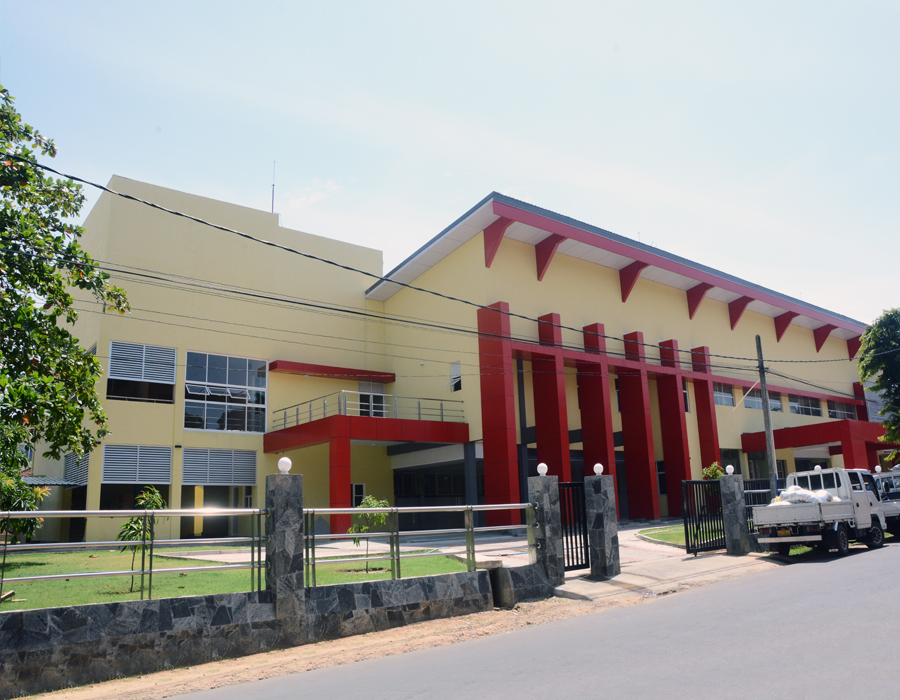
The Human Rights Commission of Sri Lanka has found that the administration of a government hospital in the east of the country violated the constitutional rights of six Muslim employees, after it barred them from wearing the hijab and modest clothing alongside the prescribed work uniform, in a decision that has sparked debate over freedom of belief and equality in government workplaces.
The decision was issued on 12 October 2026, following complaints filed by the employees against the administration of Kalmunai Northern Base Hospital, demanding protection of their right to wear clothing consistent with their religious beliefs while performing their professional duties.
The Commission affirmed that the measures taken by the hospital administration violated several rights guaranteed by the Sri Lankan Constitution, including freedom of religion and belief, equality before the law, non-discrimination, and the right to engage in lawful work.
The Commission also recommended that the government issue clear instructions allowing public sector employees to wear religious clothing alongside the official uniform, provided that their identities remain verifiable during work.
How did the case begin?
The incident dates back to 6 August 2026, when six Muslim employees joined the hospital at Kalmunai Northern as healthcare assistants, after being appointed by the Ministry of Health.
According to the complaints reviewed by the Human Rights Commission, hospital officials asked the employees to remove the head coverings, long sleeves and trousers they wore alongside the work uniform, on the grounds that they did not conform to the approved dress regulations.
The employees objected to this measure, asserting that the garments in question are linked to their religious commitment to modesty, and that wearing them does not prevent them from performing their professional duties.
The dispute escalated after the employees were subjected to administrative measures, including their transfer from the hospital, without a disciplinary investigation, according to the Commission's findings.
The case raised questions about the extent to which the administration of a government institution may impose restrictions on the religious expression of its employees, and whether the work uniform necessarily requires excluding additional clothing linked to belief.
The Commission: barring the hijab violated constitutional rights
After investigating the complaints, the Sri Lankan Human Rights Commission concluded that the hospital administration had taken unjustified measures that contravened constitutional guarantees.
Its decision relied on several articles of the country's Constitution, most notably Article 10 concerning freedom of thought, conscience and religion; Articles 12(1) and 12(2) concerning equality before the law and non-discrimination; and Articles 14(1)(e) and 14(1)(g) concerning the practice of religious observances and beliefs and the pursuit of lawful work.
The Commission found that the hospital administration's interpretation of the work uniform regulations was arbitrary and discriminatory, especially since the administrative circulars on which the administration relied, issued in 1989 and 2022, contain no explicit prohibition on religious head coverings or additional modest clothing.
The Commission also observed that other government hospitals in the area permit Muslim female employees to wear similar clothing, without this obstructing their work.
This means the case was not a dispute over whether a uniform exists, but over how its rules were interpreted and applied to the Muslim employees.
Recommendations on reinstatement and investigating harassment
The Commission's decision did not stop at condemning the hospital administration's measures; it included recommendations to address their consequences.
It called on the hospital administration to issue written instructions permitting head coverings, long sleeves and trousers alongside the approved uniform, so that the rules are clear to all employees and officials.
It also recommended a full and impartial investigation into the allegations of harassment contained in the complaints, and the provision of a written offer to the six employees allowing them to return to work at the hospital, ensuring they are not deprived of wearing clothing linked to their beliefs if they choose to return.
These recommendations show that the Commission did not treat the case as a simple administrative problem, but as a dispute concerning constitutional rights, the working environment, and the safeguards available to employees when they object to administrative decisions.
A call to change dress rules in government institutions
The decision carries a broader significance than the hospital incident. The Human Rights Commission recommended that the Ministry of Public Administration issue a new circular clarifying employees' right to wear clothing linked to their religious beliefs alongside the official uniform.
The Commission proposed drawing on administrative circular No. 13/2019, issued on 26 June 2019, to develop clearer instructions on religious dress in the public sector.
It stressed the need to take into account requirements for identifying an employee while performing their duties, so that religious protection is achieved without compromising legitimate professional needs.
The importance of this recommendation lies in the fact that it is not limited to Muslim women or employees in the health sector, but seeks to establish a general administrative standard on the religious dress of employees.
However, the recommendation does not automatically mean that the government has already issued a new circular, or that all institutions are now bound by different instructions; implementing the proposals requires further formal action by the competent authorities.
Why is the decision significant for Muslims in Sri Lanka?
Muslims form one of the country's significant religious minorities, with large communities in the eastern regions, including Kalmunai and the surrounding areas.
In recent years, the country has witnessed recurring debates about religious practices, Islamic dress, and equality among religious groups, particularly in government institutions and public spaces.
In this context, the Human Rights Commission's decision carries particular importance, because it links the protection of religious freedom with the right to work, and affirms that the application of uniform administrative rules should not become a means of discrimination on the basis of belief.
It also highlights the importance of independent mechanisms that employees can turn to when they believe their employer has violated their rights.
Legally, the decision does not grant a general exemption from all safety or occupational discipline requirements, but it affirms that any restrictions on religious dress must rest on legitimate reasons and clear rules, and must not be imposed arbitrarily or selectively.
Have the Commission's recommendations been implemented?
The Sri Lankan Human Rights Commission set 11 November 2026 as the date for receiving a report on progress in implementing the recommendations from the hospital administration and the relevant government bodies.
However, no reliable official statement has been found confirming the implementation of all the recommendations, the return of the six employees to their posts, or the issuance of the proposed government circular, as of the preparation of this report.
Accordingly, the confirmed development is the Human Rights Commission's decision finding violations and making recommendations, rather than a final court ruling or the completion of implementation procedures.
Monitoring the authorities' response to these recommendations remains necessary to determine whether the decision translates into effective safeguards in the workplace.
The case of the six Kalmunai employees stands as a test of the ability of Sri Lankan government institutions to protect freedom of belief and equality in employment, and to reconcile job requirements with employees' religious rights.
If the Commission's recommendations are implemented, they could provide clearer rules to protect Muslim women employees and others with religious beliefs, and reduce the divergent decisions government administrations take regarding religious dress.
If the recommendations remain unimplemented, the case will remain an example of the gap that can separate official recognition of rights from the guarantee of their practice within public institutions.


