


For weeks, the residents of the town of al-Mansouri in south Lebanon have been witnessing a harsh scene. From the hills facing their village, which they were forced to flee once again, they watch Israeli forces demolish homes, blow up buildings and bulldoze land in succession, despite the ceasefire in effect.\
According to a field report published by Middle East Eye on 1 October 2026 (20 Rabi' al-Akhir 1448 AH), the town, located on a green hill a few kilometres south of the city of Tyre and already heavily damaged during the war, is witnessing continuous demolition operations using explosives and air strikes.\
The Israeli army describes al-Mansouri as an operational stronghold of Hezbollah, while its residents say that what is happening is gradually turning their village into an uninhabitable area and dashing the hopes of some five thousand of its people to return to their homes.
«الخط الأصفر» يقسم القرية.. والسكان نزحوا مجددًا
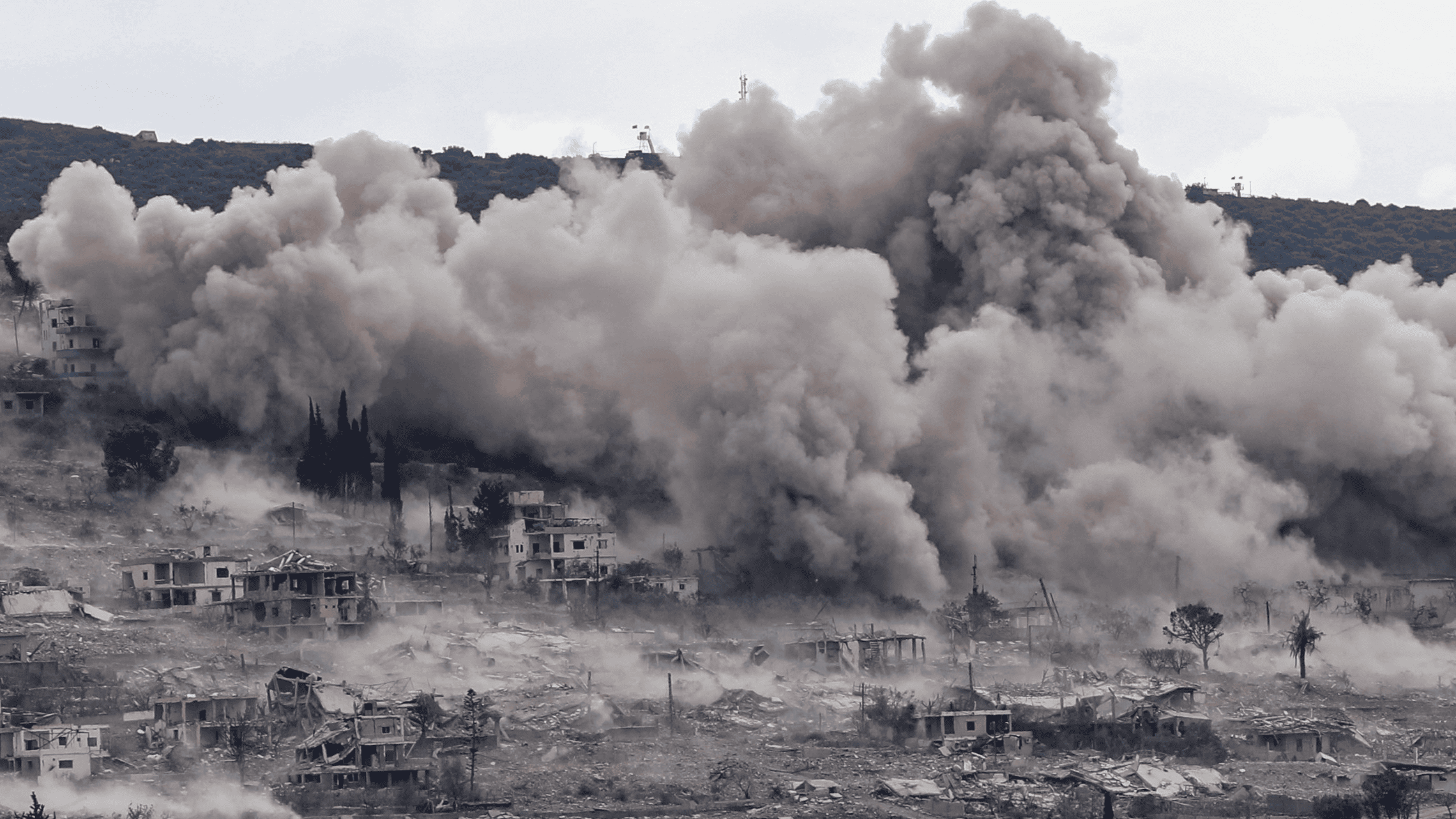
Al-Mansouri was initially outside what is known as the "Yellow Line", a security line imposed by Israel inside Lebanese territory following the entry into force of the latest ceasefire.\
However, the line later extended to cut the town into two parts. According to the report, the field reality goes beyond that, as the entire village has come under Israeli control, after residents who had returned were forced to flee again during the summer under the weight of Israeli air operations.\
The mayor of al-Mansouri told local media that residents were subjected to artillery attacks, in addition to hand grenades and sound bombs dropped by drones, noting that he himself was injured in an Israeli attack and survived it.
Waiting for their homes' turn to be demolished
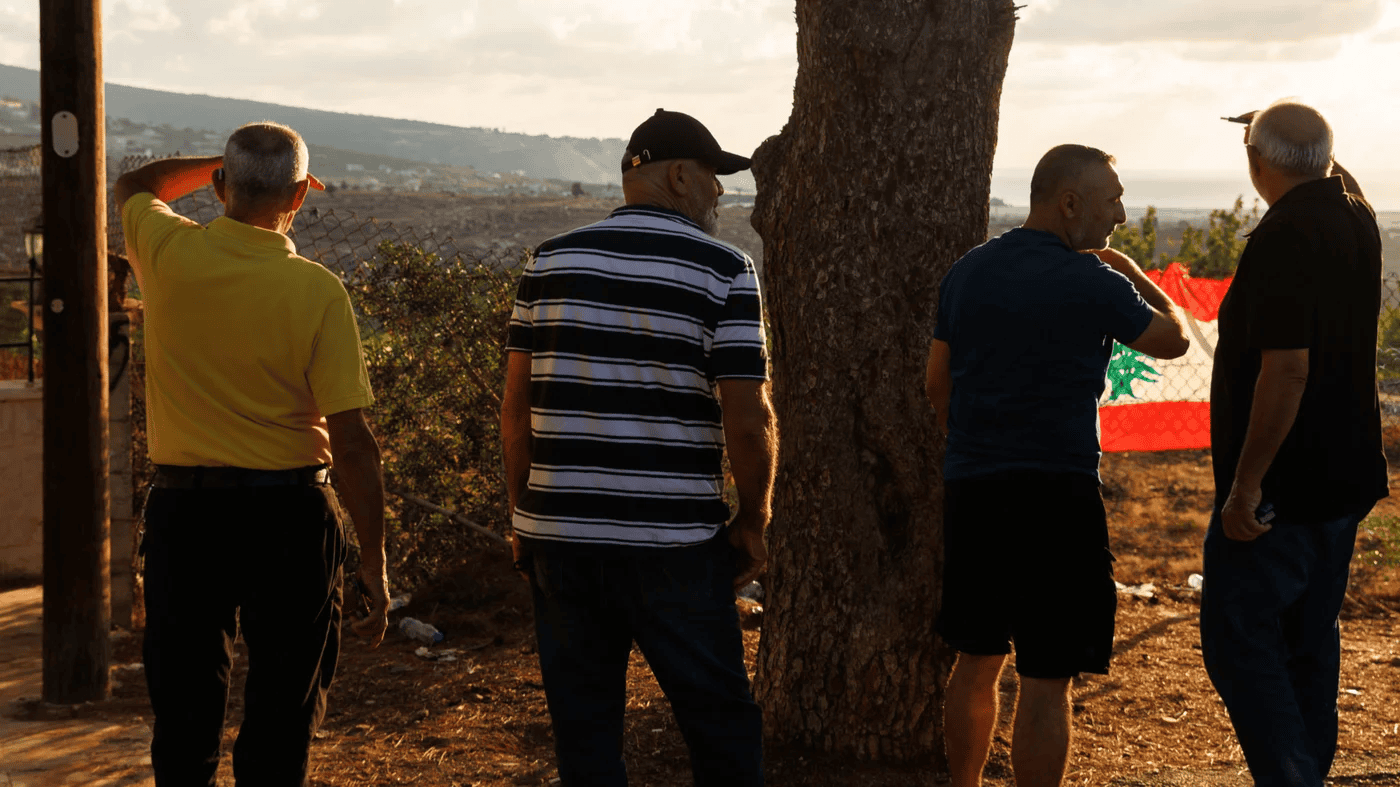
In the neighbouring village of Haniyeh, which Lebanese civilians can still reach by car, dozens of displaced people from al-Mansouri gather daily on a rise that clearly overlooks their village.\
From there they watch Israeli forces operating inside the town.\
Ahmad, a 47-year-old man, placed his phone on a stand by the roadside and began live-streaming what is happening on Facebook in an attempt to document the destruction of his village.\
He pointed to a yellow house on the horizon, saying it was his home and the only one still standing among the houses around it.\
For him, the question is no longer whether his home will be demolished, but when its turn will come.
Beside him was Ali, a resident of al-Mansouri whose house was destroyed during the war, watching the land where he used to work before the displacement.\
He said: "It is worse than anything. I no longer have work. I had farmland below the village. Look, the smoke is rising from there; they are burning my land."\
Despite this, he said he insists on staying at the closest possible point to his village because he does not want to abandon it.
Drones placing explosives on homes\
Residents say the destruction is not limited to shelling or the use of bulldozers.\
One resident showed a clip he said was filmed in recent days, showing an Israeli drone slowly lowering an explosive device suspended on a rope and placing it on the roof of a building, before the place exploded minutes later.\
During the reporter's presence with the residents, a cloud of dust was seen moving along one of al-Mansouri's roads as Israeli vehicles advanced, while a resident who was watching the village through binoculars said he had seen a machine removing the rubble of a demolished house and turning its site into an empty plot of land.\
Ibtisam, a 38-year-old woman from al-Mansouri, says the scene is repeated almost daily:
"Every day something happens. One day they shell, and the next day they send in the bulldozers. And sometimes devices they planted inside our homes explode. It is torture; they are destroying our lives before our eyes."\
But she added: "This land is everything to us. We will return and rebuild, God willing."
نحو 460 كيلومترًا مربعًا جنوب «الخط الأصفر»
According to the report, the issue is not limited to al-Mansouri.
It is one of 63 villages located in the area controlled by the Israeli army south of the "Yellow Line", which covers an area of approximately 460 square kilometres.\
Residents say they feel abandoned, both by the international community and by the Lebanese state, at a time when the Lebanese army is not visible in the areas to which they have lost access.\
During the summer, al-Mansouri residents organised a peaceful sit-in near a Lebanese army post in al-Amiriya under the slogan "al-Mansouri is not occupied", demanding an end to the shelling and the return of the Lebanese army to their village.
Participants said they were prepared to walk into the town alongside the army once a decision to enter was taken.
But one resident said nothing has changed since then: "We have been left alone with our village. Since then no one has helped us at all, while we are still displaced and no one has work."
مخاوف من منع السكان من العودة
Al-Mansouri, along with other towns such as Talousa and Mais al-Jabal, has become one of the main areas of current Israeli military operations in south Lebanon.\
According to the report, many Lebanese believe that the demolition operations aim to complete the destruction of border areas in a way that makes the return of their residents more difficult, allowing Israel to consolidate its presence on the ground for a long period.\
However, this represents Lebanese interpretations and concerns cited in the report, not a publicly declared Israeli objective.
The operations continue despite the framework agreement concluded on 26 June, which was supposed to test different arrangements in three areas: Froun, Sreifa and Zawtar al-Gharbiya.\
Under those arrangements, the Lebanese army was to gradually regain control on the ground, secure the towns and prevent any unauthorised armed presence, in coordination with a mechanism led by the United States to monitor implementation of the agreement.
احتكاكات بين الجيشين اللبناني والإسرائيلي
However, implementation on the ground has faced obstacles.
In Zawtar al-Gharbiya, Israeli soldiers were accused of opening fire near Lebanese army personnel while deploying in the area.\
On 18 September, an Israeli force approached a Lebanese army post in Deir Mimas and threw sound bombs around it, causing a confrontation that was contained after the coordination mechanism supervising the agreement intervened, according to the report.\
This reflects the gap between the announced arrangements and the reality experienced by residents of the border areas.\
While the demolition operations continue, the residents of al-Mansouri remain on the hills opposite, watching their village house by house; some document what is happening with their phones, some follow through binoculars, while others await the fate of the few homes still standing.\
For them, the ceasefire no longer means the end of the war; the shelling may stop one day, but the bulldozers and explosives keep changing their village before their eyes, while the question of return remains unanswered.


