

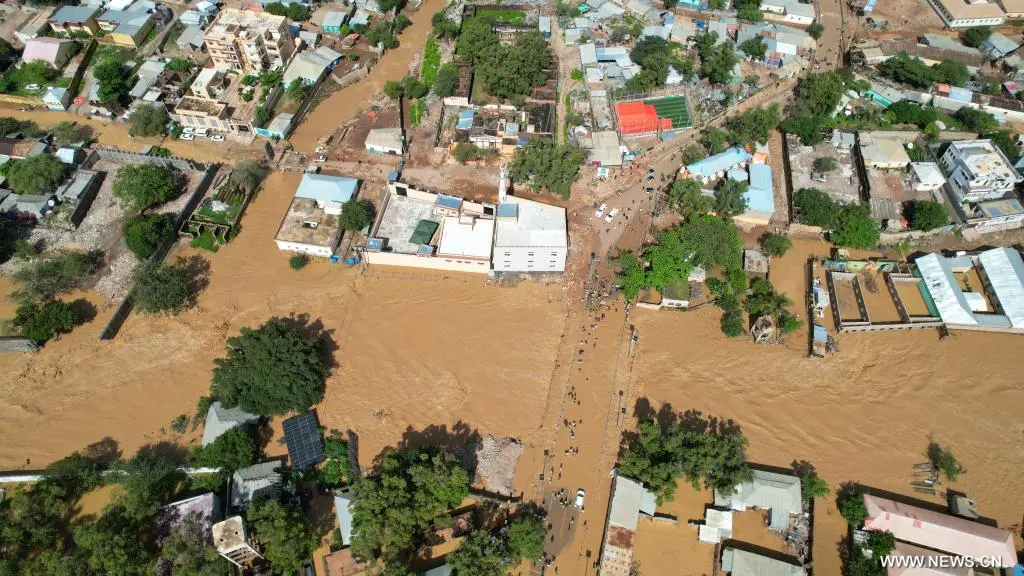
At least 175,000 people were affected by heavy rains and flash floods that hit various parts of Somalia during October, while UN agencies have warned of the possible displacement of hundreds of thousands during the current rainy season, amid ongoing armed conflict, deteriorating food security and a shortage of humanitarian funding.
The UN Office for the Coordination of Humanitarian Affairs (OCHA), in an update published at the beginning of November, said the rains linked to the El Niño phenomenon had flooded homes, shelters, health facilities, schools and water sources, increasing the vulnerability of people already affected by drought and displacement.
Galkacyo in Galmudug, Abdwaq in Galgaduud, and Baidoa in Bay region are among the areas most affected in October.
Thousands of Homes and Service Facilities Affected
According to data from the humanitarian coordination teams, the floods destroyed 1,515 shelters and homes, and damaged 4,498 others.
Floodwaters also submerged or damaged 2,110 latrines, 137 water sources, 72 schools and 55 health facilities.
These damages increase the risk of the spread of diseases linked to contaminated water, and disrupt education and healthcare, particularly in displacement camps that lack adequate drainage networks.
Rainfall monitoring data recorded high precipitation in some areas, with rainfall recorded in Baidoa up to 19 October reaching about 279% of the usual monthly average.
874,000 People at Risk of Displacement
On 21 October, the International Organization for Migration (IOM) warned that about 874,319 people may be forced to leave their homes between October and December 2026, as a result of the floods and other risks associated with the season.
The organisation said the floods could be responsible for 92% of the expected displacement, according to estimates it prepared in cooperation with the Danish Refugee Council.
In a broader estimate conveyed by government and humanitarian bodies, the number of people at risk of displacement could approach one million if the floods worsen.
However, these figures represent future scenarios and not a tally of people who have already been displaced.
At the same time, UN estimates indicate that up to 3.4 million people may be exposed to flood risks during the last three months of the year, particularly in Hiraan, Middle Juba and Lower Juba.
Baidoa: Floods on Top of a Hunger Crisis
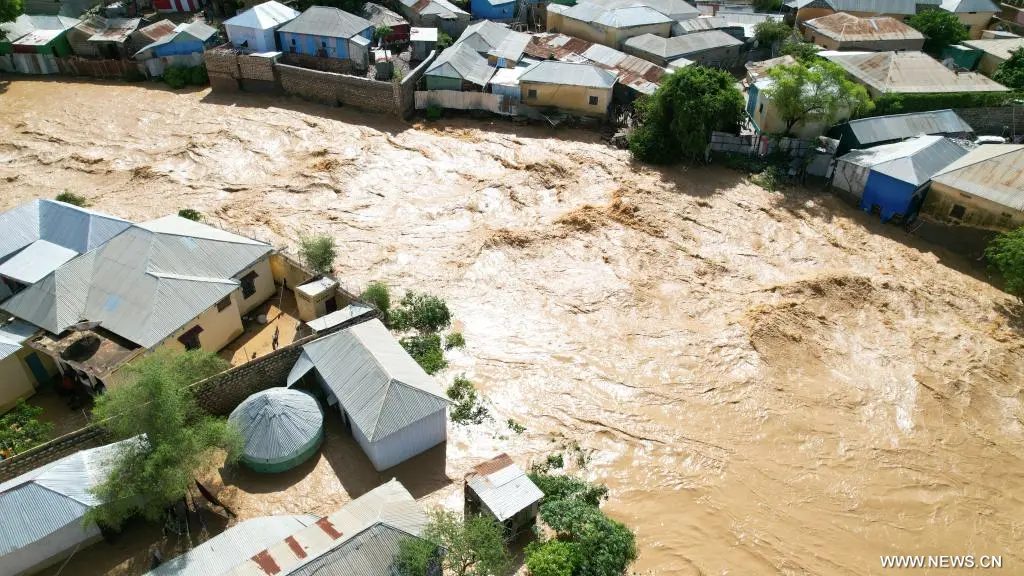
The city of Baidoa and the displacement camps surrounding it face extremely serious humanitarian conditions, with floods, displacement, armed conflict and food shortages occurring at the same time.
In September, the United Nations had warned that around 5.4 million people may face high levels of acute food insecurity between October and December.
The estimates include about 1.5 million people who may reach the emergency phase or worse.
The results of the Integrated Food Security Phase Classification also warned of the risk of famine among some displaced people in Baidoa, in a scenario in which floods, displacement and disruption of services worsen.
Humanitarian organisations stress that this warning does not mean that a famine has been declared, but rather indicates the possibility of one occurring if the worst conditions combine without an adequate response.
Limited Funding and Early Action
Humanitarian actors have activated an early response plan for the floods, backed by eight million dollars, seven million of which come from the UN Central Emergency Response Fund and one million from the Somalia Humanitarian Fund.
Measures include issuing early warnings, providing cash assistance, protecting livelihoods, and storing supplies in the areas most at risk.
However, the International Organization for Migration announced that, as of 21 October, it had received only about 14.4% of the 16.62 million dollars it requires for its flood response.
The funding shortfall, together with insecurity and difficulty accessing some areas, increases the risk that the floods will turn into a broad displacement crisis.
In a country whose communities have suffered the effects of drought and armed conflict for years, heavy rains are not only a seasonal hazard, but may become an additional factor in the loss of homes, livestock, crops and livelihoods, deepening the crises of hunger and displacement.


