


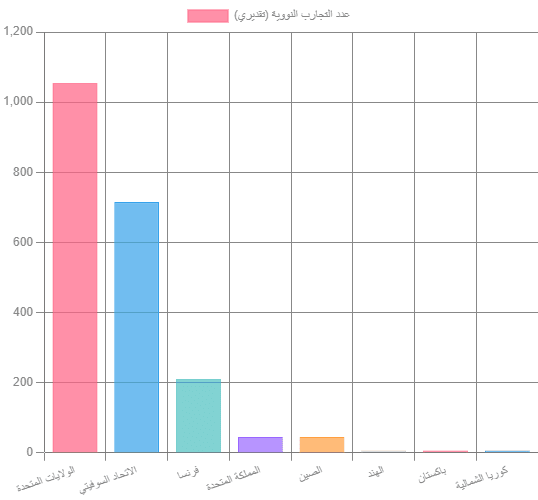
- More than 2,000 nuclear tests: Since 1945, the world has witnessed more than 2,000 nuclear tests at multiple sites, beginning with the historic "Trinity" test.
- American and Russian sites: The United States led with the Nevada test site and the Marshall Islands, while the Soviet Union conducted tests at Semipalatinsk and Novaya Zemlya, including the "Tsar Bomba" detonation.
- Destructive environmental and human impacts: These sites left a legacy of radiological contamination, displacement of residents, and long-term health problems for surrounding communities, making some of them World Heritage sites or uninhabited zones.
Since the mid-twentieth century, the Earth has entered a new era of scientific progress and geopolitical challenges, embodied in the development of nuclear weapons. To perfect this destructive technology, vast stretches of deserts and remote islands were turned into real laboratories for testing nuclear bombs.
These sites, which were once quiet or inhabited areas, have now become symbols of destructive scientific prowess and the deep environmental and humanitarian repercussions of these tests. This era began on 16 July 1945 with the "Trinity" test in the New Mexico desert, opening the way to more than 2,000 nuclear explosions around the world until 1998.
Origins and History: The Beginning of the Nuclear Age
Nuclear tests were not merely scientific events; they were pivotal moments in human history that reshaped balances of power and raised deep concerns about the future of the planet. Each test represented a new step in the arms race, through which states sought to demonstrate their strength and develop their military capabilities. These tests led to the establishment of a number of sites whose names became closely associated with the history of nuclear weapons.
The Spark of the Beginning: The Trinity Site
The Trinity Site (Trinity Site) in New Mexico, United States, is the place from which the spark of the nuclear age was launched. On 16 July 1945, the Jornada del Muerto (Jornada del Muerto) desert witnessed the first nuclear explosion in the world, as part of the Manhattan Project. This test, named "Trinity," heralded the start of the era of nuclear weapons and left an indelible mark on human and scientific history.
Notable Nuclear Test Sites Around the World
Nuclear test sites were spread across continents and oceans, chosen carefully for their relative isolation or for strategic reasons, and each site left its own imprint on the nuclear historical record.
The Main American Sites
Nevada Test Site (Nevada Test Site)
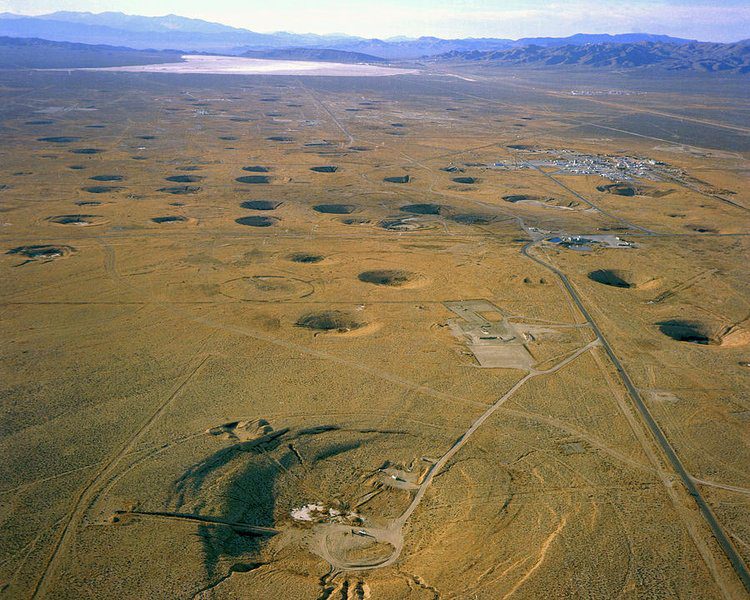
The Nevada Test Site, located about 65 miles north of Las Vegas, is considered one of the most important and most heavily used sites in the history of American nuclear testing. Between 1951 and 1992, 928 nuclear tests were conducted there, 828 of them underground. The site has now become the Nevada National Security Site (NNSS), while retaining its historical role as a large-scale laboratory for evaluating weapons and their effects. Aerial images of the site show deep, wide craters resulting from these explosions, reflecting the magnitude of the destruction they caused.
Pacific Islands: Bikini and Enewetak
The United States used Bikini and Enewetak atolls in the Marshall Islands as "Pacific proving grounds" for atmospheric and underground nuclear tests between 1946 and 1966. These tests led to the displacement of the indigenous population and caused severe environmental and health consequences, including the "Castle Bravo" test, which was one of the most powerful explosions.
Amchitka Island (Amchitka Island)
Amchitka Island, located in Alaska, witnessed a series of underground nuclear tests in the 1950s and 1970s. These experiments were part of the United States' efforts to model and study the effects of nuclear weapons on the earth and the earthquakes associated with them.
The Main Soviet Sites
Semipalatinsk (Semipalatinsk)
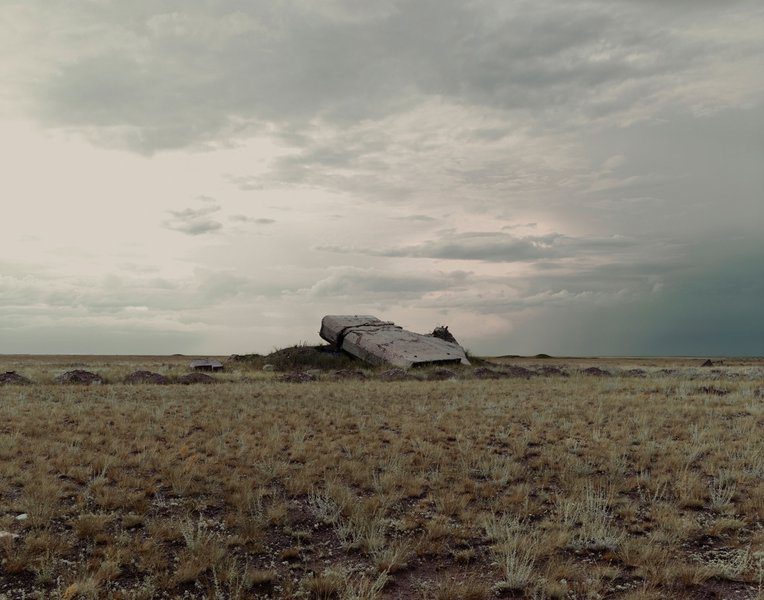
In Kazakhstan, the Semipalatinsk site, also known as "the Polygon," was the Soviet Union's largest nuclear test site. A total of 456 nuclear tests were conducted there between 1949 and 1989, significantly affecting the health of local residents and the environment.
Novaya Zemlya (Novaya Zemlya)
Novaya Zemlya lies in the Arctic Ocean and was a principal Soviet test site. This region witnessed the detonation of the largest hydrogen bomb ever, including the "Tsar Bomba" (Tsar Bomba) in 1961, whose yield reached 50 megatons of TNT.
Testing Sites of Other Countries
Lop Nur Testing Facility (Lop Nur Testing Facility)
In Xinjiang, China, the Lop Nur site was used between 1964 and 1996 for atmospheric and underground nuclear tests. This site is a symbol of China's earlier nuclear efforts and its role in the global arms race.
Mururoa and Fangataufa Atolls (Mururoa and Fangataufa Atolls)
France used these atolls in French Polynesia for its nuclear tests in the Pacific Ocean over several decades. These tests caused significant environmental and political effects in the region and sparked wide-ranging international controversy.
Algeria and French Polynesia (Other French Sites)
France also conducted its nuclear tests in other areas, such as the Algerian desert (at sites such as Reggane) before moving to the Pacific islands. These sites form part of the history of French testing and its repercussions.
Sites of India, Pakistan and North Korea
India (at Pokhran and Pokhran-II), Pakistan (at Chagai), and North Korea conducted their nuclear tests at their own dedicated sites, reflecting the spread of nuclear technology and the emergence of new nuclear powers.
The Repercussions of Nuclear Testing
The effects of nuclear tests were not confined to the moment of the explosion itself; they extended to long-term environmental, health, social and economic repercussions. Many of these sites became hazardous areas because of radiation, affecting wildlife, soil and water. Local residents also suffered serious health problems, including elevated rates of cancer and radiation-related illnesses.
Environmental Impacts
Nuclear explosions caused radical changes in the terrain, creating huge craters and dispersing radioactive materials into the atmosphere, soil and water. These pollutants destroyed ecosystems, and both marine and terrestrial life were affected.
Health and Social Repercussions
Communities near the test sites were affected directly and indirectly. Some communities were forced to leave their lands, lost their traditional livelihoods, and survivors suffered from chronic illnesses and disabilities. Later generations inherited the effects of radiation through congenital deformities and hereditary health problems. Compensation and accountability have become subjects of international debate, as victims seek justice and recognition over time.
The Shift After the Tests: Toward a World Free of Nuclear Weapons?
In the wake of these tests, the world saw a shift in attitudes toward nuclear weapons, as international efforts began to limit their spread and ban testing. Many of the sites that were theatres of explosions became part of heritage and documentation efforts, and some are open to visitors within certain limits, serving as witnesses to this historical era.
The Future of These Sites
Governments and international organisations continue to work on addressing the long-term repercussions of these sites, including radiation clean-up and monitoring of health effects. At the same time, these places serve as a permanent reminder of the need to preserve global peace and work toward a world free of nuclear weapons.
Thus, the sites that became laboratories for nuclear bombs stand as silent testimonies to a critical era in human history. From the New Mexico desert to the Pacific islands and the vast plains of Kazakhstan, each place tells a story of a feverish arms race and of deep environmental and health repercussions.


