


Although its area does not exceed 25 square kilometres, the Shebaa Farms are among the most contested border areas in the Middle East. Since its occupation in 1967, this mountainous tract, which was once a source of livelihood for farmers and grazing land for residents, has become a political, legal and security knot where Lebanese, Syrian and Israeli interests intersect, and it is constantly invoked in the context of the regional conflict and narratives of "resistance". Amid conflicting maps, the absence of a final border demarcation, and the continued Israeli occupation, the Shebaa Farms have remained an open file whose repercussions extend beyond land ownership to affect the balance of power in the region.
In this report, we shed light on the historical and legal roots of the Shebaa Farms question, its geographic and strategic importance, the reasons the dispute persists, and a reading of recent developments and their repercussions for the Lebanese and Syrian arenas and the future of the conflict in the region.
The Historical Background and Complex Legal Status
The origin of the dispute over the Shebaa Farms dates back to the French Mandate period, when the border between Lebanon and Syria was not finally demarcated, creating a state of ambiguity about sovereignty over the area. With the Israeli occupation of the Golan Heights in 1967, Israel extended its control over the Shebaa Farms and considered them part of the occupied Syrian Golan, turning them since then into one of the most complex border issues in the region.
Lebanon maintains its claim to sovereignty over the farms, relying on ownership documents, land registries and local testimonies, as well as a 1964 decision by a joint Lebanese-Syrian committee that considered the area Lebanese. For its part, although Damascus supported the Lebanese position at earlier stages, it has not completed an official and final demarcation of the border that establishes the farms' affiliation with Lebanon under international law. Syrian President Ahmed al-Sharaa has revived the debate by affirming the existence of a disagreement between Damascus and Beirut over the area's affiliation, stressing that the priority must be liberating it from Israeli occupation before settling the question of sovereignty.
As for what is called "Israel", it continues to consider the Shebaa Farms part of the Syrian Golan it occupied in 1967, and it refuses to withdraw from them under Resolution 425 concerning southern Lebanon, asserting that they are subject to Resolutions 242 and 338 concerning the occupied Syrian territories.
The United Nations position rests on the same view: the organisation classifies the Shebaa Farms as occupied Syrian territory and considers that the documents submitted by Lebanon are insufficient to change the existing legal status. The international organisation has repeatedly called on Lebanon and Syria to complete an official and final demarcation of their border, considering this step the legal basis for resolving the dispute over the farms.
Strategic Importance and Its Role in the Conflict
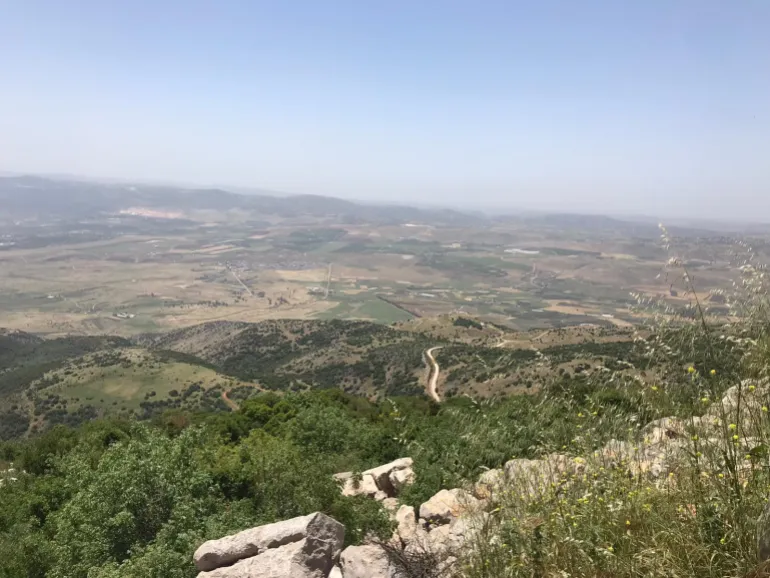
The importance of the Shebaa Farms is not limited to being a disputed border area; it also stems from its sensitive geographic location, which links southern Lebanon, the occupied Syrian Golan and northern occupied Palestine. Its mountainous terrain and its elevation overlooking wide areas give it considerable military and security value, as it allows monitoring of movements on both sides of the border and control of strategic roads and sites.
These characteristics are among the main reasons for Israel's insistence on controlling the farms, as part of the defensive system linked to the occupied Golan, while Lebanon sees them as occupied land that should be recovered within any future settlement.
On the other hand, the Shebaa Farms have been one of the principal pillars Hezbollah has relied on to justify continued armed activity after the Israeli withdrawal from southern Lebanon in 2000. The party maintains that the withdrawal was not complete while the farms remained under occupation, and it considers their liberation part of the mission of "resistance". Since then, the issue has become a key element of the party's political and military discourse, and one of the most prominent points of tension on the Lebanese-Israeli border, where confrontations and military escalation between the two sides recur.
Recent Developments and Their Impact
The Shebaa Farms file returned to the centre of political debate with what Syrian President Ahmed al-Sharaa said in June 2026, when he affirmed that his country does not intend to engage in a detailed dialogue on border demarcation with Lebanon at the present stage, noting that the Shebaa Farms question remains among the most complex files because of the continued Israeli occupation on the one hand, and the continued disagreement over their affiliation between Damascus and Beirut on the other.
Al-Sharaa stressed that Damascus's priority is ending the Israeli occupation of the farms before moving on to discuss sovereignty and border demarcation, warning that raising these files at the present time could open the door to new disputes in the border areas, particularly given the geographic overlap between a number of villages and towns. This position reflects a Syrian approach that places postponed sovereignty files within a later phase, at a time when Damascus is focused on reorganising its internal situation following the political change the country has undergone.
Observers believe that postponing a decision on the legal status of the farms means the continuation of the ambiguity that has surrounded the area for decades, which keeps the file present in political and security calculations. The absence of a final Lebanese-Syrian agreement on the affiliation of the Shebaa Farms also gives the various parties room to continue employing the issue within their political and strategic positions, and makes it one of the influential questions in the future of Lebanese-Syrian relations and in any possible settlement of the conflict over Lebanon's southern border.
The Shebaa Farms and the Broader Regional Conflict
The Shebaa Farms question cannot be viewed in isolation from the broader regional scene, as it intersects with complex political, security and humanitarian files that go beyond the matter of border demarcation between Lebanon and Syria. Relations between the two countries remain burdened by outstanding issues, most notably the question of Syrian displaced persons, border control and security coordination, which Beirut and Damascus both see as requiring balanced treatment within a comprehensive framework that reorganises bilateral relations.
At the same time, the Shebaa Farms file features within international efforts aimed at calming the Lebanese-Israeli border. As tension rises in southern Lebanon, diplomatic moves led by the United States and international partners are continuing to discuss security arrangements that include an Israeli withdrawal from some border areas, in exchange for strengthening the deployment of the Lebanese army and implementing the commitments of Security Council Resolution 1701. The success of these arrangements remains tied to the fate of the outstanding border issues, foremost among them the Shebaa Farms.
The farms also occupy a pivotal place in the equation of the conflict between Hezbollah and Israel. The party considers them occupied Lebanese land and relies on their continued occupation as one justification for keeping its weapons. Its opponents, by contrast, argue that settling the legal status of the farms, whether through border demarcation or an international agreement on them, could change the nature of the internal debate over the weapons and their role, and affect the political and security balances within Lebanon, as well as the regional influence of the forces involved in the conflict.
Challenges to Future Solutions
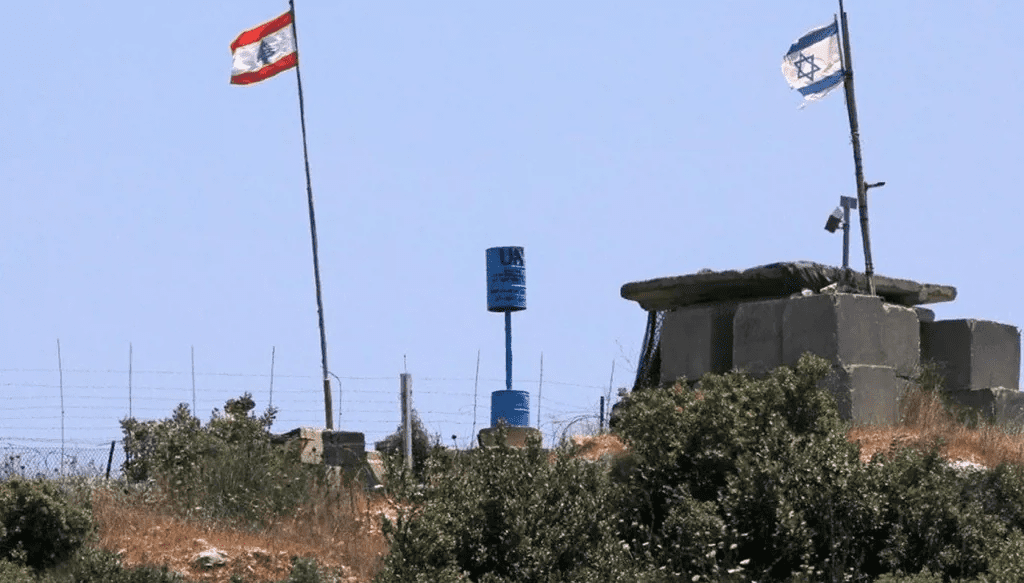
Reaching a final settlement of the Shebaa Farms question remains contingent on a set of legal and political complexities that have accumulated over decades. Demarcating the border between Lebanon and Syria is the essential step toward settling the debate over the area's affiliation, a demand the United Nations has reiterated on the basis of the border divisions imposed by Western occupation on Greater Syria.
In this context, the Syrian position is one of the decisive elements in the future of the issue. While Damascus insists on the priority of ending the Israeli occupation before engaging on the sovereignty file, observers argue that any official and documented Syrian recognition of the Lebanese affiliation of the Shebaa Farms would strengthen the Lebanese position internationally and give Beirut a stronger legal basis for demanding their recovery.
By contrast, Israel holds to its position that the Shebaa Farms are part of the Golan Heights it occupied in 1967, and it refuses to treat them as Lebanese territory, which means that any settlement is also tied to the course of the Arab-Israeli conflict and the future of the occupied Golan.
The complexity of the file is not confined to its border dimensions; it extends to the political and security balances within Lebanon, where the farms question is tied to the ongoing debate over the role of Hezbollah and its weapons. The party regards the continued Israeli occupation of the farms as evidence that Lebanese territory is still occupied, while its opponents argue that settling the legal status of the area could open the way to a new phase of internal debate over the future of the weapons and their role in the Lebanese equation.
Given the intertwining of these factors, the Shebaa Farms appear to be more than a disputed border area; they represent a knot where considerations of sovereignty, international law and regional security converge, making a final solution dependent on broader political understandings that reach beyond Lebanon and Syria to the overall arrangements for stability in the "Middle East".
Conclusion
Over decades, the Shebaa Farms have shifted from an agricultural area known for the fertility of its land, on which hundreds of families depended for farming and herding, into one of the most complex flashpoints of conflict in the "Middle East". Between the Israeli occupation, the dispute over their legal affiliation, and the absence of a final border demarcation between Lebanon and Syria, the landowners have remained the greatest losers, many of them having been denied access to their land and its use, turning the farms from a source of production and development into an arena of conflict and regional manoeuvring.
Observers believe that any sustainable settlement of this file cannot be achieved except through an integrated process that begins with demarcating the Lebanese-Syrian border according to the rules of international law, and is accompanied by addressing the legal status of the farms and ending the Israeli occupation of them, so as to restore rights to their owners and remove one of the most prominent causes of tension on Lebanon's southern border. However, this view overlooks the reality of the Israeli occupation as a factor that continually generates turmoil and instability in the region through its expansionist ambitions.
Despite their small area, the Shebaa Farms have long since moved beyond being a disputed geographic patch to become a point where considerations of sovereignty, security, international law and regional balances intersect. Until this knot is resolved politically and legally, the farms will remain one of the most sensitive issues in the Levant and a constant factor in the equations of conflict, while the land that was once a symbol of agriculture and production remains hostage to regional disputes and awaits a long-delayed settlement, one that appears unlikely to be achieved without a full uprising against the reality of the Middle East imposed on its inhabitants by Western occupation.


