

Raids, arrests and settler attacks on farmers in the West Bank, and the storming of the Ibrahimi Mosque in Hebron
Israeli occupation forces and settlers escalated their attacks in various areas of the occupied West Bank, carrying out nighttime raids and arrests that targeted a number of Palestinians, alongside attacks on farmers, their land and olive crops, in a scene that reflects the widening violations against residents and their sources of livelihood.
Several areas of the West Bank witnessed raids during last night, accompanied by arrests, while settlers continued their attacks throughout the day, targeting farmers while they worked on agricultural land, stealing crops and equipment, and vandalising property and infrastructure.
Settler attacks on olive farmers south of Nablus
In the town of Beita, south of Nablus, settler militias attacked farmers in the Al-Dhahira area, stealing their equipment and the olives they had harvested, in an attack that targets those working on their land and threatens the olive harvest season, which is a basic source of income for many Palestinian families.
Read also: The "Abrahamic" movement and its Syrian branch: a reading of the normalisation project
The danger of these attacks is not limited to direct material losses; it extends to an attempt to squeeze farmers and push them away from their land, amid repeated attacks targeting fields and agricultural property in various parts of the West Bank.
In a related development, settlers destroyed electricity poles that supply the new Burin suburb south of Nablus governorate, causing damage to infrastructure and threatening to disrupt essential services on which residents depend in their daily lives.
Detention of farmers and confiscation of olives in Jenin
In Jenin governorate, settlers accompanied by Israeli occupation forces detained farmers on land in the town of Arraba and confiscated the olives they had managed to harvest.
This attack reveals the scale of the risks Palestinian farmers face while on their land, as the attacks include not only threats and vandalism but also the seizure of crops after long efforts in planting, tending and harvesting them.
The confiscation of olives is a direct blow to landowners and their families, especially as the agricultural season represents an important economic resource, in addition to the olive tree's bond with the land, identity and Palestinian heritage.
Thousands of settlers storm the Old City and the Ibrahimi Mosque
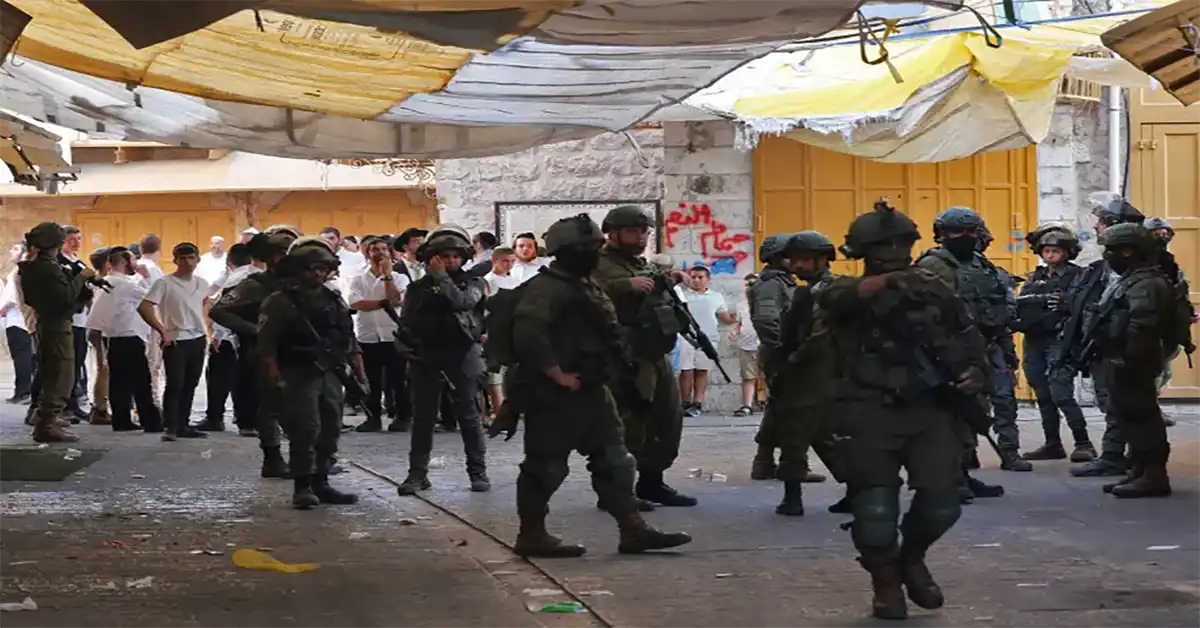
In the city of Hebron in the southern West Bank, thousands of settlers stormed the Old City and the Ibrahimi Mosque to mark what is known as the Jewish "Sarah's Life" or "Sarah's Sabbath" holiday, amid tight security measures imposed by Israeli occupation forces on the area.
Read also: Working for the sake of God: reward and intention, not reputation and show-off
The raids were accompanied by restrictions on the movement of Palestinians, which increased the difficulty of residents' movement in the Old City and around the Ibrahimi Mosque, at a time when the area witnessed an intensive deployment of occupation forces to secure settlers' movements.
The Ibrahimi Mosque holds a great religious and historical standing for Muslims; it is among the most prominent Islamic landmarks in the city of Hebron. Targeting it and restricting worshippers' access to it is a source of continuing concern for Palestinians, in light of the Israeli measures imposed on the mosque and the Old City.
These raids also raise residents' fears of continued restrictions on the Palestinian presence around the mosque, and on freedom of worship and movement, particularly as the area is turned into a military zone during events organised by settlers.
Continued escalation targeting the land and the Palestinian people
These attacks come within a continuing escalation in the occupied West Bank, where military raids and arrests intertwine with settler attacks on villages, agricultural land and Palestinian property.
Palestinian farmers face growing challenges in reaching their fields and protecting their crops, while infrastructure and private property are subjected to vandalism and assault, in practices that add to the economic and livelihood burdens on Palestinian families.
The attacks witnessed in Beita, Burin, Arraba and Hebron confirm that the escalation does not target a single area, but reaches different sectors of Palestinian life, from agriculture and sources of income to freedom of movement and worship and the protection of property.
Amid the continuation of these violations, calls are renewed for the protection of Palestinian civilians and their farmers, an end to settler attacks, guaranteed freedom of access to agricultural land and mosques, and respect for the basic rights of residents of the occupied West Bank.


