


The political and religious arena in the occupying entity has witnessed a new wave of controversy following provocative remarks made by Rabbi Dov Landau, the spiritual leader of the Haredi Degel HaTorah party, who considered that religious Jewish soldiers serving in the Israeli army commit "murder" if they take part in wars that do not aim to defend the state. The remarks drew angry reactions within the government and prompted Prime Minister Benjamin Netanyahu to issue a rare condemnation of statements by one of the senior Haredi rabbis.
Direct accusation against religious soldiers
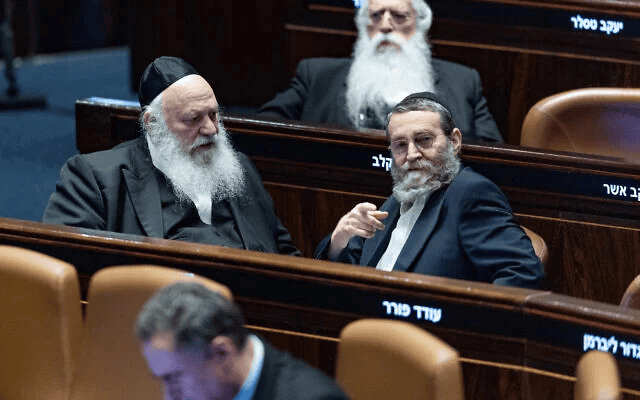
During a meeting held at his home in the city of Bnei Brak with officials of the "Mir" yeshiva, Rabbi Landau sharply criticised members of the religious Zionist current who perform military service in the Israeli army.
He asked: "If the state sends soldiers for the honour of the state, and they go and kill people, is this also permissible? This is killing in every sense of the word."
He added that the Israeli authorities "incite to killing, and wage wars not for the sake of salvation, but for the sake of the dignity of the state."
These remarks are among the most severe positions announced by one of the most prominent leaders of the Haredi current against military service, at a time when the crisis of conscription of religious Jews is escalating.
Division within the ruling coalition
Landau's remarks highlighted the extent of the division within the governing coalition between the Haredi parties that reject military service, and the religious Zionist parties whose members participate widely in the army, especially in combat units.
Many members of the national religious current hold the Haredim responsible for the worsening shortage of manpower in the army, after tens of thousands of yeshiva students have continued to be exempted from conscription, forcing reservists to spend hundreds of days in military service.
Netanyahu responds with an unusual condemnation
As the controversy escalated, Prime Minister Benjamin Netanyahu issued a statement defending Israeli soldiers, considering that they sacrifice their lives to protect the state.
Netanyahu said:
This position by Netanyahu is rare, given his political reliance on the Haredi parties, which form one of the pillars of his government.
Haredim defend the rabbi
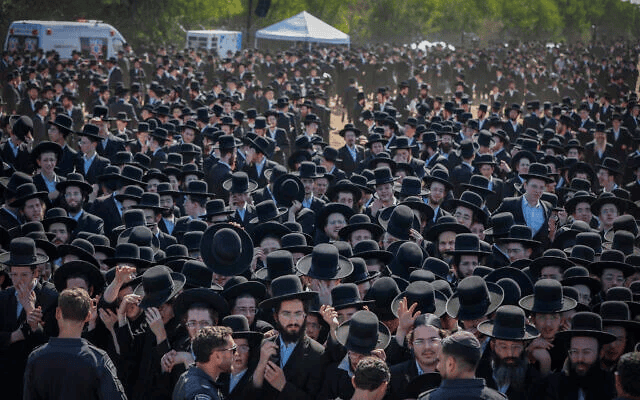
Despite the criticism, the Degel HaTorah party, led by Knesset member Moshe Gafni, hastened to defend Rabbi Landau, affirming that his remarks are "sacred," and that whoever does not understand the religious context of his words "should not rush to interpret them or attack them."
Israeli media also quoted associates of Landau as saying that his remarks were not directed against religious soldiers themselves, but came within a theoretical jurisprudential debate on the legitimacy of wars fought "for the honour of the state" rather than for its defence.
The conscription crisis continues
These remarks come amid an ongoing political and legal crisis over the conscription of Haredi Jews, after the Israeli Supreme Court ruled in 2024 that the continuation of blanket exemptions from military service without new legislation was unlawful.
In an attempt to protect those exemptions, the Knesset last week passed a basic law considering Torah study a "foundational value of the Jewish people," which its supporters see as strengthening the legal justifications for continuing the exemption of yeshiva students from military service.
The Knesset also passed another law granting tens of thousands of Haredim wanted for conscription a temporary immunity from arrest until late January 2027; however, the Supreme Court froze the implementation of the law and set a hearing to consider it on 28 July of the current month.
Tens of thousands outside service
According to official estimates, there are currently some 72,000 Haredi young men aged between 18 and 24 who are eligible for military service but have not joined the army, although the military establishment confirms that it faces a severe shortage of manpower amid continued military operations on more than one front since the attack of 7 October 2023.
Rabbi Dov Landau's remarks reflect the continuing deep division within Israeli society between religious and secular currents, and between the Haredi parties and the religious Zionist forces, in one of the most contentious issues in Israeli politics in recent years.


