


As statements and negotiations continue over the possibility of Rohingya returning to Myanmar, another crisis is deepening inside the camps where they currently live in Bangladesh: humanitarian funding has fallen to levels that threaten education, food, health and child protection, at a time when safe return to Arakan remains far from assured.
The United Nations and its partners have requested US$710.5 million to meet priority needs during 2026, under a plan targeting some 1.6 million people, including Rohingya refugees and host Bangladeshi communities in Cox's Bazar, Bhasan Char, Ukhiya and Teknaf. Ninety-eight organisations and agencies are participating in the plan, roughly half of them Bangladeshi national institutions.
However, the scale of needs faces a significant funding gap.
In early June, the United Nations High Commissioner for Refugees warned that the response plan was funded at only about 60% according to the data available at the time. Data from the United Nations Financial Tracking Service currently show reported funding of about US$351.5 million out of US$710.5 million, or nearly 49.5%. The published percentages may vary depending on when pledges are counted and when funds are recorded as actually received.
Plan scaled back, but the gap remains large
The paradox is that the US$710.5 million figure does not represent an expansion of spending; it came after a reduction in the needs requested compared with last year's plan.
United Nations sources noted that the 2026 plan was cut by about 26% from the 2025 appeal, narrowing further to the most urgent humanitarian needs. In other words, the current shortfall is occurring despite lowering the ceiling of ambition and focusing on essential services.
This means the problem is no longer limited to financing additional projects or improving living conditions in the camps; it now extends to services that humanitarian organisations consider necessary for life itself, including food, health care, water and sanitation, education and protection.
Some 1.2 million Rohingya live in Bangladesh, most of them in the crowded camps of Cox's Bazar, and large numbers depend primarily on humanitarian aid.
Schools were the first casualties
The education sector was among the first to show the impact of the funding shortfall.
During 2025, due to the funding crisis, UNICEF was forced to close nearly 2,800 schools and learning centres in the Rohingya camps, alongside damage to child protection and skills development programmes. The agency was later able to reopen most of its centres after redirecting part of the funding, but other schools and centres run by different organisations remained closed, and concerns persisted about a repeat of the crisis with further cuts.
UNICEF had already warned that hundreds of thousands of children were at risk of losing education because of the funding shortage, in a crisis that goes beyond the suspension of classes to what may happen to children after they leave school.
An investigation by the Associated Press documented rising risks to children after schools closed and protection programmes were scaled back, including early marriage, child labour, abduction, trafficking and recruitment by armed groups. UNICEF data cited in the investigation reported that recorded abduction cases rose by more than four times during part of 2025, and that documented cases of child marriage and child labour also increased.
Here, the funding crisis reveals an impact beyond the numbers: closing a school does not only mean the halting of lessons, but the removal of one of the most important spaces that protect a child within a highly vulnerable camp environment.
Children between study, work and marriage
Testimonies gathered by aid organisations and media outlets showed that some children, after their schools stopped, were forced to work to support their families, while the risks to girls in particular grew.
The Associated Press investigation recorded cases of girls who married at an early age after losing educational opportunities, and children who turned to hard labour or became more exposed to human trafficking networks. Child protection workers also linked the absence of learning centres and activities to increased exposure of young children to exploitation, recruitment and abduction.
These developments are especially serious because most Rohingya children have few broad alternatives outside the camps, while return to Myanmar remains fraught with security and political risks, and many have lived for years in a long-term refugee setting.
Return does not address today's crisis
The funding crisis comes at a time when the question of Rohingya repatriation to Myanmar has returned to the forefront, but talk of return does not cancel current needs.
Even if prospects for return improve in the future, hundreds of thousands of children need education now, patients need treatment, families need food, water and shelter, and the most vulnerable groups need protection programmes.
For this reason, the United Nations plan for 2026 includes two parallel tracks: working towards early, voluntary and sustainable return when conditions allow, and at the same time providing protection and life-saving assistance to refugees and host communities for as long as they remain in Bangladesh.
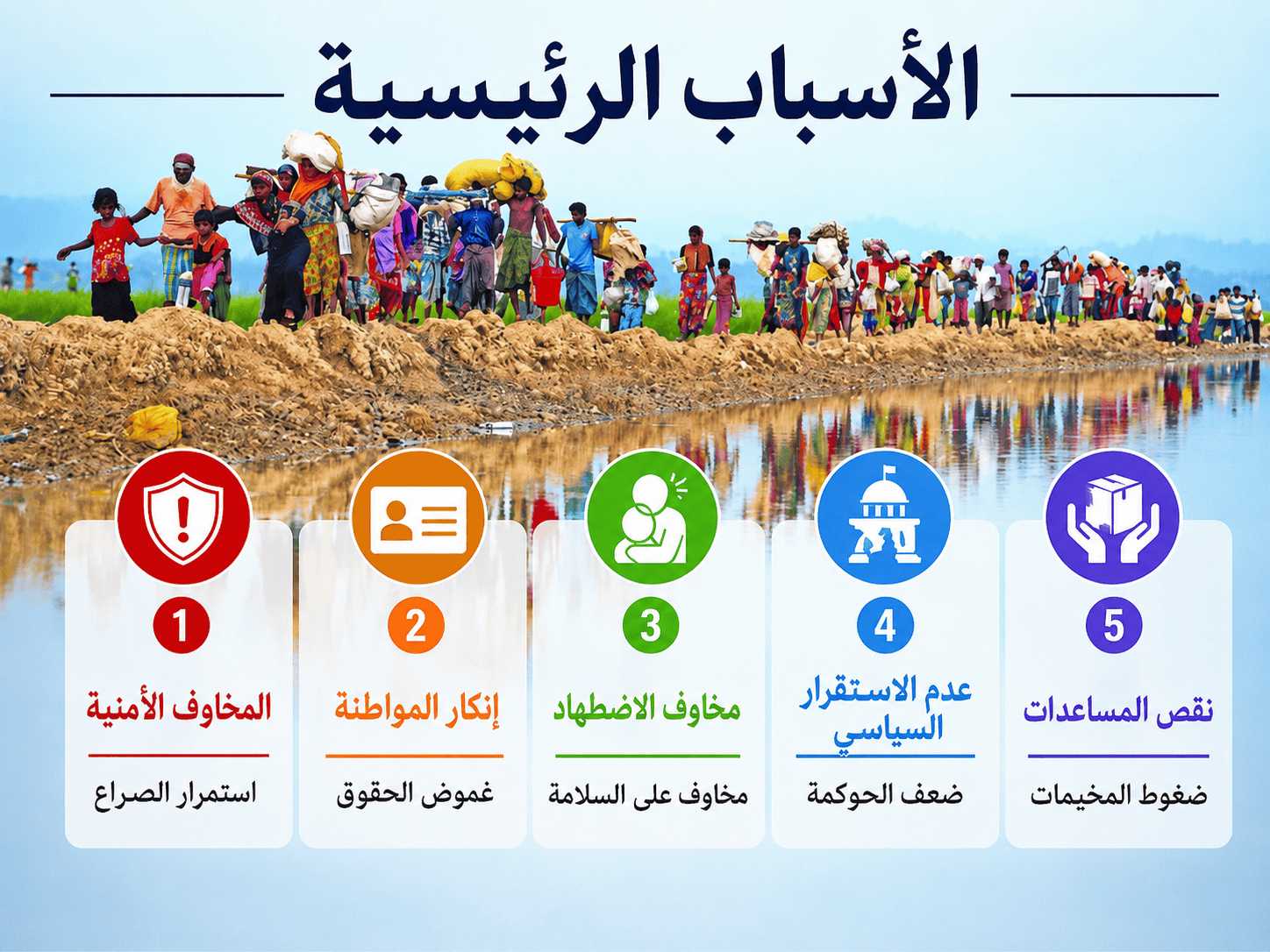
The cost of waning global attention
Nearly nine years after the major exodus of 2017, the Rohingya crisis faces the risk that donors will come to see it as a chronic situation the world has grown used to, rather than an emergency.
But the passage of time does not mean that needs have declined.
Continued displacement, the birth of new generations within the camps, renewed violence in Myanmar, and the arrival of new refugees since 2024 all add pressure to a humanitarian system already suffering from shrinking resources. UNHCR has noted the arrival of about 150,000 new Rohingya in Bangladesh since early 2024 due to renewed violence in Myanmar.
Accordingly, the funding gap does not appear in United Nations reports merely as an arithmetic problem between "required" and "available" amounts; it appears in the lives of the refugees themselves: in a classroom that closes, a meal that may shrink, a child who loses a safe space, or a family that finds itself more exposed to exploitation.
While the international community seeks a long-term political solution to the Rohingya crisis, the camps in Bangladesh raise a more urgent question: how can a solution be awaited for years to come if the resources needed to keep people safe in the meantime are declining year after year?


