


The latest strike on the city of Sako in the Middle Juba region of Somalia was not merely a routine report of a new airstrike in the United States' war against the al-Shabaab movement. What stands out this time is that local accounts spoke of a water purification facility belonging to "Darur" being hit, in an area where sections of the population depend on limited facilities to obtain drinking water.
According to local testimonies relayed by media outlets in the area, the strike took place at around 3 a.m., and the facility was hit by up to three missiles. No human casualties have been recorded according to the available information. The same sources say the facility had already been damaged in earlier strikes, and that the latest attack came after repeated targeting of the site.
But this is where the story becomes more complicated. US Africa Command (AFRICOM) confirmed on 14 September 2026 that it had carried out an airstrike in the vicinity of Sako targeting a facility belonging to al-Shabaab, in coordination with the Somali federal government. However, it did not disclose the nature of the targeted facility and provided no details on casualties or civilian damage.
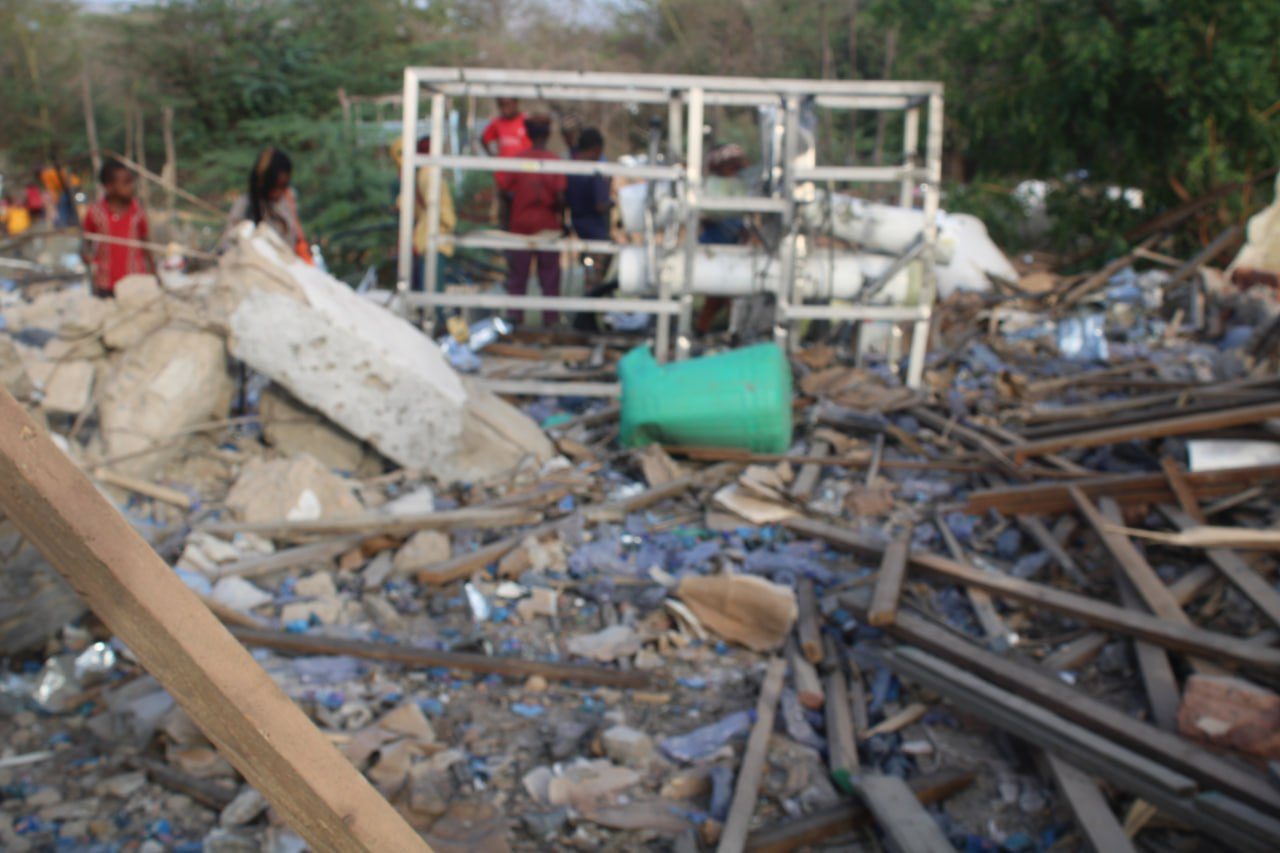
By contrast, images documenting the locally recorded destruction and the extent of the damage indicate that the American missiles hit a water purification facility serving residents. Has Washington, so far, offered any public explanation of why a water station serving the people of the area was targeted?
Why Sako specifically?
Sako is not an ordinary area in US military calculations. It lies in the Middle Juba region, which, according to recent security assessments, has remained one of the most important areas of influence of the al-Shabaab movement.
In January 2026, the Somali government announced that a joint operation with international partners, including the United States, had targeted a facility in Sako that it said was a large plant for manufacturing and preparing explosives.
Yet this does not answer the most important question: if there was indeed a military facility, what was present at the site struck by the missiles? The images show destruction to a water facility.
If the facility is civilian, why is it being struck?
Images circulating from the strike site document the effects of the destruction of a water bottling plant. How did water become explosives?
Did the United States deliberately strike the water plant for a third time, because of a fault in the intelligence it gathers, or because it actually wants to deprive residents of water services?
The matter gains further importance because water facilities are not ordinary civilian installations under international humanitarian law, which the states within the United Nations system are bound by. The rules summarised by the International Committee of the Red Cross grant drinking water installations special protection as objects indispensable to the survival of the civilian population, and prohibit attacking, destroying or rendering them useless with the aim of depriving civilians of their essential needs. Attacks that target military objectives must also observe the principles of distinction and proportionality and the precautions required to protect civilians and vital installations.
Why does the United States not acknowledge striking the water station?
The United States carries out strikes on targets it presents as military victories and achievements, but field investigations have repeatedly found that the targets were purely civilian. Nevertheless, US Command does not acknowledge its mistakes and still denies targeting civilians, limiting itself to statements that speak of terrorist targets.
This creates a large gap between what happened on the ground and what is officially acknowledged.
The party carrying out the strike holds the targeting information, intelligence, aircraft data and images from before and after the strike, while residents or local journalists often have nothing but the traces of the bombing, the location of the impact and the testimonies of those present at the scene.
Most troubling: repeated targeting
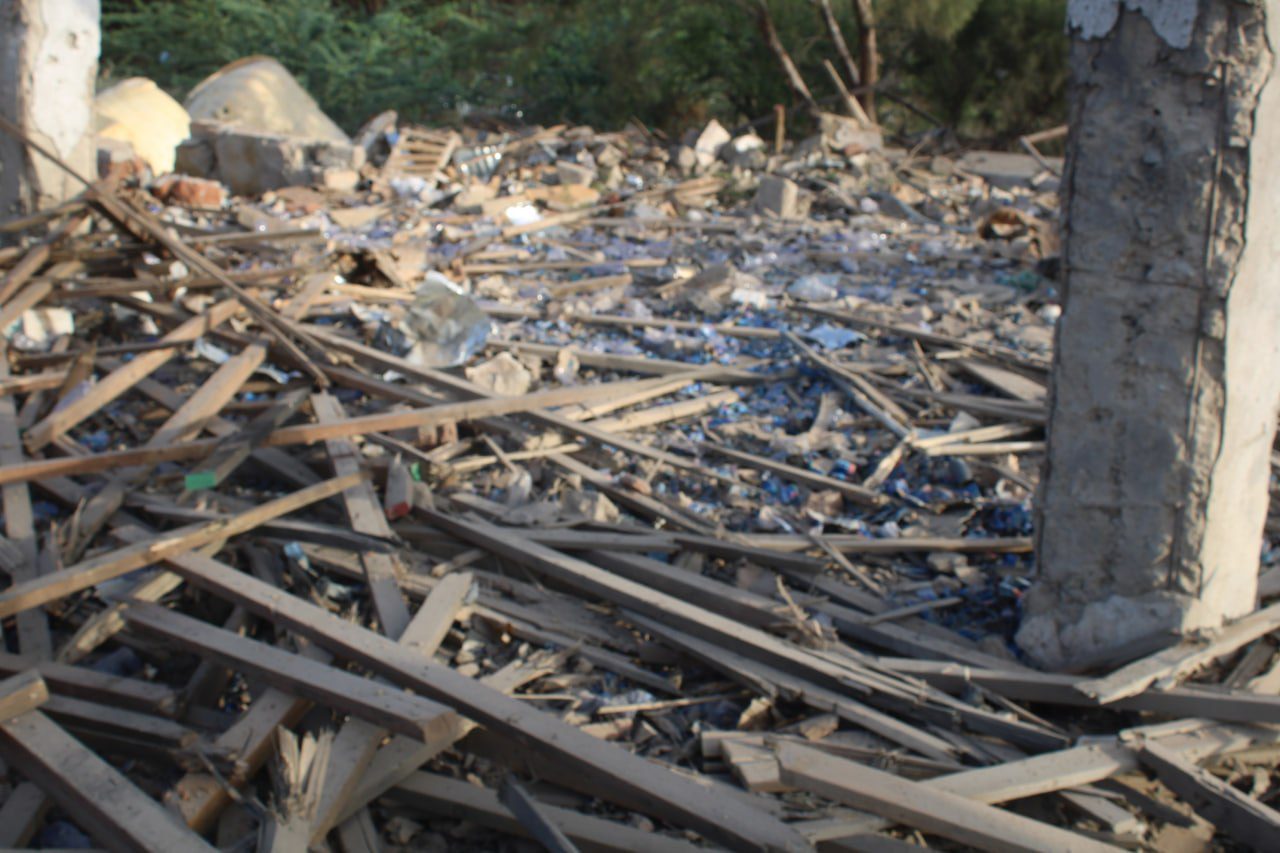
Residents' accounts say the Darur water facility has been struck three times, which takes the issue beyond the latest strike.
If the facility is indeed civilian and was destroyed for a second or third time as a result of airstrikes, the question becomes more pressing: how could the same site be hit repeatedly without this leading to a clear review of the targeting data?
If, on the other hand, the facility was actually being used militarily, the public has a right to know why there is no evidence documenting such military use across three consecutive strikes, and whether it is plausible that a group fighting by guerrilla tactics would use the same site three times in succession after it had been bombed.
These are not marginal questions, because the damage to a water station does not end when the strike does. Disabled pumps or purification equipment can deprive residents of water for far longer than the moment of the attack, and may force them to rely on less safe sources or to carry water over long distances.
Is the aim to pressure residents?
The publicly stated US rationale for the strikes is combating al-Shabaab and weakening its military capabilities. In September 2026, Washington intensified its air operations in Somalia; AFRICOM announced several strikes over closely spaced days, while press reports estimated the number of publicly announced US strikes in the country this year in the dozens.
But striking civilian facilities does not explain US objectives for local residents.
This is why the question presents itself: "Did Washington want to harm the population?"
In the end, the most affected by these bombardments are civilians.
Official silence fuels suspicion
In wars, silence may be understandable in the first hours for operational reasons. But when it concerns a vital civilian facility that, according to local accounts, was struck repeatedly, the continued absence of an explanation leaves a wide space for speculation.
At the very least, the US Command could have clarified: was the water station the target? And if it was not the target, why is a civilian facility being struck three times in succession? Rebuilding the facility after each strike indicates the residents' need for it. It would also be exceedingly foolish for a fighting group to carry out military activity at the same targeted location three times, if the US account were to be examined.
Such information does not necessarily reveal military secrets, but it is necessary to prevent the war on so-called terrorism from becoming a war without transparency for the residents who live in areas of operations.
When residents learn that the water facility they rely on has been destroyed by US bombing, but do not know why it was targeted and destroyed, and receive in return only a statement in formulaic language speaking of striking a target of the youth, this is precisely the gap that makes talk of protecting civilians more than a slogan. It feeds popular anger and even recruitment against the United States and its proxies.
Unless the US leadership respects the rights of civilians, its indifferent policies will continue to fuel the conflict indefinitely.


