

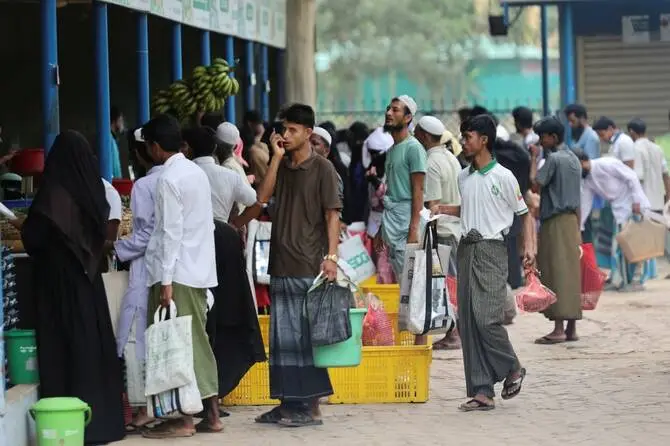
The impact of the US–Israeli war on Iran has already reached Rohingya camps in Bangladesh, where refugees say the indirect effects are further complicating the existing displacement crisis and the decline in humanitarian aid.
Bangladesh relies on imports to meet 95% of its energy needs, and has faced difficulties securing supplies of crude oil and gas from major Middle Eastern sources since the war began on 28 February.
Supplies reaching the refugee camps also come from these imports, through the United Nations High Commissioner for Refugees (UNHCR) and the International Organization for Migration.
The UNHCR spokesperson, Mishrif Hossain, told Arab News:
"Bangladesh relies heavily on imports to meet its fuel needs, and we depend on Bangladeshi suppliers to deliver liquefied petroleum gas to refugees in the camps.
If gas supplies fall, Rohingya families will have no choice but to gather firewood from nearby forests or burn biomass or plastic for cooking… Returning to firewood will undermine years of environmental recovery."
Most of them fled a military campaign in their homeland of Rakhine State in Myanmar in 2017, a bloody campaign that the United Nations described as ethnic cleansing.
In Bangladesh, they depend on international aid, which has declined noticeably since 2021, amid difficulties faced by humanitarian organisations in covering the costs of education, healthcare and food.
In early April, the United Nations World Food Programme reduced food assistance in the Cox's Bazar camps for most refugees, cutting rations for about two-thirds of them from $12 to $10 or $7 per month, depending on the severity of each family's needs.
Syed Ullah, acting chairman of the United Rohingya Council, a rights body in the Cox's Bazar camps, said: "We were already suffering from many crises, and this war has pushed us into even harsher conditions.
On the one hand, my food allocation has been reduced, and on the other, the war has caused the prices of goods to rise… In the current situation, I cannot provide a proper diet for my family or buy nutritious food for my three children."
The rise in the prices of fuel and basic goods has affected daily life in the camps, not only in cooking but also in transport and small income-generating activities, making it difficult for hundreds of thousands of households to meet their basic needs.
900 Rohingya drowned in 2025: the highest toll on record in the "sea graveyard"
Mohammad Arif, a teacher at a community school inside the Cox's Bazar camps, told Arab News that support from Rohingya migrant workers in Middle Eastern countries has also declined, as the war has affected their jobs and they are no longer able to send money to their relatives.
He added: "Many families in the camps have fallen into far greater hardship. Rohingya mothers are being forced to compromise on the quality and nutrition of their children's food. Some 40 to 50% of families are trying to adapt to this shortage."
He continued: "Even small changes in the global situation affect the already fragile living conditions in the camps, and some people are resorting to irregular migration to other countries, risking their lives because of this crisis."
Arab News


