

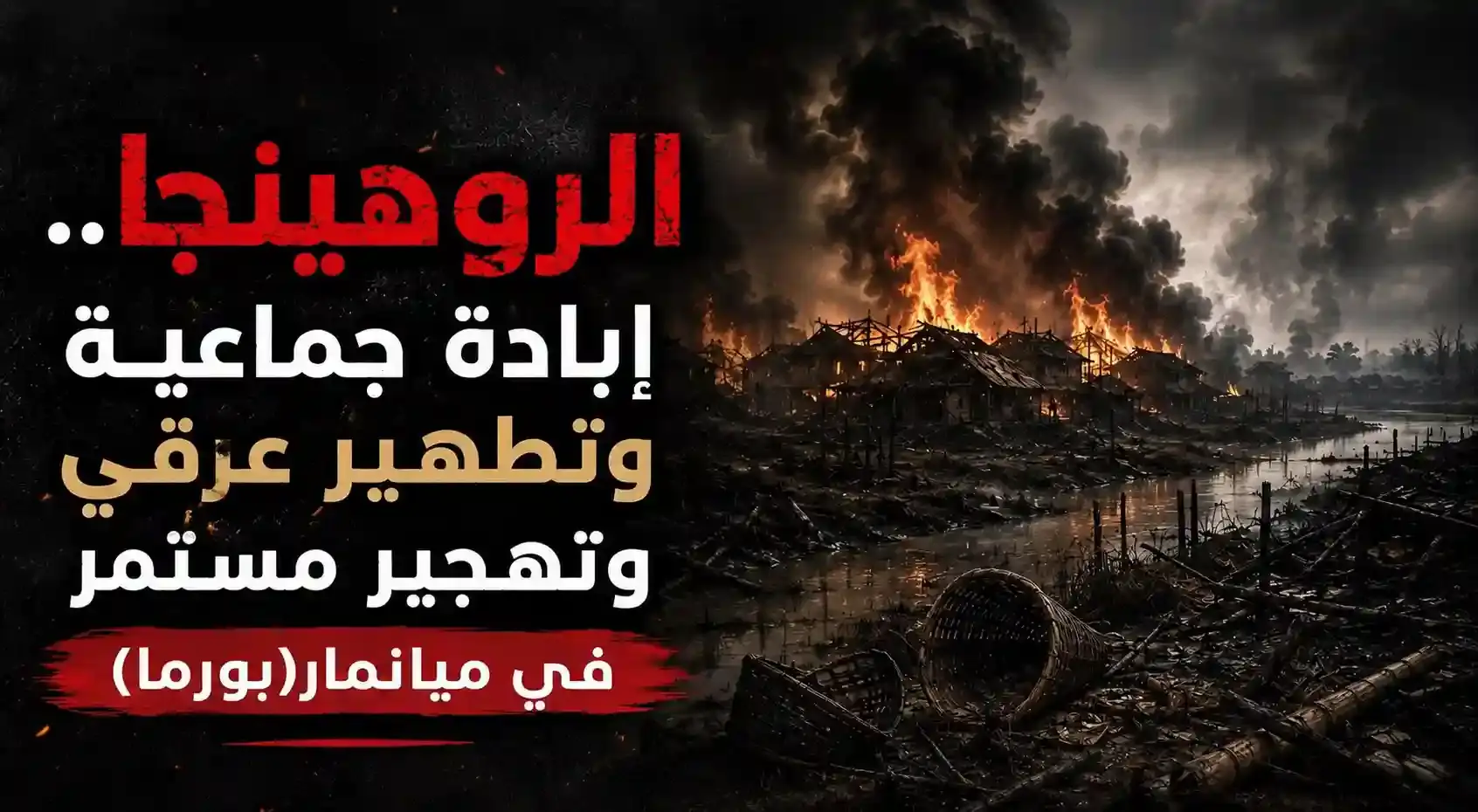
Rohingya refugee camps in Bangladesh are receiving new groups of displaced people fleeing eviction campaigns in India and the deteriorating security situation in Rakhine State in western Myanmar, amid reports of pressure by the Arakan Army armed group to recruit young men from the Muslim minority.
The Rohingya Monitor platform reported in a report published on Sunday, 15 November 2026, that 13 Rohingya refugees, including two families, had arrived at camps in the Ukhia area of Cox's Bazar after crossing the border from India and Myanmar.
The report said that more than 50 other refugees had arrived over the past few weeks, indicating that waves of flight are continuing despite tight security restrictions at the border.
Families fleeing India and Myanmar
According to the report, a family of six from the town of Buthidaung in Rakhine State crossed into Bangladesh on 11 November through the Teknaf border area in Bandarban.
On 14 November, another family of seven arrived from India, having crossed the border in the Satkhira area, before heading to the Kutupalong camp east of Cox's Bazar.
Sources in the camps indicated that about 50 refugees had recently arrived in one section of the Kutupalong camp, including 45 people coming from India, most of whom fled eviction campaigns in Jammu and Kashmir, where some had lived for many years.
Some of these people hold registration cards issued by the Office of the United Nations High Commissioner for Refugees, but this has not prevented them from feeling fear of deportation or loss of shelter.
Accusations against the Arakan Army of pressuring Rohingya recruitment
Those arriving from Myanmar spoke of pressure to recruit them into the Arakan Army, which controls large parts of Rakhine State.
The platform cited sources in the camps as saying that at least 55 Rohingya had entered Bangladesh from Myanmar between 27 and 29 October, most of them from the Buthidaung area.
These accounts reflect the fears experienced by members of the minority in conflict areas, where civilians face risks linked to military operations, restrictions on movement and alleged forced recruitment.
The claims of the refugees regarding the party responsible for the recruitment pressure could not be independently verified in full.
Sea crossing and arrests at the border
In another development, Bangladesh Border Guard forces detained 38 Rohingya, including 14 women and 16 children, during a security operation in the Teknaf area on 9 November.
According to local reports carried by the platform, between 50 and 60 people crossed the sea area adjacent to the Naf River with the help of smugglers, before some of them dispersed into neighbouring villages while authorities tried to apprehend the new arrivals.
These movements raise concerns about the exploitation of human trafficking networks by refugees' need to reach safe places, especially as violence and restrictions on movement continue.
A displacement without end
Bangladesh hosts more than one million Rohingya refugees, most of whom live in overcrowded camps in the Cox's Bazar area and depend heavily on humanitarian aid.
The camps face growing challenges related to food, healthcare, education and security, while safe and voluntary return to Myanmar remains out of reach for many families.
The latest wave of arrivals reveals the widening circle of Rohingya suffering, as they face the risk of eviction and loss of shelter in some areas of refuge, while security conditions in their homeland prevent them from returning and settling.


