


The Rohingya crisis has returned strongly to the agenda of United Nations meetings in New York, as Malaysia calls on the international community to bear a greater share of the burden of hosting refugees, and Bangladesh mounts an intensive push toward a solution that would return more than one million Rohingya to Myanmar, at a time when the United Nations affirms that the conditions necessary for a safe, voluntary and dignified return are still not in place.
The diplomatic moves coincided with the continued arrival of Rohingya fleeing fighting in Myanmar into Bangladesh, adding pressure to camps already overcrowded with residents, while the humanitarian response faces a funding shortfall and growing risks from landslides and natural disasters.
Malaysia: Host countries should not bear the crisis alone
On Thursday, 24 September 2026 (13 Rabi' al-Akhir 1448 AH), Malaysia called for greater international sharing of the burdens and responsibilities linked to the Rohingya crisis, affirming that countries hosting refugees should not bear the consequences of the crisis alone.
Malaysian Foreign Minister Mohamad Hasan, speaking at the annual coordination meeting of Organisation of Islamic Cooperation foreign ministers at United Nations headquarters in New York, said that any lasting solution to the Rohingya crisis must address its root causes, including the question of citizenship, and create the conditions for their safe, voluntary and dignified return to Rakhine State in Myanmar.
Hasan said there is an urgent need for "greater sharing of international burdens and responsibilities" to support countries hosting Rohingya refugees.
He affirmed that Malaysia continues to support efforts to hold those responsible for human rights violations against the Rohingya to account, including the case brought by The Gambia against Myanmar before the International Court of Justice.
Kuala Lumpur welcomed the conclusion of oral hearings in the case before the court in January 2026, and said it is awaiting the court's ruling. The foreign minister also affirmed that his country contributes to the OIC's Rohingya fund and called on the other member states to increase their contributions.
But Malaysia's plan to return the Rohingya draws human rights objections
Malaysia's call for burden-sharing comes at a time when Kuala Lumpur faces human rights criticism over its plan to return a number of Rohingya living on its territory to Myanmar.
In a statement published on 25 September 2026 (14 Rabi' al-Akhir 1448 AH), 166 civil society organisations and more than 140 individuals from Malaysia and abroad expressed concern over a proposal by Prime Minister Anwar Ibrahim to cooperate with the authorities in Myanmar to return Rohingya residing in Malaysia.
Anwar had earlier announced his intention to invite Myanmar's commander Min Aung Hlaing to Malaysia to discuss the issue of Rohingya returns, after Myanmar declared its readiness to receive five thousand of them in a first phase.
Human rights organisations reject any forced return, considering that conditions inside Myanmar do not yet provide guarantees of a safe return.
This position intersects with the assessment of the United Nations High Commissioner for Refugees, which affirmed on 23 September that the conditions necessary for the Rohingya to return voluntarily, safely, with dignity and sustainably "do not exist at present" due to the continuing conflict in Myanmar.
Bangladesh presses in New York to end displacement
In parallel with Malaysia's move, Bangladesh placed the Rohingya crisis at the forefront of its activities during the 81st session of the United Nations General Assembly.
Bangladeshi Prime Minister Tarique Rahman told the General Assembly that his country has been hosting more than 1.2 million Rohingya for years, warning of the heavy pressure that the continuation of the crisis places on Bangladesh's resources, environment, security and host communities.
He called on the international community to sustain humanitarian assistance and work to create the conditions that would allow the Rohingya to return safely to Myanmar.
Rahman also discussed the issue during his meetings in New York with United Nations Secretary-General António Guterres, as well as with a number of international leaders and officials. The Prime Minister's office said the Rohingya crisis was a prominent item in the bilateral meetings Rahman held during his visit.
On 23 September, the prime minister had put forward a five-point plan to end the crisis, including establishing a credible roadmap for safe, voluntary and dignified return, halting violence against civilians in Myanmar, ensuring adequate humanitarian funding, strengthening justice and accountability, and expanding cooperation to confront human trafficking and transnational crime.
The UN: Return is not possible now
However, the political push to return refugees is colliding with the security reality inside Myanmar.
The United Nations High Commissioner for Refugees, Barham Salih, told the international event on the Rohingya in New York that around 1.2 million Rohingya are still refugees in Bangladesh nine years after the major displacement wave of 2017.
He affirmed that an entire generation is growing up in exile, at a time when conflicts continue inside Myanmar and humanitarian resources are shrinking.
The agency's position was clear that current conditions do not yet allow for a voluntary, safe, dignified and sustainable return of the Rohingya.
This reveals an important distinction between the goal of return, which Bangladesh and Malaysia agree is the lasting solution to the crisis, and the timing and conditions of return, as the United Nations and human rights organisations hold that current conditions inside Myanmar do not provide the guarantees required for its implementation.
150,000 new Rohingya since 2024
While states debate how to return refugees, the flow of displacement continues in the opposite direction.
The United Nations says that around 150,000 new Rohingya have arrived in Bangladesh since the start of 2024 as a result of the continuing conflict in Myanmar, adding further pressure on the camps and limited humanitarian resources.
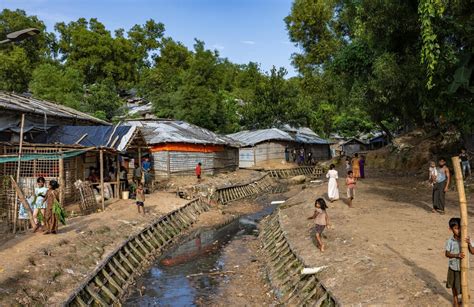
Around 1.2 million Rohingya currently live in Bangladesh, most of them in the Cox's Bazar district, which hosts one of the largest refugee settlements in the world.
A recent report published on 25 September revealed that the camps have become increasingly vulnerable to landslides due to overcrowding, construction on slopes, removal of vegetation and seasonal rains.
The continued arrival of refugees forces the expansion of residential areas within an already limited space, increasing pressure on the fragile hills and slopes surrounding the camps.
Only $710 million to cover minimum needs
The rising number of refugees comes at a time when the humanitarian response is facing a funding crisis.
The United Nations and its partners requested $710.5 million for 2026 to meet the most urgent needs of the Rohingya and the host Bangladeshi communities. The programme targets up to 1.56 million people.
However, the United Nations affirms that this appeal is 26% lower than the 2025 plan, and covers only the minimum life-saving assistance.
It includes approximately $247.3 million for food, $128 million for shelter, $61.2 million for water, sanitation and hygiene, $52.7 million for education, and approximately $49.9 million for health.
From 2017 through the end of 2025, the international community provided around $5.42 billion to fund the humanitarian response for the Rohingya, but declining global funding now threatens the services provided to refugees.
A crisis returns to the forefront, but a solution remains distant
The moves of recent days in New York reveal an attempt to return the Rohingya issue to the forefront of international attention after years of displacement and declining funding.
Bangladesh, which hosts the largest number of them, says it is no longer able to bear the crisis indefinitely, while Malaysia demands a greater sharing of the burden among states, and both countries ultimately insist on the return of the Rohingya to their homeland as the lasting solution.
But this return remains tied to a question that has not yet found an answer: can the Rohingya return to Myanmar with their security, rights and citizenship guaranteed?
While governments call for accelerating a political solution, the United Nations affirms that the conditions for a safe return are currently not in place, and new Rohingya continue to cross the borders into Bangladesh rather than returning from it.
The crisis thus continues along two opposing tracks: international diplomacy seeking a way to return the Rohingya to their homeland, and a field reality that still pushes more of them into displacement outside it.


