


Millions of Sudanese have returned to Khartoum after the Sudanese army regained control of the capital last year, but for some families the return has become a daily confrontation with a city still bearing the marks of war: long power and water cuts, destroyed buildings, unexploded ordnance, shortages of medicines and jobs, and continuously rising living costs.
About four million people had fled Khartoum after war broke out between the Sudanese army and the Rapid Support Forces in April 2023. Since the army regained the capital, an estimated 2.7 million people have returned to it, according to a report by Agence France-Presse.
But returning home was not, for many, the end of the journey of displacement.
"Bringing my family back was a mistake"
In central Khartoum, burnt and destroyed buildings still surround returnees. While the army has resumed domestic flights from the airport and parts of the infrastructure have been repaired, electricity and water can be cut off for consecutive days.
Businessman Imad Khaled, 43, said he decided to send his family back to Egypt while he remains in Khartoum because of his work.
He said: "Bringing my family back was a mistake."
He is not alone in this. A number of government employees who were asked to return to the capital said they had left their families outside Sudan, reflecting the gap between the resumption of state institutions' work and the city's ability to provide a stable life for families.
Markets have reopened in various areas of the capital, but unemployment and a shortage of liquidity mean that many residents lack sufficient purchasing power, while the prices of basic necessities keep rising.
The danger of war persists after the fighting stops
The danger is not limited to the lack of services.
Until June, the United Nations had considered only 1% of Khartoum safe, given the spread of landmines, unexploded ordnance and explosive traps left behind by years of fighting.
Dozens of children have been killed or injured by war remnants found between houses, walls and along roadsides, making return to some neighbourhoods hazardous even in the absence of direct clashes.
The contrast between the capital's neighbourhoods is increasingly clear. Popular neighbourhoods have received large numbers of returnees, while wealthier areas, such as Khartoum 2, remain almost deserted, as many of their former residents can afford to stay outside the country.
On the streets of some of these areas, villas remain empty, windows are shattered, and parts of buildings are demolished by shelling.
Hospitals return, but medicine does not return with them
Healthcare is one of the greatest challenges facing returnees.
As waves of return began, Sudanese associations and initiatives worked to rehabilitate hospitals that had been destroyed by the war or had stopped operating, and health sector workers say some facilities are now in better condition than before.
But rebuilding a hospital does not necessarily mean that treatment is available.
Doctor Haifa Omar says some medicines and supplies are simply not available, which forces doctors to ask patients to buy them at their own expense, although the doctors know how difficult their economic circumstances are.
University professor Imam Babiker says he may have to visit ten pharmacies in search of blood pressure medicine for his father, as prices keep changing.
The problem becomes more serious for medicines that need refrigeration. Babiker bought a refrigerator to store the insulin of his mother, who has diabetes, but power cuts of around 12 hours a day cause it to spoil.
Thus, the electricity cut turns from a service problem into a direct health risk.
Half a million have returned from Egypt
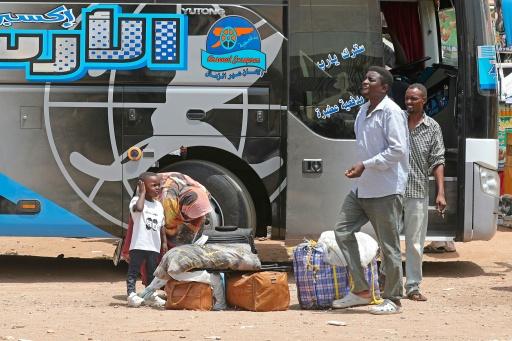
One of the main routes of return to Sudan is the route from Egypt, from which around half a million Sudanese have returned, after some 1.5 million had taken refuge there during the war.
But the decision to return does not necessarily mean that Khartoum has become the better option. Some returnees have found themselves caught between the hardships of life in countries of refuge and the difficulty of rebuilding their lives in the capital.
Those who return to Khartoum may find their homes looted or destroyed, their work halted, electricity and water unstable, and medical services limited.
One returnee said her refrigerator was stolen during the war and that she cannot afford to buy another, so she is forced to buy vegetables and meat daily instead of storing them, while prices keep rising continuously.
A capital recovering its residents before its health
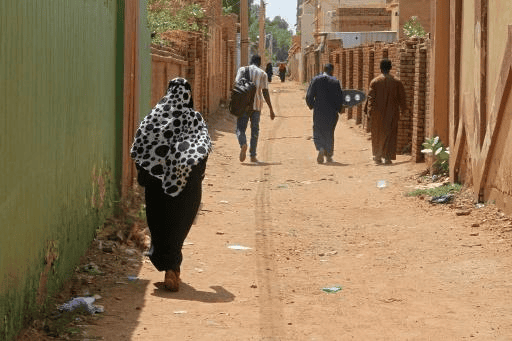
The Sudanese army's recapture of Khartoum has allowed government institutions to return and the airport, markets, some hospitals and services to resume operation, but it has not ended the effects of a war that lasted for years in one of the country's largest urban areas.
Nor has the war itself ended: fighting continues in other parts of Sudan, particularly Darfur, Kordofan and Blue Nile.
Therefore, the return of some 2.7 million people to the capital carries a harsh paradox: residents are returning at a pace faster than the city's capacity to recover.
The Khartoum they return to is not the city they left; parts of it are rubble, infrastructure remains fragile, and medicine, work, water and electricity are not guaranteed, while war remnants are still hidden between houses and streets.
For many Sudanese, the question is no longer only: when will we return to Khartoum? It has become: can one really live there after returning?


