


A new human rights report has revealed a wide civilian toll from US airstrikes on Yemen between late 2023 and mid-2025, while new information about British support for some US operations has raised questions about the responsibility of states participating in military operations and the mechanisms for investigating their harm to civilians.
The report was issued on 10 September 2026 (28 Rabi al-Awwal 1448 AH) by the Yemeni organisation Mwatana for Human Rights and the Costs of War project at Brown University in the United States. It draws on field investigations, visits to strike sites, and interviews with survivors, relatives of victims, witnesses, and rescue workers.
576 killed and injured in 46 incidents
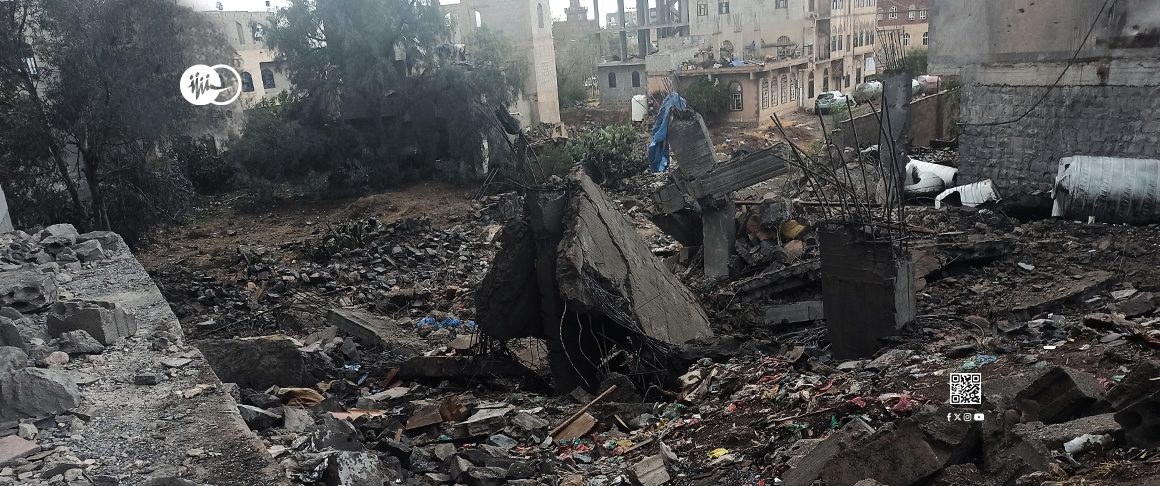
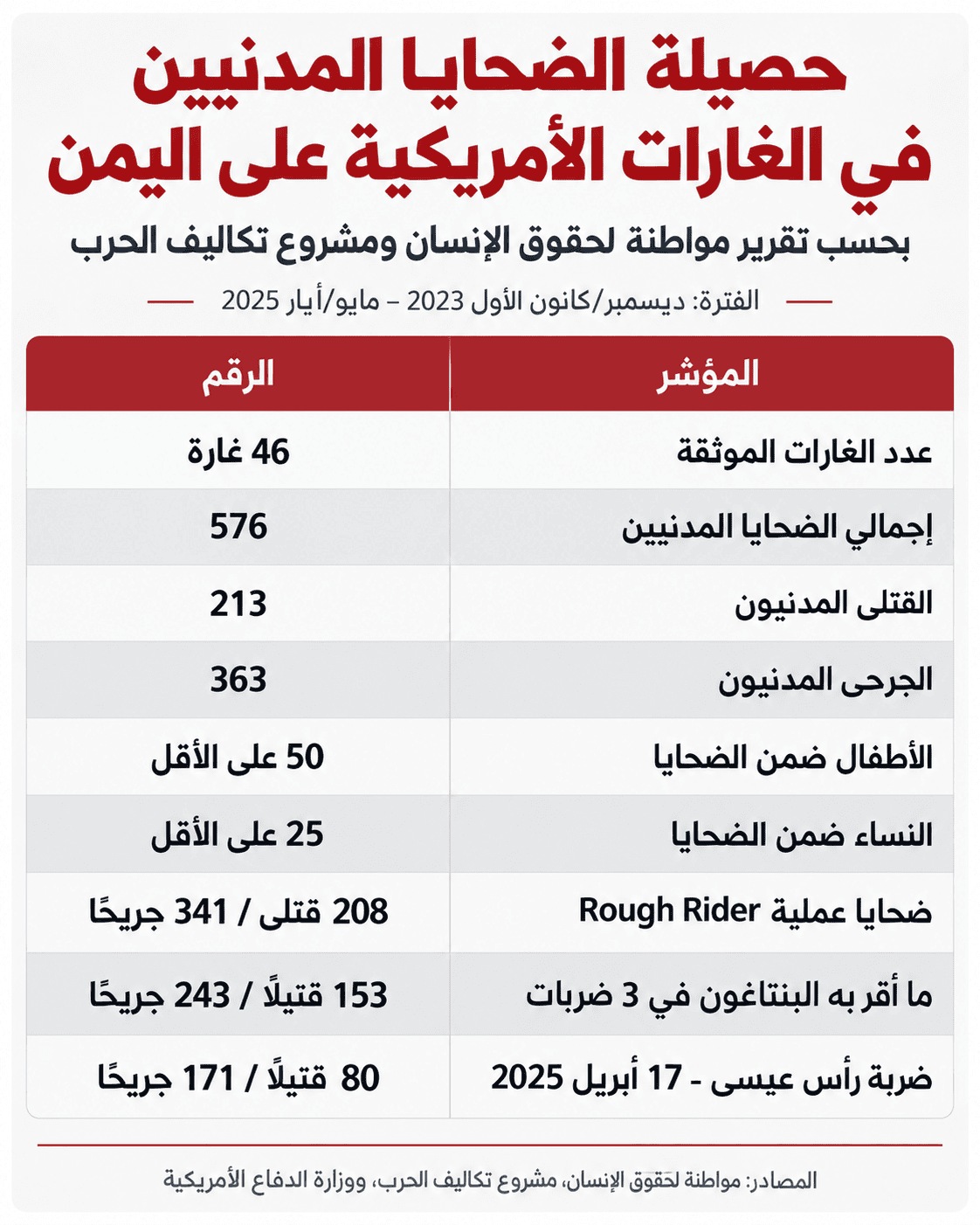
The researchers documented 46 US strike incidents between December 2023 and May 2025, which they said resulted in at least 576 civilians being killed or injured.
According to the report, 213 civilians were killed and 363 others were injured, and the victims included at least 50 children and 25 women. The investigation found that the strikes also hit homes, shops, farms, residential neighbourhoods, facilities, and civilian infrastructure.
Mwatana's team conducted 59 interviews with survivors, family members of victims, witnesses, paramedics, and other sources, in addition to field visits to the sites of several strikes. The report says the effects of the attacks were not limited to deaths and injuries, but also included the loss of sources of income and the destruction of shops, farms, workshops, and essential facilities in areas already suffering from shortages of water, electricity, and health services.
Two operations under Biden and Trump
The report addresses two main phases of US operations.
The first is "Operation Prosperity Guardian", which began under President Joe Biden after escalating Houthi attacks on ships in the Red Sea and the Gulf of Aden. During this phase, the report documented the killing of five civilians and the injuring of 22 others in the strikes examined by the investigation.
The second phase, "Operation Rough Rider", carried out by the administration of President Donald Trump between 15 March and 6 May 2025, accounts for the overwhelming majority of the victims recorded in the report, with an estimated 208 civilians killed and 341 others injured.
The US operations were a response to Houthi attacks on ships and oil tankers in the Red Sea and the Gulf of Aden, which the group said targeted vessels linked to the Israeli occupation or heading to its ports in the context of the war in Gaza.
Ras Isa: one of the deadliest strikes
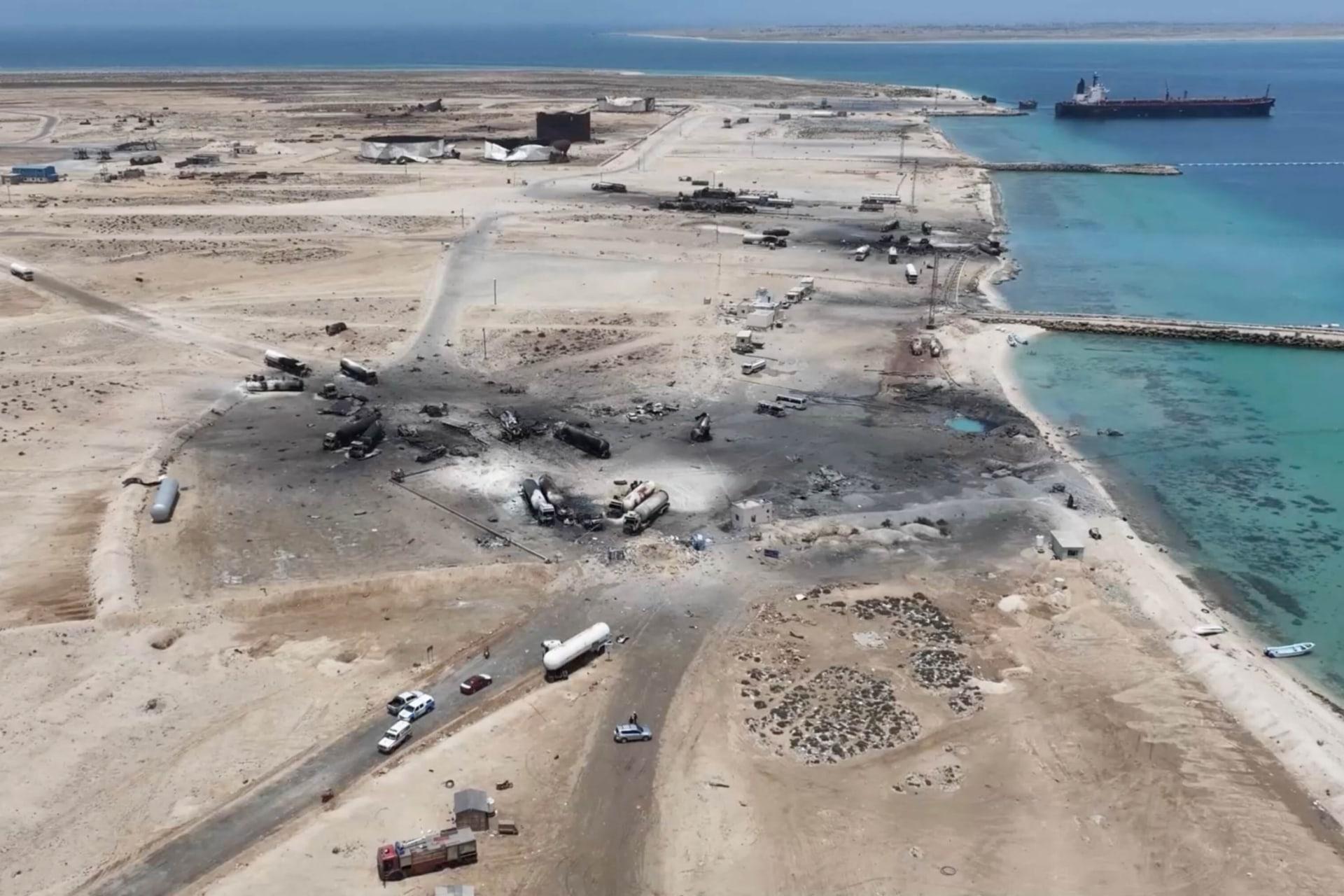
Among the most prominent incidents addressed by the report is the US strike on the Ras Isa oil port in Hodeidah on 17 April 2025 (19 Shawwal 1446 AH).
The Pentagon later acknowledged that 80 civilians were "likely" killed and 171 others injured in the attack, while the organisation Airwars documented the names of 84 civilians it said were killed, including three children.
When the attack was carried out, US Central Command said its aim was to deprive the Houthis of a source of fuel and revenue that the group uses to finance its operations.
However, Human Rights Watch said, after investigating the strike, that the attack on the port should be investigated as a "potential war crime", citing the large number of civilian victims and the humanitarian and economic importance of the facility.
Migrant detention centre in Saada
Eleven days later, on 28 April 2025 (30 Shawwal 1446 AH), a US strike targeted a detention centre in Saada Governorate that housed African migrants.
A subsequent US report acknowledged the killing of 68 civilians and the injuring of 47 in that attack, while human rights organisations called for an independent investigation into its circumstances and the extent of compliance with rules protecting civilians.
The Mwatana report includes testimonies from survivors who described harrowing scenes after the attack, and highlights ongoing psychological effects among survivors and children who witnessed the killing or injury of family members.
The Pentagon acknowledges hundreds of victims
The new figures carry additional weight because the US Department of Defense has also acknowledged significant civilian casualties.
In its annual report on civilian harm, the Department said that only three US strikes in Yemen during April 2025 likely resulted in the deaths of 153 civilians and the injuring of 243 others.
These figures do not necessarily represent the Pentagon's tally for all the strikes addressed in the Mwatana report; they relate to three incidents acknowledged by the US military, whereas the Yemeni organisation says its investigations into dozens of incidents revealed a much higher toll.
Where does Britain come in?
Another article, published by the platform "Declassified UK" on 16 September 2026 (5 Rabi al-Akhir 1448 AH), adds a new dimension to the case, saying that Royal Air Force refuelling aircraft provided support for US operations during the "Rough Rider" campaign.
According to the article, British "Voyager" aircraft carried out at least 25 missions from RAF Akrotiri in Cyprus during the US campaign, and British flights, based on flight-tracking data analysed by the platform, coincided with two of the strikes that the Pentagon acknowledged caused large numbers of civilian casualties.
Data collected by the platform indicates that a British refuelling aircraft was operating in the Red Sea area on the day Ras Isa port was bombed, at a time when the US aircraft carrier USS Harry S. Truman and its carrier strike group were conducting operations over Yemen.
A researcher at Human Rights Watch told the platform that the possibility of British contribution to support for some of those strikes could raise the issue of "complicity in war crimes", but said this is a potential legal formulation and not a judicial ruling or proof that British aircraft directly took part in carrying out the bombing.
London: we did not take part in the Rough Rider strikes
For its part, the British Ministry of Defence denied that the United Kingdom had taken part in the US strikes under Operation Rough Rider.
The Ministry said Britain provided "routine air-to-air refuelling support to allies" to help defend the US aircraft carrier in the region, and that any operational support London provides to its allies is assessed separately to ensure it is consistent with British policy and legal obligations.
At the same time, British government data confirms that London directly took part in other operations against Houthi sites. On 29 April 2025, British Typhoon fighter jets, together with US forces, carried out strikes on a facility that London said was used to manufacture Houthi drones south of Sanaa, with support from Voyager refuelling aircraft.
Losses that do not end with the strike
The Mwatana report concludes that the impact of the strikes does not end when the bombing stops or when the wounded are treated. Many families lose their breadwinner, their home, or their livelihood, while the destruction of farms, shops, and basic infrastructure deepens poverty in a country exhausted by more than a decade of war.
Mwatana for Human Rights' director, Radhya al-Mutawakel, said the losses suffered by civilians cannot be considered temporary damage that ends with the conclusion of military operations, and called on the United States to acknowledge the victims, investigate the violations, and provide compensation and redress.
Between the figures reached by the researchers and those acknowledged by the Pentagon itself, the new reports reopen the file on the civilian cost of the air war in Yemen, not only for the United States that carried out the strikes, but also for the states that provided various forms of logistical and military support for the operations.
The question these investigations raise is this: when war is waged through a network of aircraft, bases, refuelling, intelligence, and logistical support spread across several states, where does each party's responsibility for civilian victims begin, and where does it end?
Sources: Mwatana for Human Rights; the Costs of War project at Brown University; the US Department of Defense report on civilian harm; Human Rights Watch; and Declassified UK.


