

Following Assimi Goïta's seizure of power in Mali in 2021, the country embarked on a strategic shift by expelling French forces and United Nations forces from the country.
Although this shift was considered risky, given the fragility of the security architecture in the region, the Malian government sought to reshape the regional security model through new partnerships. In this context, Mali has continued its war against insurgent movements through security cooperation with countries such as Russia, China and Turkey.
"Terrorism" in the Sahel
According to what is known as the "Global Terrorism Index," the Sahel has emerged as the region most affected by terrorist attacks and related deaths in the world.
In this context, two organisations stand out: Jama'at Nusrat al-Islam wal-Muslimin, affiliated with al-Qaeda, and the Islamic State's Sahel Province. In addition, the separatist Azawad Liberation Front, composed of Tuareg members, is also active in the region.
Jama'at Nusrat al-Islam wal-Muslimin emerged in March 2017, when four groups operating in Mali—Ansar Dine, al-Murabitoun, the Macina Liberation Front, and al-Qaeda in the Islamic Maghreb—announced their merger.
Since then, the group has carried out its attacks mainly in Mali and Burkina Faso. The group typically targets military bases and vehicles, while at the same time conducting propaganda activities among the local population and religious outreach events, presenting itself as a source of social legitimacy.
Jama'at Nusrat al-Islam wal-Muslimin is not limited to its conflict with the Malian government; it also competes with the Islamic State. By 2025, the group's attacks had taken on an increasingly strategic character.
The Risk of the Spread of "Terrorism"
On 1 July 2025, Jama'at Nusrat al-Islam wal-Muslimin carried out a striking attack that caused widespread concern. Simultaneous attacks were launched on seven towns in the Kayes region of western Mali, near the borders with Senegal and Mauritania.
The location of this attack heightened concerns among the countries of the region and international actors about security in the area. Until then, the presence and operations of Jama'at Nusrat al-Islam wal-Muslimin within Mali had been concentrated largely in the western and northern regions, such as Kidal, Timbuktu, Ségou and Gao. The occurrence of the 1 July attacks close to Senegal and Mauritania led many observers to question whether the group was seeking to expand into West Africa.
Following the attacks by Jama'at Nusrat al-Islam wal-Muslimin on 1 July 2025, a similar security situation could develop around the border area between Mali, Mauritania and Senegal. Moreover, access to the sea is one of the most significant risks associated with the group's westward expansion, as such access would greatly enhance its commercial and logistical capabilities.
Although Senegalese and Malian forces intensified their joint military patrols along their shared border in response to these attacks, no concrete framework for cooperation in what is termed counter-terrorism has yet been established. Following the attacks, Jama'at Nusrat al-Islam wal-Muslimin imposed a blockade on several villages and towns in the Kayes region, and later expanded the scope of this blockade in September.
The Blockade of Mali's Capital
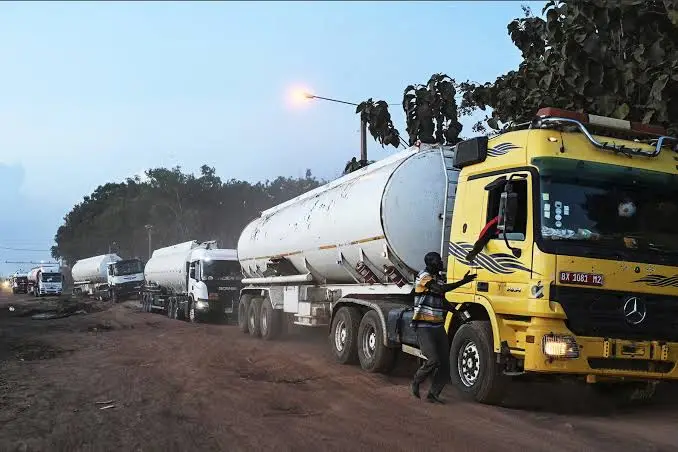
On 3 September 2025, Jama'at Nusrat al-Islam wal-Muslimin extended the blockade to include the capital, Bamako, leading to acute crises across the country. Estimates indicate that around 200 fuel transport trucks were destroyed during this blockade.
The direct impact of the blockade was on the transport sector, and its effects extended to other sectors. Given the vital role of fuel in electricity generation, daily life in Bamako came almost to a standstill. In response, the Malian government decided in late October to close schools until 9 November.
It is worth noting that mining sites in western Mali, which are among the country's most important sources of income, rely heavily on fuel-powered generators, meaning that the blockade also threatens Mali's economic lifeline. This prompted the government, on 7 October, to escort 300 fuel transport trucks to Bamako under military protection.
In addition to its economic impact, the blockade had serious political repercussions.
After the capital was encircled, many countries, including the United States, the United Kingdom and a number of European states, issued travel warnings for their citizens in Mali. This situation prompted speculation in some quarters that Jama'at Nusrat al-Islam wal-Muslimin might attempt to seize Bamako, in reference to the Taliban's takeover of Kabul in Afghanistan.
However, it is not currently believed that the group has either the intention or the capacity to govern the country. Even if it were able to take control of Bamako, it would lack the trained human resources necessary to administer a state. Furthermore, states with strong bilateral relations with Mali would likely support the government in such a scenario, making the group's task considerably more difficult.
Another key operational axis for Jama'at Nusrat al-Islam wal-Muslimin is its practice of detaining foreign nationals and demanding ransom from their home countries in exchange for their release. In October last year, two Emirati nationals were detained by the group. Reports indicated that negotiations took place between the UAE, the group and the Malian government. It was alleged that the negotiations were prolonged because Mali refused the group's attempt to negotiate directly with the UAE without government involvement.
Ultimately, an agreement was reached on a ransom payment of 50 million dollars, which the UAE accepted to secure the release of its citizens.
A Broad Strategic Shift
What is known as counter-terrorism operations were carried out under Operation Barkhane, while the United Nations maintained its presence through the United Nations Multidimensional Integrated Stabilization Mission in Mali (MINUSMA). However, after Assimi Goïta came to power, these operations ceased, and foreign forces withdrew from the country.
Niger and Burkina Faso have seen similar developments, indicating a broader strategic shift in the Sahel region.
Another key dimension of this shift is the growing security cooperation between Mali and Russia; Wagner forces and the Africa Corps have carried out joint operations with the Malian army. However, this support has proven insufficient, as Islamist and separatist groups have continued to expand their activities.
Turkey Builds a Partnership
Turning to Turkey, its military support has drawn particular attention.
In Mali's case, two Bayraktar TB2 drones were purchased in 2022, followed by three more in 2023. In addition, footage published by the Turkish security company Janik Academy in November 2024 showed training being provided to Malian special forces.
Furthermore, at a time when Bamako was under blockade by Jama'at Nusrat al-Islam wal-Muslimin, and Western countries, including the United States and the United Kingdom, were urging their citizens to leave Mali, Turkey hosted a defence industry exhibition in the capital.
The BAMEX25 exhibition, held from 11 to 24 November, attracted considerable interest from many countries in Africa and beyond.
An analysis of Turkey's security cooperation initiatives shows that they provide substantial support for what is termed counter-terrorism and regional stabilisation. The Malian army's use of Turkish-made drones to strike targets belonging to armed groups has achieved notable progress, making it a model to be emulated by other countries facing similar challenges. This highlights the advanced capabilities of the Turkish defence industry and its global contribution to counter-terrorism efforts.
The potential expansion of armed organisations could lead to new regional military alliances, or to deeper cooperation with global actors. The threat facing Senegal and Mauritania through the Kayes region of Mali, and possibly Morocco should the armed groups reach its territorial waters, may also prompt strengthened cooperation with these countries.
As an external actor, Turkey is distinguished by its counter-terrorism experience, its defence industrial capabilities, and its strong diplomatic and cultural relations with the countries of the region. Through security cooperation agreements in place across the region, Turkey is able to expand its engagement to contribute to regional stability and to global "counter-terrorism."
Translated from
"Blockade in Mali: Terror threat from Sahel to West Africa", The Daily Sabah.


