

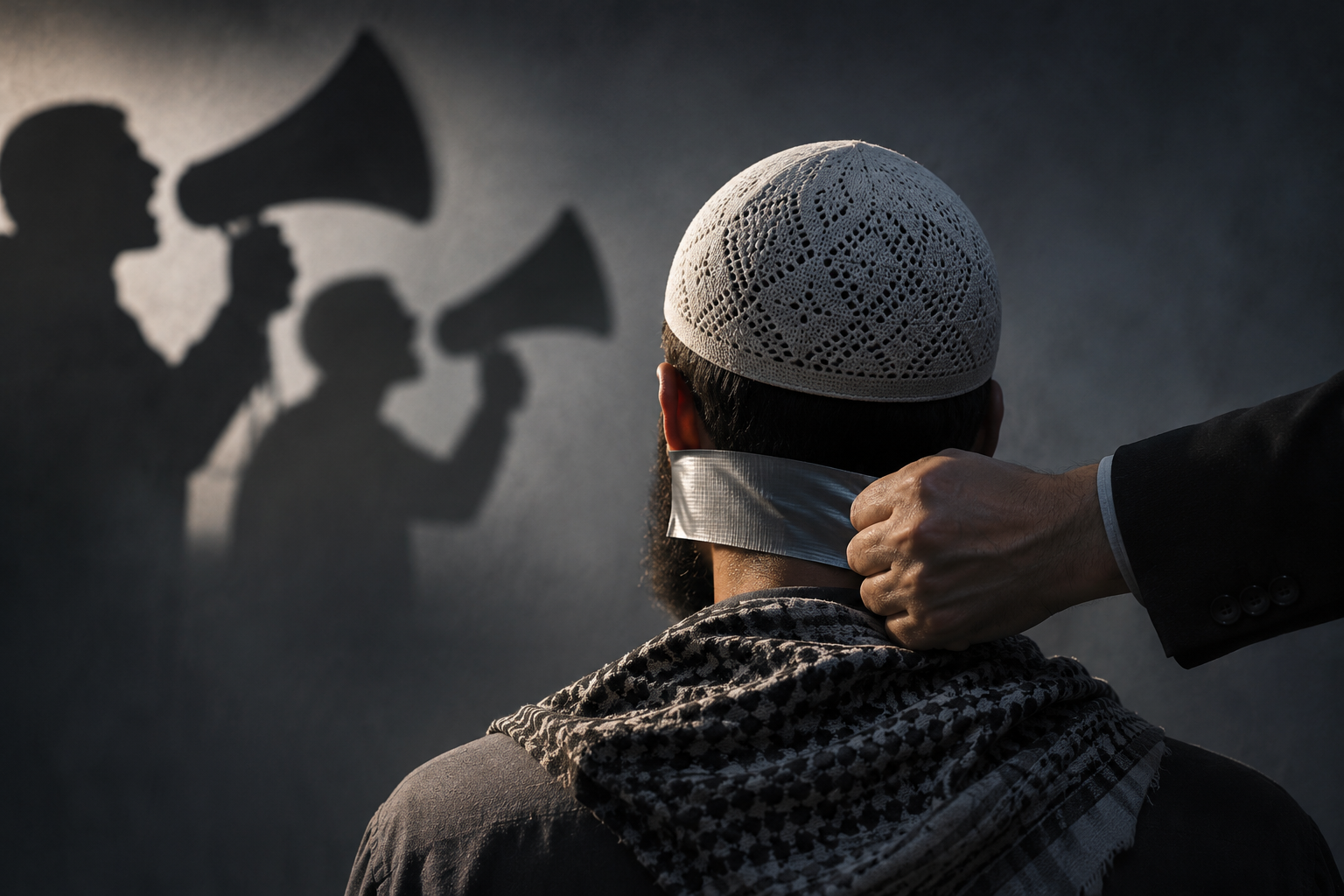
In every country, freedom of expression is considered the indicator of respect for rights, except when it comes to Muslims, whether they are a majority in their own lands or a minority elsewhere. A non-Muslim sees a Muslim's freedom of expression as a threat to them, while considering themselves fully entitled to suppress the Muslim.
The current Jordanian situation represents the most prominent example of this duality. After the Karak incident and what followed, some opposing voices, backed by the official climate, found an opportunity to tighten the grip on Islamic voices. Publications that aim to explain Islamic rulings regarding behaviors and conduct that contradict the faith of Muslims have come to be classified by their authors as a source of danger and threat, requiring official intervention to curb them.
Indeed, public voices emerged on this matter adopting this position, saying:
"Not a week has passed since the Karak crime before the same accounts, and especially the websites, returned... to incite and mobilize people against them! Tonight's headline: Halloween parties! And before it, Amr Diab's concert, and before that the series Rawabi..... As for you as an inciter, your only right is to refrain, you and your family, from being present at any place or celebration that contradicts your moral and religious system, not to intrude on the place!
Every publisher of a post... their post must be treated as incitement content that requires verification and accountability. The Cybercrime Unit tonight in particular bears a great responsibility in monitoring these accounts and taking the necessary legal measures. And we have a responsibility to report incitement content."
The words of these voices and their like reveal nothing but a thorough ignorance of the Islamic principle of "enjoining good and forbidding evil," which is regarded by Muslims as the foundation for building and preserving the Islamic social fabric.
They have become like someone who, out of zeal and ignorance, appoints himself a teacher of a subject he has never opened a book on. They have produced wonders, dressing Muslims in clothing that is not theirs, accusing them of "incitement" which they themselves openly practice in their posts, and calling for the criminalization of raising an Islamic voice, limiting it to private inner and practical disapproval, under the elastic label of "cybercrime." Thus the matter became confused for them: they practiced real incitement against Muslims and tried to brand them with what is in fact their own characteristic, in a stark and evident contradiction.
Strikingly, the Jordanian Constitution expressly states that the state is Islamic, yet we find no laws that protect this characteristic or protect the voices calling for its preservation. Instead, cybercrime laws are the prominent tool used to suppress and uproot them, under broad and vague provisions tied to political matters such as "inciting strife" and "incitement speech."
Thus every attempt to explain an Islamic legal ruling has become a target, labeled a cybercrime that requires decisive deterrence in order to preserve "civil peace."


