


From Afghanistan and Gaza to Somalia, Libya and Syria, states able to reach the warring parties and combine diplomacy, aid and military and economic cooperation are gaining importance. A recent British study finds that Qatar and Türkiye have developed two different models for dealing with conflicts, giving them influence in environments where traditional Western approaches face growing difficulties. It also warns, however, that the capacity to intervene and open channels of communication does not necessarily translate into lasting peace.
The concept of stabilisation in conflict zones is undergoing an increasing shift, with regional states emerging that are able to play security, diplomatic and humanitarian roles in environments where traditional Western interventions have failed to achieve stable outcomes.
After decades of international projects that sought to rebuild the institutions of states emerging from war, the experiences of Iraq, Afghanistan and other areas reveal the difficulty of imposing ready-made models of stabilisation, especially when internal divisions intersect with regional interests and with armed groups operating outside government control.
In this context, a new study by the Royal United Services Institute (RUSI) concludes that Qatar and Türkiye have become influential actors in conflict management and stabilisation efforts, thanks to their ability to combine different tools and to engage with political and security actors that some Western powers cannot easily deal with.
The institute published the study on 29 October 2026, under the title "Contemporary Stabilisation: New Realities and New Approaches", prepared by researcher Antonio Giustozzi and Professor Sultan Barakat, specialists in conflict, peacebuilding and reconstruction.
The study examines the difference between traditional Western models and the approaches developed by rising regional powers, focusing on Qatar and Türkiye as examples of states that have used political relations, aid and security cooperation to achieve an influential presence in conflict zones.
Why are traditional Western approaches facing growing difficulties?
The study starts from the premise that stabilisation efforts led by Western states over the past two decades have faced profound challenges of legitimacy and effectiveness, particularly after the military interventions in Iraq and Afghanistan.
These approaches were often based on a mix of security operations, rebuilding government institutions, strengthening the rule of law, providing development aid and supporting political processes.
However, the success of these programmes remained linked to factors beyond the size of funding and military strength, such as the acceptance of local communities, the legitimacy of the authorities benefiting from them, and their ability to sustain the institutions being established.
The decline of external development aid in recent years has also raised questions about the cost of long-term Western programmes and whether they can be sustained.
The study makes clear that the problem is not a lack of need for strong institutions, laws or accountability standards, but the difficulty of implementing these goals in environments marked by ongoing conflict and in which governments lack full control over their territory.
In many of these areas, international actors are not dealing with a stable state and unified institutions, but with competing authorities, shifting local alliances and armed groups that hold political or military influence.
Under such conditions, limiting engagement to officially recognised authorities may reduce the ability to reach actors that are influential in sustaining or halting fighting.
Hence the importance of powers able to communicate with a broader range of actors while maintaining security and diplomatic relations that allow them to move in complex circumstances.
Qatar: mediation and contact with opposing parties
The study presents Qatar as a model relying primarily on diplomacy, mediation and humanitarian aid, while maintaining channels of communication with hostile parties that are difficult to bring together around one table.
One of the most notable strengths of this model is Doha's ability to engage with governments, political groups and armed actors within negotiating frameworks, even when direct relations between those parties are severed or highly tense.
Qatar uses its diplomatic position and its multiple relationships to facilitate dialogue, the exchange of detainees, the reaching of temporary understandings, and the delivery of humanitarian aid.
The study argues that this flexibility gives Doha access to areas and actors that many traditional Western bodies do not have.
Its willingness to bear greater political and operational risks may also allow it to continue working when other parties withdraw because of security concerns or political constraints.
Nevertheless, the researchers do not present mediation as a guarantee of ending conflicts, but as a means that may help contain crises, open negotiation channels and reduce levels of violence.
A mediator's success in bringing parties together or reaching a preliminary agreement does not mean it has the capacity to compel them to implement the agreement or to address the deeper causes of the conflict.
Afghanistan: how direct relations gave Qatar a negotiating role
The Afghan file is a clear example of the importance of the communication channels Qatar maintained with opposing parties.
Doha hosted negotiations between the United States and the Taliban, which ended with the signing of the February 2020 agreement on the withdrawal of American forces from Afghanistan.
After the Taliban took control of Kabul in August 2021, Qatar played an important role in facilitating evacuation operations and communication between international parties and the new authorities.
It also took part in arrangements related to the continued operation of Kabul airport and the transfer of foreigners and Afghans at risk.
This experience shows how a state that maintains relations with a party other states do not recognise, or refuse to deal with directly, can serve as an essential channel of communication during crises.
However, the political outcomes that followed the American withdrawal also reveal the limits of mediation.
An agreement that ends a foreign military presence or facilitates a political transition does not necessarily ensure the building of inclusive institutions, the protection of rights and freedoms, or long-term stability.
For this reason, a distinction must be drawn between the success of mediation in reaching an agreement and the assessment of the political and humanitarian consequences that follow.
Gaza: humanitarian mediation during war
The Gaza Strip represents another case illustrating the nature of Qatar's role in complex conflicts.
Doha took part, together with Egypt, the United States and other parties, in mediation efforts between Israel and Hamas, contributing to agreements on ceasefires, the exchange of prisoners and detainees, and the entry of humanitarian aid.
These efforts depend on Qatar's ability to communicate with actors with whom some Western states do not have direct channels.
Mediation is also linked to humanitarian tracks that include facilitating the entry of aid and the evacuation of the wounded and sick, and supporting de-escalation arrangements.
The Palestinian experience, however, highlights a fundamental dilemma: a mediator can contribute to reaching an agreement, while the parties' ability to implement it remains tied to political and military factors that the mediator cannot control alone.
Mediation does not automatically resolve issues related to occupation, blockade, reconstruction and the future of governance and security.
Assessing Qatar's role therefore requires distinguishing between direct results, such as opening negotiation channels or facilitating exchanges and relief, and the achievement of a comprehensive and sustainable political settlement.
The Democratic Republic of the Congo: a Qatari model expanding into Africa
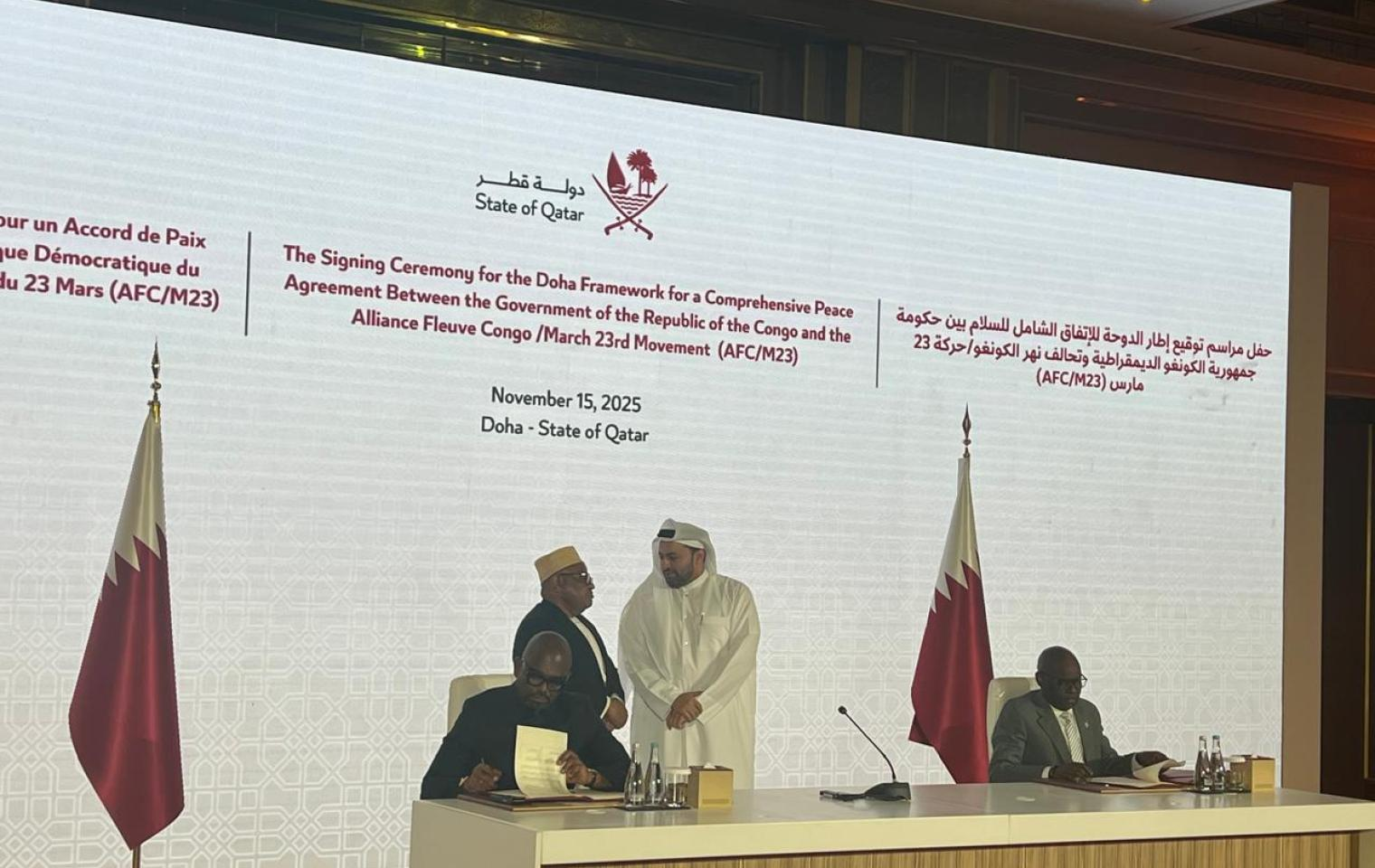
Qatar's mediation role is no longer confined to the Middle East and Afghanistan, but has extended to African conflicts.
On 15 November 2025, Doha hosted the signing of a peace framework between the government of the Democratic Republic of the Congo and the Congo River Alliance linked to the 23 March Movement (M23).
This framework came after months of negotiations aimed at de-escalating the situation in eastern Congo, where armed confrontations had caused large-scale displacement of civilians and worsened the humanitarian crisis.
The framework included tracks related to ceasefire, the release of detainees, restoring state authority, the return of refugees and displaced persons, and creating conditions for a political settlement.
The agreement, however, was not a final settlement of all issues, but a framework for negotiating additional arrangements.
Meetings continued during 2026 with the participation of Qatar, the United States, the African Union and other partners, to discuss mechanisms for verifying the ceasefire and humanitarian access.
This experience demonstrates Qatari diplomacy's capacity to bring together disputing parties in complex African files, but it also highlights the potential gap between signing agreements and implementing them on the ground.
The continuation of violence or the faltering implementation of commitments does not necessarily mean the absence of a mediating role, but it does limit its ability to achieve lasting stability.
Türkiye: security, institutions and the economy in one model
Unlike the Qatari model, which focuses more on mediation and aid, the study presents Türkiye as an actor combining military and security cooperation, institution-building and economic investment.
This model relies on establishing direct relations with governments, providing military training and advice, participating in infrastructure development, and strengthening commercial ties.
In some cases, Turkish military cooperation is linked to economic agreements and investments in ports, airports, energy and construction.
The study argues that this combination of security and economic tools gives Ankara the capacity to build long-term relationships with states affected by conflict.
It also allows Ankara to move sometimes faster than multilateral international programmes, which may require lengthy negotiations to secure funding and approvals.
However, this model raises questions about the relationship between supporting state institutions and strengthening the influence of incumbent governments, especially when the country is experiencing internal disputes over legitimacy and the sharing of power.
In this context arises the challenge of ensuring that security support does not strengthen one political or military party at the expense of a comprehensive settlement process.
Somalia: from humanitarian aid to military partnership
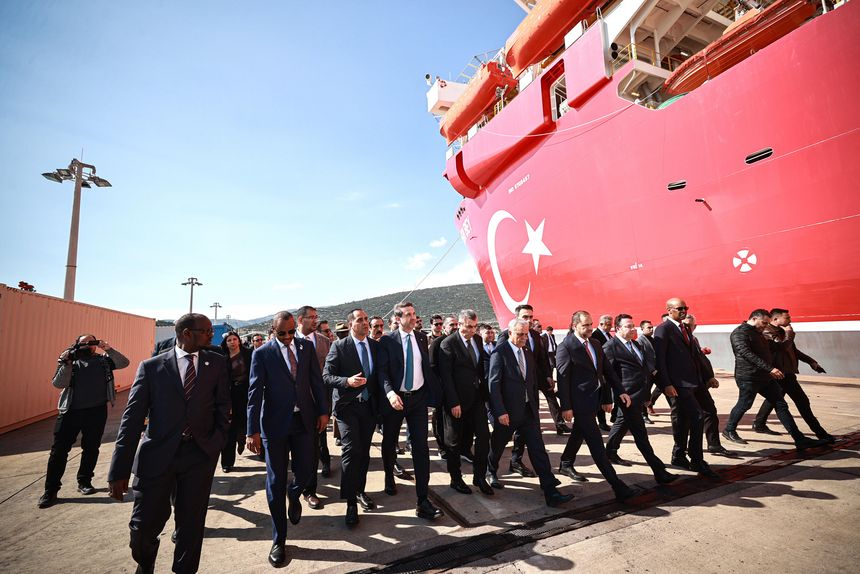
Somalia is one of the most prominent examples the study considers to illustrate the shift in Türkiye's role.
A significant phase of Turkish engagement in Somalia began in 2011, when President Recep Tayyip Erdoğan visited Mogadishu during the famine crisis, in parallel with the expansion of Turkish humanitarian aid.
Over the years, the relationship developed into a partnership covering the training of the Somali armed forces, the management of some vital facilities, and cooperation in infrastructure, energy and trade.
In 2017, Türkiye opened a military training base known as "TURKSOM" in Mogadishu, which contributed to training thousands of Somali soldiers, including elements of the "Gorgor" forces.
Turkish companies also took on roles in operating the port of Mogadishu and the international airport.
Military and security cooperation between the two countries later expanded, in parallel with continued fighting between the Somali government and al-Shabaab.
This model represents an attempt to combine security support for the state with economic services and projects that help strengthen its institutions.
However, the assessment of its outcomes remains a subject of debate.
In an independent analysis published by the Royal United Services Institute in May 2026, researcher Matthew de Waal warned that the expansion of Turkish influence within Somali institutions, and the overlap of security and commercial interests, could raise challenges concerning sovereignty and internal political competition.
He also cited allegations about the partisan nature of some forms of external support in internal political disputes.
The Somali case reveals that building military capacity may help the government confront threats, but on its own it does not guarantee addressing political divisions or achieving consensus between the federal government and local administrations.
Therefore, the sustainability of outcomes is also tied to the effectiveness of institutions, accountability and political consensus within the country.
The other side of Turkish intervention: drone-related civilian casualties and popular protests in Somalia
Among the aspects that deserve to be added to the debate about Turkey's role in stabilisation, and that the study did not address, are the allegations raised by military operations supported by Turkish drones in Somalia concerning civilian casualties, and questions about responsibility for air strikes and oversight of the use of force. In May 2024, Amnesty International reported that 23 civilians, including 14 children, were killed and 17 others injured in two strikes that targeted an agricultural area in the Lower Shabelle region on 18 March of that year. The organisation's investigation confirmed the use of Turkish-made "MAM-L" munitions, launched by "Bayraktar TB2" drones, but was unable to determine whether Turkish or Somali forces were operating the drones at the time of the attack. The organisation called on both countries to investigate the two strikes as possible war crimes, to hold those responsible accountable and to compensate the victims, in the absence of an announced official inquiry establishing responsibility for those losses.
The repercussions of this military role have not been limited to human rights allegations, but have extended to popular protests in some Somali areas. In August and September 2026, areas of south-western Somalia and the state of Jubaland witnessed demonstrations against the Turkish military intervention, during which Turkish flags were burned and images of President Recep Tayyip Erdoğan were raised showing him with bloodied hands, while other reports said his images were burned. Protests escalated following an incident on 3 September in the Dolo area, for which officials in Jubaland accused Türkiye and the federal government of involvement; Mogadishu denied the account of an air strike and claimed that preliminary information pointed to the explosion of materials inside the targeted building.
These events reveal a problematic dimension in assessing the role of external powers in stabilisation: humanitarian aid, military training and the building of government relations are not sufficient on their own to measure the success of an intervention, unless the impact of military operations on civilians, the acceptance of local communities, and the existence of independent mechanisms for investigation and accountability are also taken into account. They also raise a fundamental question about whether supporting governments in their security and political conflicts always leads to greater stability, or whether it may, in some cases, become an additional source of tension and loss of trust between the population and external actors.
Libya: military support and its impact on the balance of power
In Libya, the Turkish role took on a more distinct military and political character during the conflict that followed the fall of Muammar Gaddafi's regime.
Ankara provided military support to the internationally recognised Government of National Accord during the confrontations the country witnessed, particularly in 2019 and 2020.
This support included military equipment, training and security cooperation, and contributed to shifting the balance of power during the fighting around Tripoli.
However, the Libyan experience reveals one of the dilemmas associated with foreign interventions.
Intervention that helps one party repel an attack or preserve existing institutions may at the same time entrench division among local forces if it is not accompanied by a comprehensive political settlement.
Furthermore, the continued presence of external military and economic interests may tie the future of stability to regional balances, not to internal understandings alone.
For this reason, the success of an intervention cannot be measured merely by achieving military results; its impact on building unified institutions, reducing violence and protecting civilians must also be considered.
This shows that the Turkish model may play an influential role in shifting balances of power, but it faces challenges different from the Qatari model, which is based mainly on mediation.
Syria: Between Institution-Building and Fears of Continued Divisions
Syria is one of the files that reflects the expansion of the Turkish role in combining political, security and economic tools.
After the fall of the regime of Bashar al-Assad, Ankara strengthened its relations with the new Syrian authorities and moved to expand security and military cooperation and participation in efforts to rebuild institutions.
In August 2025, Türkiye signed a memorandum of understanding with the Syrian transitional government concerning military training, advisory support and strengthening defence capabilities.
Ankara also sought to expand economic relations and contribute to infrastructure and reconstruction projects.
These policies are also linked to Türkiye's security interests, foremost among them border security and the future of armed groups in northern Syria, in addition to the file of Syrian refugees on its territory.
However, supporting state institutions in Syria faces challenges related to accommodating the different components, guaranteeing rights, and preventing security cooperation from becoming an additional cause of deepening internal tensions.
In this context, the European Union had previously warned of concerns related to the roles of armed groups backed by Türkiye in northern Syria, stressing the need to ensure the security and rights of Syrians, including Kurds.
The Syrian case shows that rebuilding security institutions can be an element in stabilising the situation, but its success remains tied to how inclusive it is and its capacity to meet the needs of the Syrian people.
What Distinguishes Qatar and Türkiye from the Western Model?
The British Institute study points to a number of differences between traditional Western approaches and the models developed by regional powers such as Qatar and Türkiye.
The first of these differences relates to the willingness to bear political and security risks.
Some regional states may be more prepared to deal with parties that Western governments find difficult to engage with because of sanctions, political considerations or legal and security concerns.
The second difference relates to the speed of action and the flexibility of the channels used.
Direct bilateral relations sometimes allow decisions to be taken and assistance or training to be provided without passing through all the stages of multilateral international programmes.
The third difference lies in the integration of different tools.
Humanitarian aid may be linked to diplomacy, military cooperation may be accompanied by investment in ports and infrastructure, while commercial relations are used to strengthen political influence.
However, this flexibility may come at the expense of important standards.
The more a relationship depends on undeclared bilateral understandings or informal networks, the more difficult it becomes to monitor funding, decisions and the beneficiaries.
Accordingly, the study does not consider the Qatari and Turkish models to be complete alternatives to Western approaches, but rather sees them as a source of experiences and tools that can be drawn upon in specific circumstances.
Risks: When Stability Becomes Tied to the Interests of External Parties
The study identifies a set of risks facing the new models of stabilisation.
Foremost among them is the possibility of weak transparency and accountability, especially when some programmes are implemented through private companies, informal networks or channels politically linked to influential actors.
Focusing on rapid access to conflict zones may also reduce attention to building independent institutions capable of sustaining themselves.
Another problem is that relationships which give the mediating or supporting state influence can become a source of dispute when political alliances change or regional rivalries intensify.
A security or humanitarian programme may be effective for a certain period, but it may falter if the priorities of the funding state change, its financial capacity declines, or the local authority shifts.
Here the importance of distinguishing between temporary stability based on political and military balances, and long-term institutional stability based on law, public services, political participation and accountability, becomes clear.
For this reason, the study stresses the need to maintain legal standards when seeking more flexible models.
Can the West Cooperate with Qatar and Türkiye Rather Than Compete with Them?
The study raises the possibility of building selective partnerships between Western states and regional actors that have different capabilities.
Qatar may provide communication channels and mediation capacities that some Western states do not have, while Türkiye offers potential for security training, institutional and economic cooperation in certain environments.
In return, Western and international institutions have expertise in governance, accountability, institutional reform and long-term support programmes.
The two researchers argue that combining these capacities may produce better results than each party acting separately or imposing a single model on all conflicts.
However, such cooperation should be tied to the circumstances of each country, and to the extent to which the goals of external parties match the needs of the local community.
There is no single recipe that suits Somalia, Libya, Syria, Afghanistan, Gaza and the Democratic Republic of the Congo at the same time.
Nor should partnerships become a means of bypassing oversight mechanisms or weakening standards relating to the protection of civilians and human rights.
Six Recommendations for Developing Stabilisation Efforts
The study concludes with six main recommendations for Western policymakers.
The first calls for building selective partnerships with emerging regional powers when these powers can fill gaps in mediation, political access or security support.
The second proposes a clear distribution of roles, combining the ability of new actors to reach and bear risk with the experience of traditional institutions in governance, reform and accountability.
The third stresses the need to design cooperation according to the circumstances of each conflict, rather than replicating the same model in countries whose political and security natures differ.
The fourth focuses on strengthening oversight of programmes that rely on private companies, informal networks or aid channels linked to political parties.
The fifth calls for drawing on lessons learned from highly dangerous environments, and developing means of reaching divided states and dealing with the influential actors within them without violating legal standards.
The sixth stresses the need to assess the sustainability of results from the outset of any intervention, taking into account the impact of regional rivalries, changing political priorities and funding.
These recommendations indicate that the study does not call for fully adopting the Qatari or Turkish model, but for benefiting from specific elements within them while addressing the risks that accompany them.
Real Stability: Reaching the Parties Is Not Enough
The comparison presented by the Royal United Services Institute (RUSI) reveals an important shift in the management of international conflicts.
Western states and international institutions no longer monopolise the diplomatic, security and humanitarian tools used in war zones. Regional powers have become capable of building direct relations with warring parties and providing aid and institutional and security support in complex conditions.
Qatar emerges as an actor that relies on mediation, opening negotiation channels and humanitarian aid, while Türkiye combines support for government institutions, military training, economic cooperation and infrastructure.
However, the difference in tools does not cancel the basic questions about stability: Has violence genuinely decreased? Have institutions become more capable of serving the population? Have guarantees for protecting civilians been secured? Can communities sustain the results without permanent reliance on external parties?
A mediator's success in reaching an agreement does not guarantee its implementation, and a state's success in training forces or supporting a government does not guarantee addressing political and social divisions.
The core conclusion the study puts forward is that the future of stabilisation will not rest on a single international model, but on the ability to combine flexibility of access and negotiation, institution-building and accountability, and responsiveness to local needs.
Accordingly, the growing importance of Qatar and Türkiye for the international community stems not only from the scale of their political or military influence, but from their capacity to operate in areas that are difficult to reach through traditional methods.
Yet the real test of these approaches remains their success in moving from managing crises to addressing their causes, and from temporary calm to a stability that the population can sustain without the continuation of war or dependence on external intervention.
Primary source: Royal United Services Institute (RUSI), Antonio Giustozzi and Sultan Barakat, "Contemporary Stabilisation: New Realities and New Approaches," 29 October 2026.
Supporting sources: Institute research on Türkiye and Somalia; Qatari Ministry of Foreign Affairs; African Union; Center for Applied Turkish Studies (CATS), 2026. Amnesty International, 7 May 2024: detailed investigation into the killing of 23 civilians using Turkish-made drones.
Garowe Online, August and 6 September 2026: documentation of protests, burning of Turkish flags and images of Erdoğan, and allegations relating to airstrikes.
Hiiraan Online, September 2026: report on protests in Kismayo and Afmadow following the Dhobley incident.
FIKIR Institute, 14 September 2026: presentation of the accounts of the federal authorities and the Jubaland administration regarding the incident, and documentation of popular reactions.


