


The poverty rate in Yemen reached 85% of the total population of 27.4 million, according to the "Center for Economic Studies and Media."
The center noted that 17 million Yemenis suffer from food insecurity, 20.7 million people need humanitarian assistance, and 9.8 million people are threatened with famine and death from hunger.
The report stated that the average increase in food prices reached 35% during the first half of this year compared with the first half of last year, 1437 AH (2016 AD).
It indicated that approximately 2.2 million children suffer from severe acute malnutrition and 462,000 children suffer from severe acute malnutrition in its most dangerous form, while 1.1 million women suffer from malnutrition, and 2.2 million women or girls of childbearing age have their health at risk due to malnutrition.
It added that approximately 90% of the total population need humanitarian assistance, while 15.7 million people lack access to safe drinking water and sanitation facilities, amid a deteriorating health situation and halted health facilities, with approximately 65% of the population lacking adequate healthcare.


UNICEF reported that the number of Yemeni children who do not attend school may reach 6 million children. Also, 1 in every 4 schools in Yemen has been either completely or partially destroyed, and 172,000 male and female teachers face the problem of not receiving their salaries regularly.
The salary crisis is not limited to teachers; all government employees in various sectors suffer from it because the government is unable to pay salaries without external assistance, according to government officials.
Yemenis face a crisis more serious than the salary crisis, namely the unemployment crisis, as no work projects are available in Yemen. This affects the purchasing power of Yemenis, which in turn affects Yemenis who work in trade.
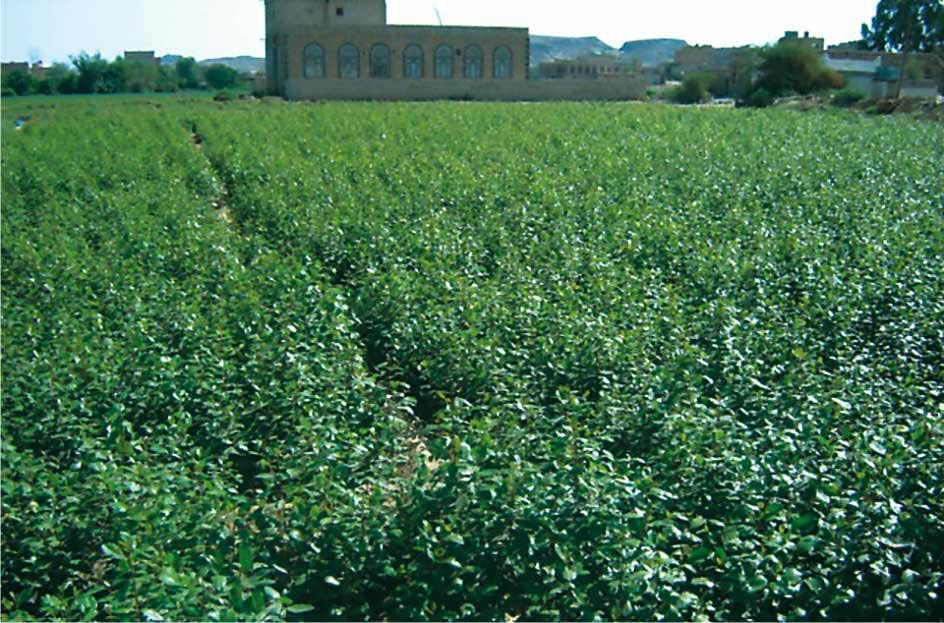
The agricultural sector faces a dilemma, namely "qat," as Al-Araby Al-Jadeed newspaper reported that 70% of Yemenis working in agriculture are growing qat, with the number of participants increasing by 40% over the past 3 years. Vast areas of farmland are allocated to growing qat, which comes at the expense of cultivating fruit trees.


