

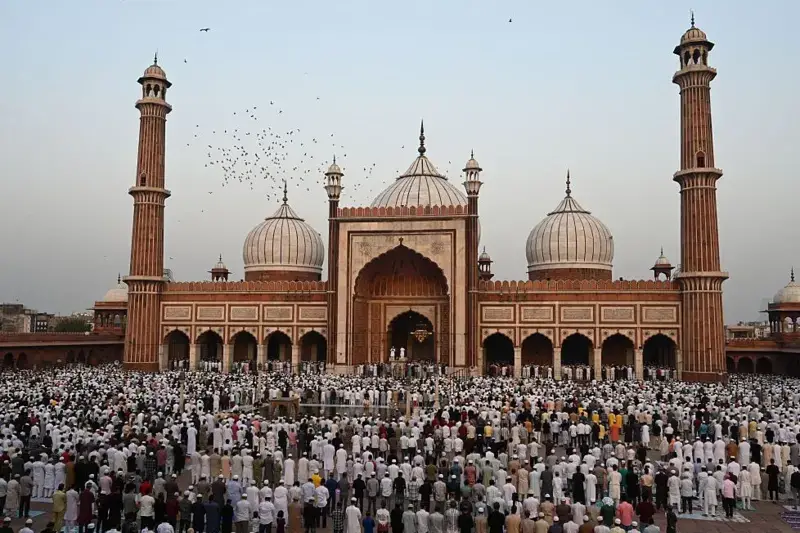
A new study published by the US-based Pew Research Center finds that India's Muslim population could rise to some 334 million by 2070, making the country the home of the second-largest Muslim population in the world after Pakistan, within broad demographic shifts that are expected to make Islam the largest religion in the world by number of followers by 2035.
The study, published on 18 November 2026 under the title "The Future of World Religions: Population Growth Projections, 2020–2070", finds that Muslims' share of India's population is projected to rise from about 15% in 2020 to 20% by 2070, while the Hindu share is expected to fall from 79% to 76% over the same period.
Nevertheless, the estimates indicate that India will remain a country with a large Hindu majority, as Hindus will make up more than three-quarters of its population. Their number is also expected to rise by about 176 million over the next five decades.
Why is the Muslim population in India growing?
The study attributes the projected growth of India's Muslim population to two main factors: the lower median age of Muslims compared with Hindus, and the continuing gap between the two groups in fertility rates.
According to the Center's estimates, the median age of Muslims in India was 24 years in 2020, compared with 29 years for Hindus, meaning Muslims have a younger population structure, with a larger share of people at or approaching the childbearing years.
The projections also point to continued higher fertility rates among Muslim women compared with Hindu women, despite the ongoing decline in fertility in both groups over past decades.
The gap between the average number of children born to Muslim and Hindu women in India exceeded one child in 1992, before narrowing to about half a child in subsequent data.
Researchers believe that the persistence of this disparity, together with the younger age structure of Muslims, will lead to an increase in their share of the country's total population, without this implying a radical change in its demographic identity.
These projections contradict claims promoting the idea that Muslims are close to overtaking Hindus in number in India. The study shows that, under the adopted demographic scenario, Hindus will retain a large population majority until 2070.
Pakistan overtakes Indonesia and India for second place
The study projects a major change in the ranking of countries with the largest Muslim populations in the world.
In 2020, Indonesia topped the list with about 239 million Muslims, followed by Pakistan with about 227 million, then India with about 213 million.
By 2070, however, Pakistan is expected to top the Muslim world in terms of Muslim population, with about 461 million, after its Muslim population roughly doubles.
India will come in second with about 334 million Muslims, despite remaining a country with a Hindu majority, while Nigeria moves up to third place and Indonesia drops to fourth.
These figures reflect the continued large demographic weight of Muslims in South Asia, particularly in Pakistan, India and Bangladesh, whose Muslim population is also expected to rise to about 218 million by 2070.
Islam may become the world's largest religion by 2035
At the global level, Pew's projections indicate that Islam may surpass Christianity in number of followers by 2035, becoming the largest religion in the world, if current demographic trends continue.
The number of Muslims is expected to rise from about 2.02 billion in 2020 to 3.64 billion by 2070, an increase of nearly 80% over half a century.
As a result, the Muslim share of the world's population will rise from about 26% to 36%, while the number of Christians will be slightly less than three billion, with their global share remaining stable at around 29%.
The study attributes the difference in growth rates to higher birth numbers and the lower median age of Muslims worldwide compared with other religious groups, along with differences in fertility rates and population changes.
It notes that the projected growth of Islam relies primarily on natural population increase, meaning the gap between births and deaths, rather than on large numbers of followers of other religions converting to Islam.
Religious shifts extend to Europe and Africa
The study did not limit itself to India and South Asia; it also examined potential changes in the religious composition of various regions of the world up to 2070.
In sub-Saharan Africa, the number of Muslims and Christians is expected to grow significantly, as a result of higher birth rates and improved life expectancy.
The study indicates that more than half of the world's Christians may live in sub-Saharan Africa by 2070, compared with about 31% in 2020, a shift reflecting the movement of the Christian demographic centre away from Europe and the Americas.
In Europe, the Muslim share of the continent's population is expected to rise from about 6% to 13% over the same period, alongside a decline in the share of Christians and an increase in the number of people with no religious affiliation.
The study also considers it likely that religiously unaffiliated people will become the majority of the population in France and the United Kingdom by 2070.
At the global level, the share of people with no religious affiliation is expected to fall from about 24% in 2020 to 17% by 2070, as a result of demographic changes, particularly the projected decline in China's population.
Conditional projections, not inevitable outcomes
For the study, the Pew Research Center drew on population and religious data from 201 countries and territories, covering more than 99.9% of the world's population, analysing differences in age, fertility, mortality, migration and changes in religious affiliation.
The researchers used census and survey data to estimate the religious composition for 2020, and then developed growth scenarios through 2070, assuming that the observed demographic trends continue.
In the case of India, the estimate of the religious composition for 2020 was based in part on projections built on the 2011 census, owing to the delay in conducting the subsequent census.
The Center stressed that the findings represent demographic projections rather than settled future facts, as wars, epidemics, natural disasters and economic, social and political changes could affect the course of population growth.
The study shows that the coming decades may witness significant changes in the geographic and numerical distribution of religious followers, while South Asia continues to be one of the largest concentrations of Muslims in the world.
While Hindus are expected to retain their large majority in India, the rise in the number of Muslims there, together with population growth in Pakistan and Africa, will make Muslims more prominent in the global demographic map in the coming decades, according to current estimates.


