


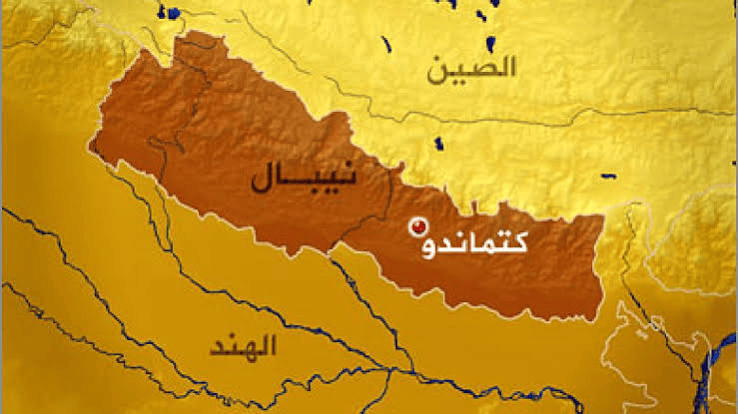
The persecution of Muslims in India is no longer a purely domestic matter, as its repercussions are beginning to appear in the neighbouring country, particularly Nepal, which in turn faces religious and political sensitivities that could make it vulnerable to the effects of polarisation coming from India.
According to an analysis published by The Diplomat in August 2026, the expanding activity of Rashtriya Swayamsevak Sangh (RSS), a Hindu nationalist organisation with wide influence in India, within Nepali territory raises concerns that patterns of tension between Hindus and Muslims could spread to the neighbouring state.
From India to Nepal
The significance of the issue rests on the nature of the relationship between India and Nepal. The long and relatively open border, along with demographic, cultural and religious overlap, makes it easier for ideas and political and social currents to move between the two countries.
In this context, The Diplomat's analysis argues that the growing presence of the RSS in Nepal should not be viewed as an organisational activity separate from the transformations taking place in India, but rather as part of a broader phenomenon: the spread of Hindu nationalist discourse beyond India's borders.
The matter is all the more sensitive in a country like Nepal, which was a Hindu kingdom until 2008 before becoming a secular republic. Religion therefore still occupies an important place in the public sphere, and religious identity overlaps with debates about the state, nationalism and sovereignty.
Hindu Politics Crosses the Border
The core issue is that the persecution of Muslims does not necessarily travel only through violent events; it can also spread through ideas, discourses and organisational networks.
Polarisation that begins with political rhetoric about religious identity can turn into social tensions, especially when a religious community is presented as a threat to national or cultural identity.
Herein lies the danger of such discourse moving into Nepal: internal political competition could turn into a struggle over the definition of the state's own identity. Will Nepal remain a secular, multi-religious state, or return to a model of a state with a Hindu identity?
The Indian Context
These developments cannot be separated from the rise of Hindu nationalism in India over recent years, during which questions of religious identity have become more prominent in politics and the public sphere.
Various reports and analyses point to rising tensions in the relationship between the Hindu majority and the Muslim minority, with issues emerging related to hate speech, political polarisation and communal violence. These files have become part of a broader debate about the future of secularism and pluralism in India.
The importance of the RSS stands out here, as it represents one of the main institutions in the Hindu nationalist ecosystem, alongside a wide network of organisations and movements linked to this current.
Yet the transfer of this model to Nepal could produce different outcomes, because Nepal's political and social environment has its own particularities, and Nepali society does not correspond religiously or politically to Indian society.
Nepal Faces a New Test
The concerns relate not only to the relationship between Hindus and Muslims, but also to the possibility of exploiting religion in internal political competition.
If religious affiliation becomes a tool for mobilising voters or building political identity, polarisation may widen to encompass other issues, from the form of the state to minority rights and the nature of relations with India.
Moreover, any sectarian escalation in border areas could have repercussions that go beyond the border, especially given the extensive social and economic ties between the populations on either side.
Hence the issue concerns not only what happens inside Nepal, but also the extent to which the Nepali state can prevent the importation of religious and political polarisation from its regional surroundings.
Beyond a Passing Incident
The significance of the developments discussed in The Diplomat's report lies in the larger question they raise: can religious nationalism in South Asia become a cross-border phenomenon?
If the transfer of political and organisational ideas has become easier thanks to social networks, population movement and cultural ties, sectarian tensions may spread in the same way.
This makes what is happening in Nepal worthy of monitoring, not as a mechanical extension of what is occurring in India, but as a test of a neighbouring state's capacity to protect its religious and political balance from the effects of regional polarisation.
Ultimately, the greatest danger does not lie in the difference between Hindus and Muslims as such, but in turning religious difference into a political project based on polarisation and exclusion. If such discourses succeed in crossing borders, tensions may become a regional issue extending beyond India, reaching one of South Asia's states most sensitive to questions of identity, sovereignty and its relationship with its larger neighbour.


