


The French capital, Paris, is witnessing a notable escalation in the crisis of migrants and homeless people, with informal camps spreading across the city's streets and beneath metro lines, amid warnings of a deteriorating humanitarian and security situation in some areas crowded with migrants.
On his first field visit since taking office, the new mayor of Paris, Emmanuel Grégoire, visited a large migrant camp located beneath metro line 2 near the Barbès-Rochechouart, Stalingrad and La Chapelle stations, areas close to the well-known Gare du Nord station in the centre of the capital. According to estimates by local organisations and French media, the camp currently houses around 800 migrants, most of them from African countries such as Sudan, Mali, Eritrea, Senegal, Gambia, Morocco and Tunisia.
The new mayor pledged to work on establishing new shelter centres to remove migrants from the streets and relieve pressure on residential neighbourhoods, stating that he would follow a "practical approach" to address the crisis. During his visit to the site, he said he was prepared to create "large shelters" to accommodate migrants, in an attempt to curb the phenomenon of sleeping rough, which has been spreading in the French capital.
Despite official promises, humanitarian organisations indicate that the crisis is deeper than merely providing temporary shelter centres. The organisation "Utopia 56" asserts that up to five thousand people are currently sleeping on the streets of Paris in various locations, while government shelter centres suffer from severe overcrowding and a shortage of capacity.
Residents of the area and organisations working inside the camps describe difficult humanitarian conditions, where migrants lack running water and basic health services, while rubbish and foul odours spread around the camps. Reports have also spoken of growing problems related to drug use and violence, particularly in some areas where crack cocaine and alcoholic beverages are traded.
A number of residents of neighbouring districts said they feel an increasing security risk, pointing to incidents of assault and harassment around the camps. In contrast, some residents maintain that the problem is not limited to migrants alone, but also involves drug addicts and groups that exploit the camps as centres for illegal activity.
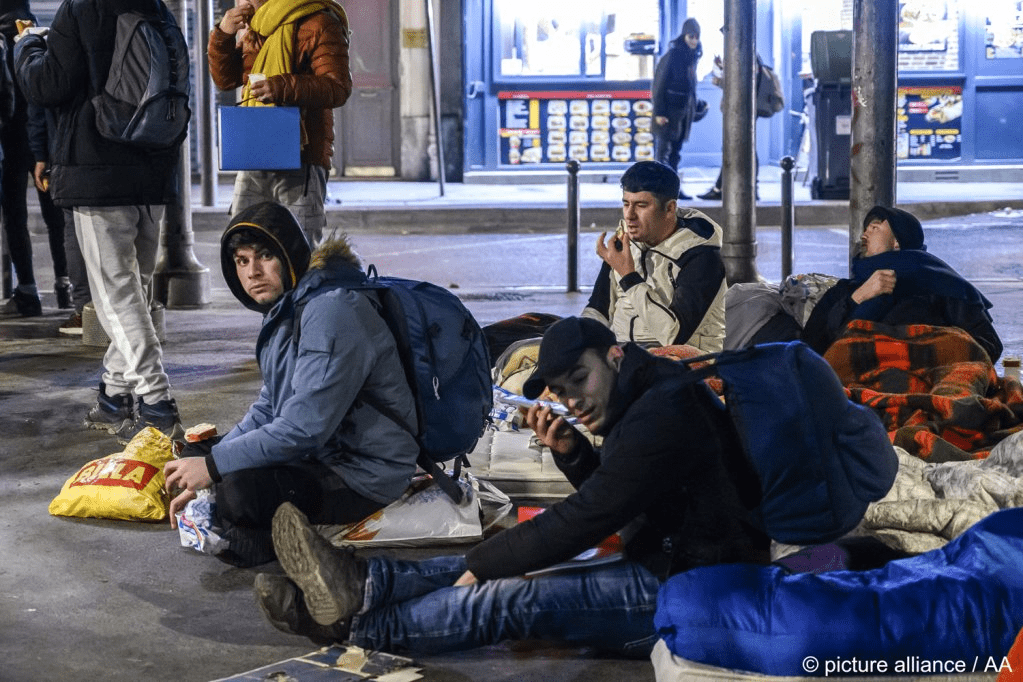
On another note, activists in the field of migrant rights believe that security solutions or repeated eviction campaigns have failed to end the crisis, as migrants often return to Paris after being moved to other areas, either because they want to remain in the capital or in an attempt to later reach the city of Calais to cross the English Channel to the United Kingdom.
Data from the Paris city council indicates that the number of people living on the streets rose by 10 percent over the course of one year, the highest level recorded since official counting campaigns began in 2018. The authorities also acknowledge that the real figures may be higher than those announced, due to the difficulty of counting all residents within the informal tents.
In an attempt to contain the crisis, Paris authorities have announced plans to create thousands of additional shelter places, including converting unused buildings such as old schools and educational facilities into temporary housing centres, with social and health services provided to migrants and homeless families.
However, as the flow of migrants continues and economic and social pressures mount, Paris appears to face a complex challenge combining humanitarian, security and political dimensions, at a time when debates are intensifying within France over migration policies and the future of how refugees and homeless people are handled in major cities.


