


After 105 years since the Battle of Anual, that historic confrontation still asserts its presence as one of the most influential battles in the history of liberation movements, having overturned the balance of power and proven that military superiority is not enough to decide wars.
Today, 22 July, marks the anniversary of the historic Battle of Anual, bringing back the story of the Moroccan leader Muhammad ibn Abd al-Karim al-Khattabi, who led a resistance that inflicted a defeat on Spain whose echoes resounded around the world and reshaped concepts of unconventional warfare.
The Battle of Anual was not merely a military confrontation between a colonial army and local resistance forces. It was a defining moment that redrew the relationship between power and will, between weapons and reason, and between empires and peoples who refuse to submit.
In the summer of 1340 AH / 1921 CE, Spain believed the way was open for it to tighten its grip over the whole of the Moroccan Rif region, having deployed thousands of soldiers, established dozens of military posts, and raised its flags over the mountain peaks stretching from Melilla to the outskirts of the Bay of Al Hoceima.
On the military maps in Madrid, everything seemed reassuring: a regular army equipped with artillery, machine guns and modern weapons, facing tribesmen who possessed only traditional rifles and knowledge of the mountains. What the Spanish command did not grasp was that maps do not fight, and that numbers alone do not make victory.
While Spain celebrated its military expansion, a man of calm features and few words was watching every step his opponent took, and redrawing the battlefield in a way no one had anticipated. That man was Muhammad ibn Abd al-Karim al-Khattabi, a man who knew his enemy before he fought him, and who was known as "Amir of the Jihad."
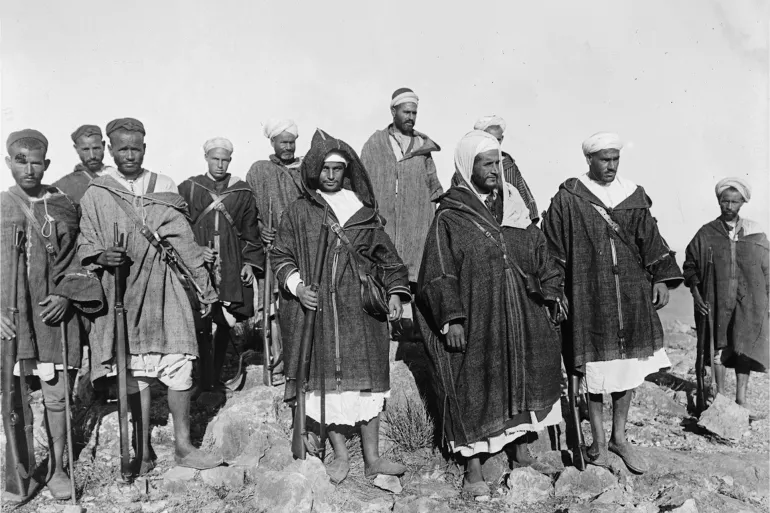
Al-Khattabi was not born a military commander, nor did he graduate from a military academy, yet he possessed something more dangerous than all of that: a deep knowledge of his adversary.
He was born in the village of Ajdir in the Rif region and grew up in a household of learning and judiciary. His father, Abd al-Karim, was a judge and a distinguished jurist among the Beni Waryaghel tribes, while he himself received his first education in the kuttab, completing the memorisation of the Holy Quran and studying the sciences of Sharia and the Arabic language, before moving to the Al-Qarawiyyin Mosque in Fez to complete his studies under the leading scholars of his time.
Al-Khattabi combined religious learning, jurisprudence and language, to the point that it was said he had memorised thousands of verses of Arabic poetry in his youth. But he did not stop there: he learned Spanish with proficiency, then went to work in the city of Melilla, which was under Spanish occupation, and there his political character began to take shape. He worked as a teacher, then as a journalist for a Spanish newspaper, then as a translator, and then as a judge for the Spanish administration itself, coming into direct contact with officers, administrators and soldiers. He observed them closely, listened to their plans, and understood their way of thinking.
Those years were akin to a field study of his future opponent. He learned their points of strength, but he also discovered their weaknesses, which they did not see.
From a Spanish administration employee to leader of the resistance
In his early years, al-Khattabi did not call for war. Accounts by historians indicate that he believed contact with the Spanish might bring some forms of organisation and modern administration to the region. But years of work within the institutions of the occupation completely changed his conviction.
He discovered that the Spanish project was not one of reform or partnership, but a project of full occupation seeking to control the land and subdue the tribes by force. His arrest by the Spanish authorities, followed by accusations of political activity, marked the great turning point in his life.
He returned to the Rif, where he began, together with his father, to unite the tribes that long-standing feuds had divided. This was not an easy task, as the Rif was not a centralised state, but a group of independent tribes, each with its own leadership and traditions. Yet al-Khattabi's scholarly character, his family's religious standing and his capacity for persuasion enabled him to build an unprecedented tribal alliance, which later became the nucleus of the resistance that would change the history of the region.
On the other side: an army that believes victory is assured
On the other side, General Manuel Fernández Silvestre was achieving rapid advances within the Rif. Almost every week he announced the seizure of a new position, and it seemed to Spanish public opinion that occupying the region was merely a matter of time. But this progress concealed a serious military problem. Each time the army advanced westward, it established a new military position on a hill or mountain, leaving behind a small garrison before continuing to another position.
Within a few months, dozens of Spanish posts had spread over wide areas, but they were isolated from one another, and all depended on long supply lines running through narrow mountain passes.
These posts did not have sufficient water, stable supply depots or adequate fortifications, and they awaited the arrival of provisions and ammunition through convoys that could easily be cut off. It was here that al-Khattabi began to implement his plan.
The war al-Khattabi chose
His aim was not to confront the Spanish army in an open battle. He understood that this would amount to military suicide, and so he decided to make the Spanish army fight according to new rules.
The fighters of the Rif moved nimbly among mountains they knew stone by stone, appearing suddenly and then vanishing. They struck a supply convoy, then moved to another pass. They blocked the arrival of water, then disappeared again.
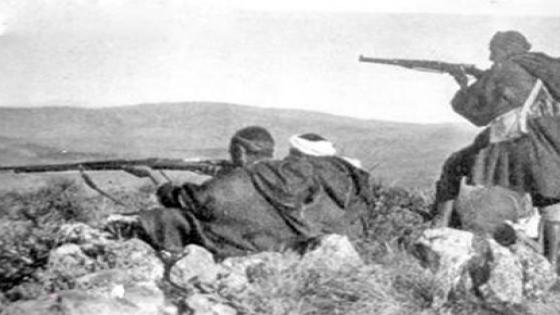
Over time, the Spanish positions began to turn into isolated islands, unable to assist one another. The plan was simple in appearance, but brilliant in its results.
The Spanish soldier had a rifle and a cannon, but found no water to drink; he possessed ammunition, but could not get it to the forward positions; he had numerical superiority, but was unable to use it amid mountains whose terrain he did not know.
Thus the Spanish military force began to erode before the Battle of Anual itself had begun.
Anual: how a withdrawal became one of the greatest defeats in Spanish military history
The Battle of Anual did not begin on 13 Dhu al-Qadah 1339 AH / 22 July 1921 CE, as many believe, but weeks earlier, when Muhammad ibn Abd al-Karim al-Khattabi succeeded in imposing his rhythm on the Spanish army, turning its rapid advance into a heavy burden threatening its very existence.
General Manuel Fernández Silvestre believed that controlling the Rif required nothing more than continuing the advance, while al-Khattabi saw that the Spanish army was defeating itself each time it moved away from its coastal bases.
The difference between the two men was that one looked at the map, while the other looked at the land.
The first blow: the fall of Mount Abarran
In early Shawwal 1339 AH / June 1921 CE, a Spanish force occupied the height of Abarran and established a new military position upon it, then the main force withdrew, leaving a limited garrison to protect the post. The decision seemed natural to the Spanish command, but for al-Khattabi it was a perfect opportunity.
Before long, the fighters of the Rif attacked the position from several directions, taking advantage of their precise knowledge of the mountain paths. The post fell quickly, and they seized the rifles, ammunition and machine guns that the Spanish soldiers had left behind.
The real gain was not the weapons alone, but the message that reached everyone: the Spanish army was not immune to defeat, and the fortresses over which the Spanish flag was raised could, within hours, become spoils in the hands of the men of the Rif.
The morale of the tribes rose, and they began to flow into the ranks of the resistance, while the Spanish command ignored the gravity of what had happened and considered it merely a passing incident.
Igueriben: the battle that preceded the catastrophe
A few days later, al-Khattabi moved toward the post of Igueriben, one of the most important defensive positions close to the Anual camp, but instead of storming it directly, he followed the same method that had become a hallmark of his battles. He did not attack the soldiers; he besieged the water.
The fighters of the Rif seized the only road leading to the water source, and every Spanish soldier who tried to reach it became an easy target for sharpshooters.
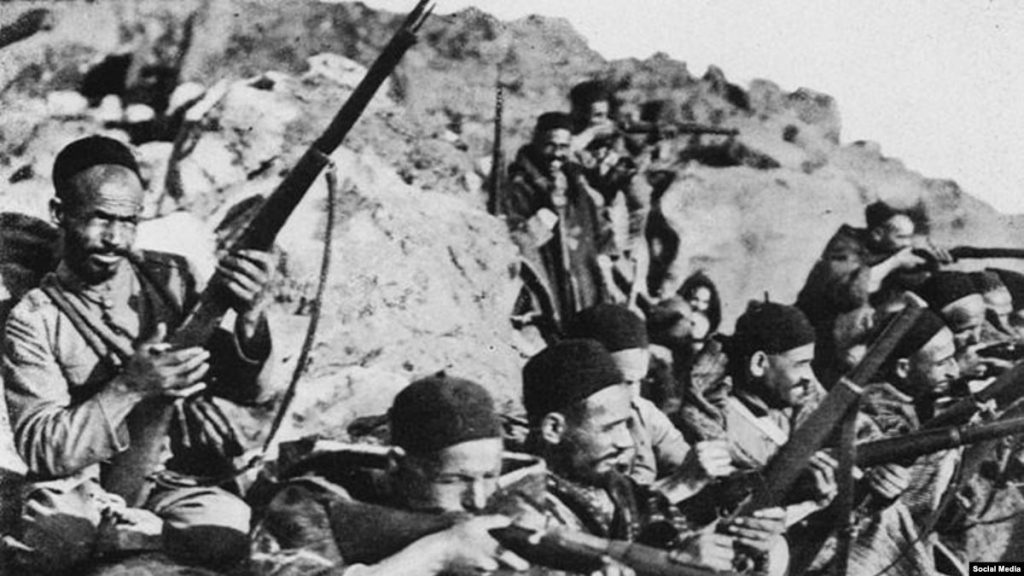
The garrison gradually turned into a group of exhausted soldiers, fighting not only to survive but for a sip of water.
The Spanish command sent several attempts to break the siege, but they failed one after another because of the ambushes laid by al-Khattabi's men in the mountain passes. After days of thirst and continuous shelling, the post fell.
That moment was the real turning point: with the fall of Igueriben, the Anual camp itself found itself in an extremely perilous position.
Anual: a camp awaiting its fate
The Anual camp was not an impregnable fortress. It was a large camp, but it too depended on long supply lines and on a water source that had become exposed to the fire of the fighters of the Rif.
In contrast, al-Khattabi's forces were tightening the noose without entering into direct confrontation, for he wanted to make his opponent take the decision that would serve him, and this indeed happened.
The decision that caused the disaster
On the morning of 13 Dhu al-Qadah 1339 AH / 22 July 1921 CE, General Silvestre issued an order to evacuate the Anual camp and withdraw toward the rear positions. The decision in itself was understandable from a military standpoint, but the problem did not lie in the decision to withdraw; it lay in the manner in which it was carried out. There was no clear plan, no arrangement of the stages of withdrawal, no distribution of tasks, no protection for the rearguard, and not even adequate notification to the various units.
The forces set out at roughly the same time, infantry units mixed with artillery, the wounded were mingled with wagons and draught animals, and convoys piled up inside the narrow passes.
Within moments, the command lost control of the situation entirely: the mountains became a hunting ground, and al-Khattabi had been waiting for this moment. As soon as the Spanish forces began to move, groups of Rifians poured down from the heights.
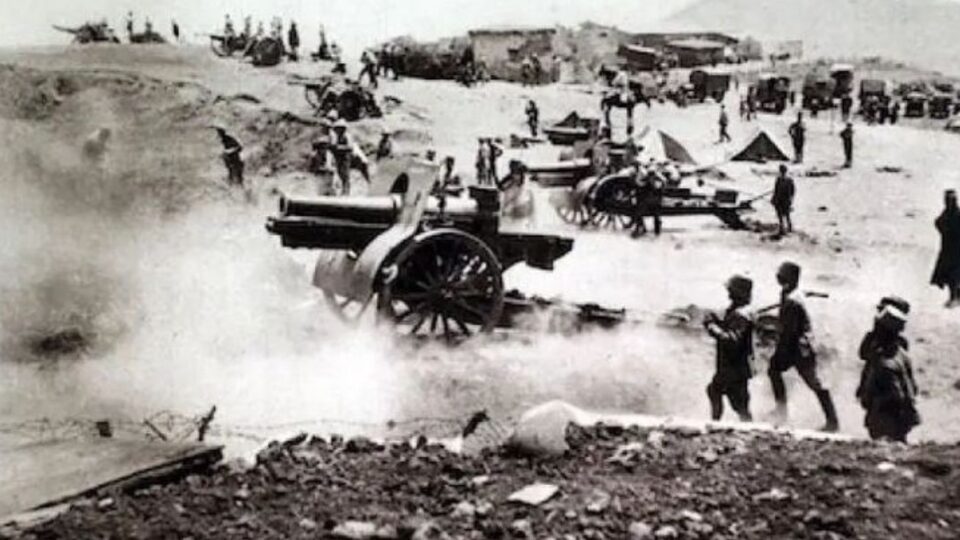
The attack was not a single wave but a succession of consecutive ambushes: every height became a firing position, every bend turned into an ambush, and every narrow pass became a trap.
The Spanish soldiers heard gunfire from every direction without seeing most of those who fired, and as the front ranks fell, panic began to spread to the rear.
Ammunition crates were abandoned, cannons were left in place, the pack animals loaded with provisions fled, and every soldier searched for a path to safety rather than a position to fight from. Within a few hours, the organised withdrawal had turned into complete collapse.
A collapse that spreads like contagion
The effect of the chaos did not stop with the withdrawing forces. Every group of fleeing soldiers that reached another Spanish position carried news even more terrifying than the last: "Anual has fallen… the army is finished… the command has vanished."
With each new account, morale collapsed further, to the point that some garrisons withdrew before they were attacked, and others abandoned their positions with little resistance. Local units that had been fighting alongside the Spanish disintegrated; some of their members joined the resistance, and others left their posts, and in this way the military defeat became a comprehensive psychological collapse.
Where did Silvestre disappear?
Amid this turbulent scene, General Manuel Fernández Silvestre vanished. From that day on, his body was never definitively found, leaving his fate one of the most enigmatic questions in Spanish military history.
As for units such as the cavalry of the Alcántara regiment, they attempted repeated covering attacks to protect the withdrawing troops and made great sacrifices, but they could not save an army that had lost its command, its communications and its discipline all at once, for the battle had by then slipped out of everyone's hands.
Figures that tell the scale of the catastrophe
Sources differ in their estimates of losses, because some studies count only the dead of the Battle of Anual itself, while others include all the operations that followed until the fall of the Spanish positions in the Rif.
But most estimates indicate that the number of Spanish dead and missing ranged between eight thousand and more than thirteen thousand, while other studies raise the figure to between ten thousand and sixteen thousand. The Spanish army also lost thousands of rifles, dozens of cannons, and enormous quantities of ammunition and equipment, and these spoils would later become the weapons with which al-Khattabi continued his war against colonialism.
The loss was not only material but also moral and political: the image of the Spanish army was shaken, and questions began to be asked in Madrid about who was truly responsible for what had happened in the mountains of the Rif.
In al-Khattabi's camp, everyone understood that what had been achieved was not merely a victory in a battle, but the beginning of a new phase that would change the history of Morocco and draw the eyes of the world to a leader who had emerged from the mountains of the Rif to write his name into the history of liberation wars.
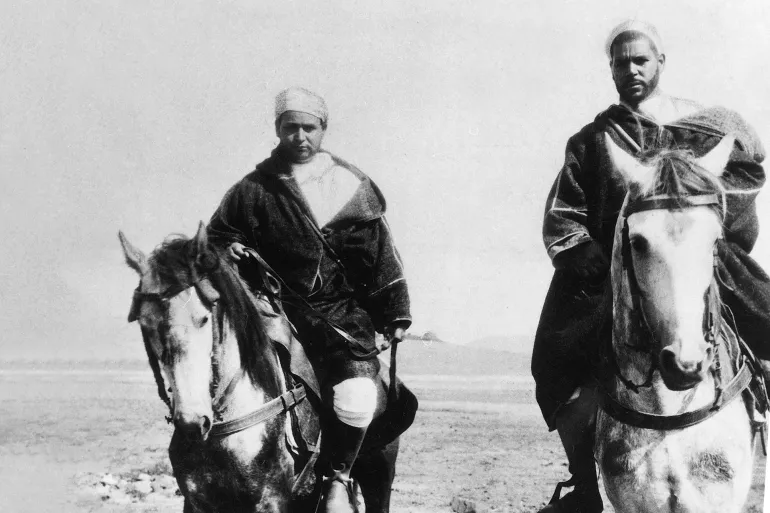
From judge and journalist to a commander who changed the history of wars: why al-Khattabi's name has remained alive for more than a century
Muhammad ibn Abd al-Karim al-Khattabi was not a military commander in the conventional sense. He did not receive his education in the science of war at a staff college, nor did he lead a regular army with arms factories or enormous supply lines. Yet he achieved what armies and states had failed to achieve, when he inflicted on Spain one of its harshest military defeats of the modern era, and later compelled France to wage a broad war to confront him.
Perhaps the secret of his distinction lay not in possessing greater firepower, but in holding a different vision of war. He understood that the struggle for liberation is decided not only by the number of rifles, but by the commander's ability to read the land, understand his enemy, and unite his people around a single goal.
A commander shaped by knowledge before the rifle
When al-Khattabi returned to the Rif for good, he was no longer the official who had worked in the Spanish administration, but a man carrying a clear political and military project.
The years of study in jurisprudence and Islamic law at the Al-Qarawiyyin Mosque, and his work as a judge, journalist and translator, had refined his character and given him a rare capacity to combine thought, organisation and leadership.
For this reason he did not regard the resistance as a temporary reaction, but as a project to build a political entity capable of endurance. Hence he did not limit himself to leading battles; he sought to organise administration, arrange resources, and unite the tribes that disputes had long exhausted. He understood that military victory is not complete without building institutions to preserve its fruits.
The Republic of the Rif: the dream of a state before the time of independence
After successive victories, in 1342 AH / 1923 CE, al-Khattabi declared the establishment of the Republic of the Rif, an experiment unprecedented in the region at the time.
The republic was not merely a symbolic declaration, but an attempt to build a modern administration, organise the judiciary, collect taxes, and establish institutions capable of managing the affairs of the population, while affirming nominal allegiance to the Sultan of Morocco and the unity of the country.
Al-Khattabi understood that resisting colonialism did not mean chaos, but required a state governed by laws and institutions. For this reason he sought to transcend narrow tribal loyalties and to turn the fighters into an organised army subject to command and discipline.
Although this experiment was short-lived, it left a deep mark on the modern history of Morocco as one of the earliest attempts to build an independent administration in the face of occupation.
When two empires united to bring down one man
Spain quickly realised that it was incapable of ending the Rifian revolt on its own. The defeat at Anual was not merely the loss of a battle, but a blow to the prestige of the entire Spanish state.
For its part, France began to watch with concern the expansion of al-Khattabi's influence, fearing that the spirit of resistance would spread into its zones of influence within Morocco. Thus the two colonial powers found themselves facing a single adversary, and they decided to unite their efforts.
Beginning in 1343 AH / 1925 CE, France and Spain launched an unprecedented joint military campaign, in which hundreds of thousands of soldiers took part, backed by aircraft, artillery and naval fleets.
The military balance had shifted considerably. Facing two colonial powers, the resistance could no longer sustain its earlier momentum.
In 1345 AH / 1926 CE, al-Khattabi decided to surrender to the French forces, preferring to spare the lives of the people of the Rif over continuing a war whose human cost had become staggering.
From Exile to Cairo... The End of a Leader Who Never Stopped Dreaming
Al-Khattabi was exiled with members of his family to the island of Réunion in the Indian Ocean, where he spent twenty-one years far from his homeland. Despite the harshness of exile, he did not surrender to isolation. He worked in trade, then in agriculture, and continued to follow world news, until he was given the opportunity to leave the island while being transferred to France. In 1366 AH / 1947 CE, he arrived in Egypt and chose to remain there, refusing to return to Morocco as long as colonialism still existed.
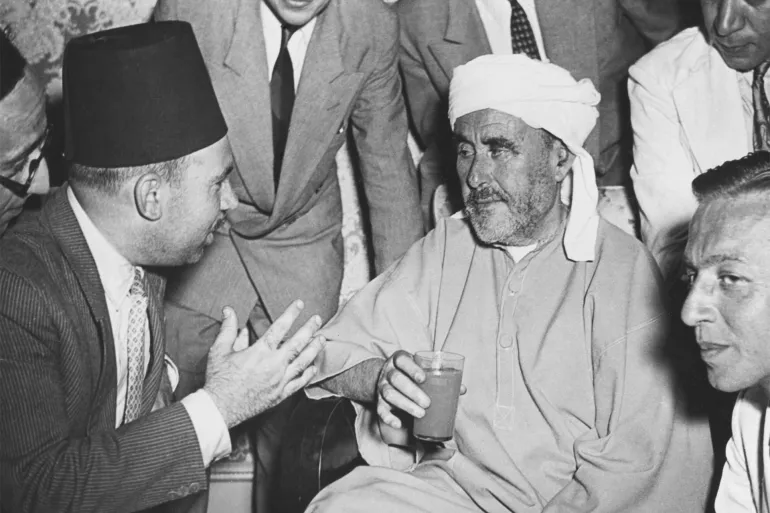
From Cairo, he founded the Committee for the Liberation of the Maghreb, making the Egyptian capital a centre for his political activity and a meeting place for leaders of the liberation movements in Morocco, Algeria and Tunisia. He continued to believe that the struggle for liberation was one, and that the independence of the Maghreb countries could not be separated from one another.
In 1382 AH / 1963 CE, the curtain fell on his life with his death in Cairo, where he was buried in the Martyrs' Cemetery, far from the mountains of the Rif that had shaped his renown, yet which remained present in his heart until his last days.


