

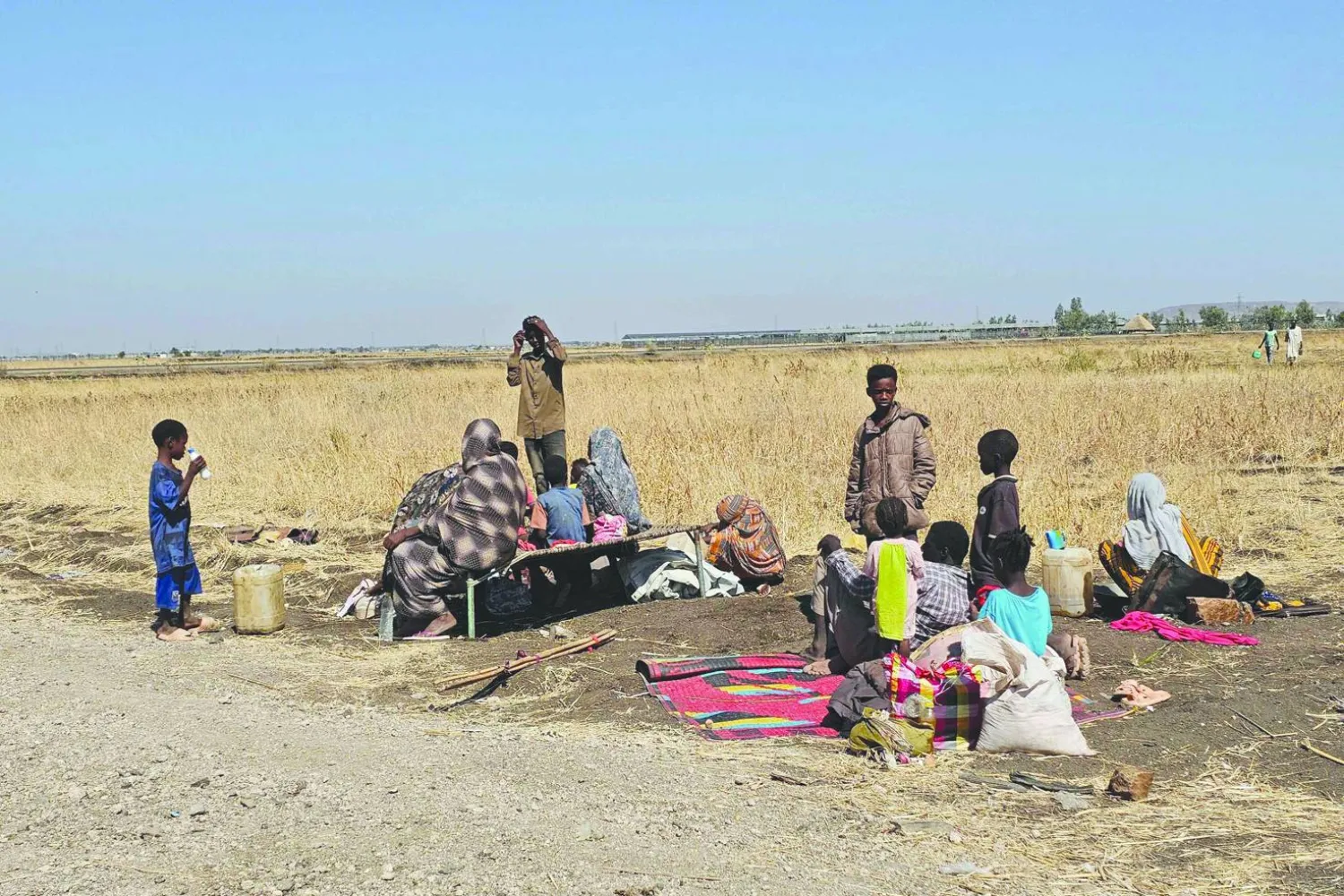
The United Nations High Commissioner for Refugees (UNHCR) on Tuesday, 3 November 2026, published a new update on the emergency response for Sudanese refugees in Chad, covering the situation up to 1 November, at a time when the war in Sudan continues to push civilians to seek safety beyond their country's borders, and pressure is mounting on host communities and humanitarian services in eastern Chad.
The agency listed the document within its operational data-sharing system, under the title "Sudan Emergency in Chad," alongside other updates concerning the relocation of refugees within the country and individual biometric registration operations.
These publications are part of humanitarian organisations' efforts to track refugee movements, organise the response, and coordinate the work of the entities involved in providing protection and assistance.
Eastern Chad: a humanitarian extension of the Sudanese war
Since fighting broke out between the Sudanese Armed Forces and the Rapid Support Forces in April 2023, Chad's eastern border has become one of the main routes along which Sudanese civilians flee, particularly those arriving from the Darfur region.
This continuing flow of refugees places a heavy burden on Chad's border areas, as the response requires providing shelter, safe drinking water, healthcare, education, and protection for the most vulnerable groups.
The need for support is not limited to new arrivals. Families who arrived in earlier phases of the war also face challenges related to the continuity of aid, the availability of essential services, and opportunities to regain a measure of stability.
Chadian host communities are also affected, as they share their limited resources with families who have fled the war.
A multi-sector operational update
The UN document's page indicates that the update relates to a wide range of humanitarian response sectors, including protection, emergency shelter, non-food items, water, sanitation and public hygiene, education, refugee registration, child protection, and the response to gender-based violence.
A number of international and local bodies take part in coordinating the response, among them UNHCR, the World Food Programme, the World Health Organization, UNICEF, and the International Organization for Migration, alongside Chadian institutions specialised in receiving refugees and reintegrating them.
This diversity reflects that dealing with the refugee crisis is not limited to providing temporary shelter; it requires an interconnected system of services, beginning with the registration and protection of new arrivals, and extending to food security, health, education, and support for host communities.
Registration and relocation within Chad
In parallel with the main update, UNHCR published other documents dated 3 November concerning individual biometric registration and the transfer of refugees from arrival areas to better-organised reception sites.
Registration operations are important for identifying needs and facilitating refugees' access to services, while internal transfers aim to organise reception and ease pressure on some border areas.
However, these measures alone do not end the vulnerabilities facing displaced families, particularly when stays in refugee sites are prolonged and humanitarian aid becomes a primary source for meeting daily needs.
Protecting civilians and sustaining needs
The ongoing war in Sudan raises concerns about further waves of displacement, especially with repeated attacks on populated areas and continuing security disturbances in Darfur.
In this context, the humanitarian response requires continuous monitoring of the numbers of new arrivals, the capacity of shelter sites to absorb them, and the scale of health, food, and educational needs.
The importance of ensuring that refugees have access to documentation and services, protecting children and separated families, and addressing the risks faced by people most exposed to exploitation and violence is also highlighted.
The new UN update once again brings attention to another dimension of the Sudanese war, one that extends beyond the front lines within the country to the lives of families who were forced to cross the border, and to what they need in terms of protection and stability after fleeing violence.
For these families, the effects of the war do not end upon reaching Chad; a new phase begins in the search for shelter, food, treatment, and education, while the prospect of returning to Sudan remains tied to an end to fighting and the availability of conditions of security and safety.


