


In a development that reveals the widening gap between Washington and Tel Aviv over the course of the war in Gaza, Israeli Prime Minister Benjamin Netanyahu announced his government's rejection of the proposal put forward by US President Donald Trump and the so-called "Board of Peace," which aimed to link the disarmament of Hamas to the withdrawal of Israeli forces from the Gaza Strip.
Netanyahu said that "Israel" had not agreed to the formula that was presented, affirming that the Israeli army will not withdraw from its current positions before "the complete disarmament of Hamas." He also stressed the continuation of military operations, directing his forces to "do whatever is necessary" to protect "Israel," in his words.
Retreat from the Initiative
The first announcements of the initiative indicated that the disarmament of Hamas would proceed in parallel with the withdrawal of Israeli forces from Gaza. However, after meeting with Netanyahu, the "Board of Peace" reverted to affirming that any withdrawal would take place only after the complete completion of disarmament and the dismantling of tunnels, which was considered a retreat from one of the most important provisions of the original initiative.
As for Hamas, it stated that it would not begin any disarmament process unless it was preceded by a complete halt to military operations and the withdrawal of Israeli forces to the agreed-upon lines, considering that any talk of disarmament before ending the occupation and aggression is unacceptable.
Continued War and Diminishing Prospects for an Agreement
Netanyahu's rejection indicates that the Israeli government remains committed to continuing the war on Gaza and holds that the disarmament of Hamas must precede any withdrawal. Observers believe this condition makes the prospects of reaching an agreement more complex, prolongs the war and increases the suffering of civilians.
These statements come at a time when raids and military operations continue inside the Strip, with more casualties, an ongoing displacement crisis, and worsening conditions for food, medicine and water, amid repeated warnings from humanitarian organisations about the deterioration of the humanitarian situation.
Critics also argue that the continuation of military operations goes beyond the goal of disarming Hamas, particularly in light of earlier statements by Israeli Defence Minister Israel Katz, who affirmed that the Israeli army will not withdraw from Gaza even if the movement is disarmed, and that the ultimate objective is to impose long-term Israeli control and prepare the conditions for establishing Jewish settlements in the Strip.
The West Bank: Targeting the Means of Life
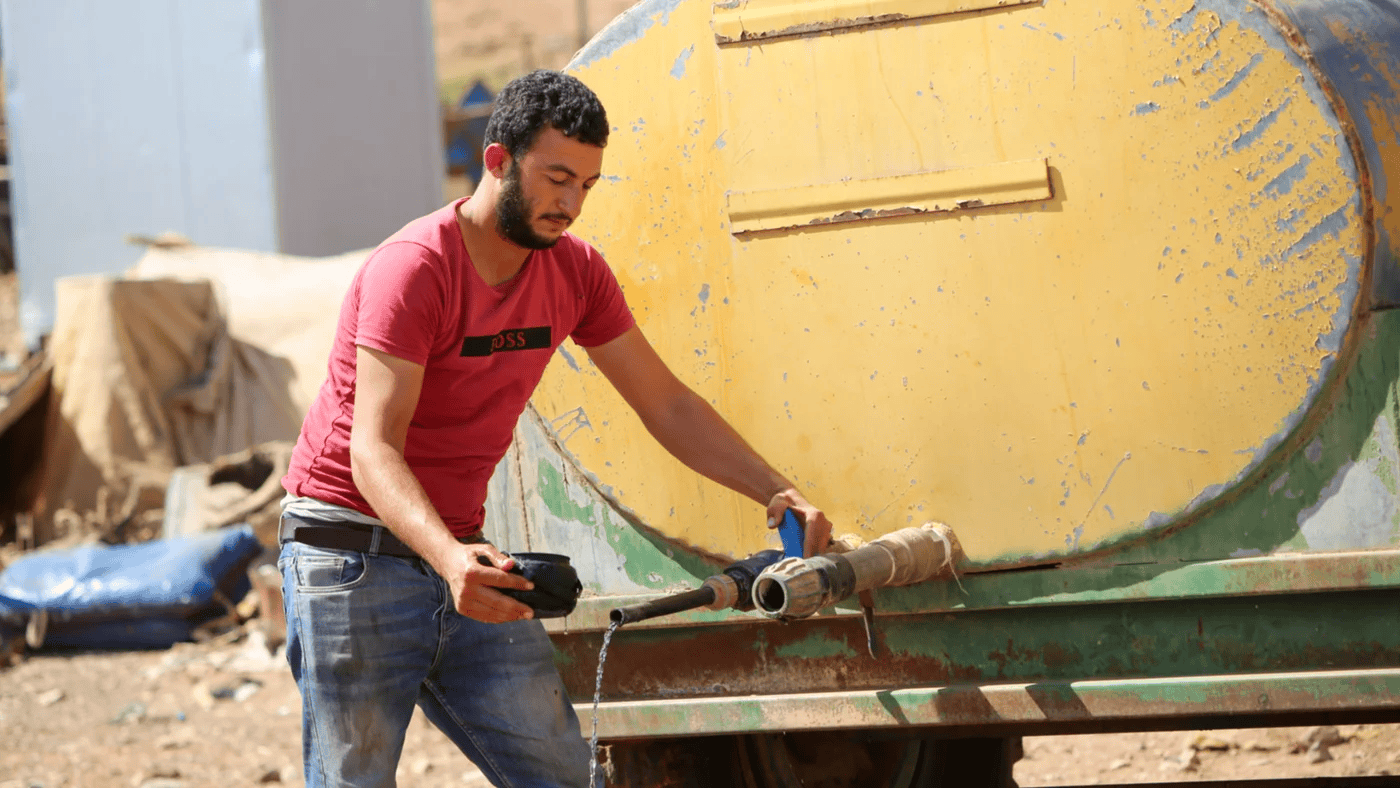
While attention turns to Gaza, policies that Palestinians and human rights organisations say aim to undermine the steadfastness of residents are escalating in the West Bank, particularly in the northern Jordan Valley.
The Ras al-Ahmar community witnessed the destruction of three water wells that supplied more than 47 Palestinian families, comprising over 600 people, with the water needed for drinking and agriculture and for watering thousands of sheep, which represent the main source of income for most residents of the area.
Residents say they have been forced to buy water and transport it by tanker from distant areas, at high cost, amid military restrictions and checkpoints that hinder the arrival of essential supplies.
Residents also affirm that the attacks were not limited to the demolition of the wells, but were preceded by months of settlers repeatedly cutting water lines in an attempt to push residents to leave their lands.
Human rights activists see the targeting of water sources as one of the most dangerous forms of pressure on Palestinian communities in the Jordan Valley, where water becomes a tool of economic and humanitarian pressure, threatening the continuity of agricultural and pastoral life in the area.
A Scene Growing More Complicated

Recent developments reflect the continued divergence between political proposals and the reality on the ground. While international initiatives are put forward to end the war and reorganise the security situation in Gaza, the Israeli government holds to conditions that make reaching an agreement more difficult, while its military operations in the Strip continue.
In contrast, Palestinian civilians continue to pay the greatest price: in Gaza, the effects of the war, including killing, displacement and destruction, persist, while in the West Bank pressure on residents is increasing through the targeting of agricultural land and water sources, compounding the humanitarian crisis and making a political settlement more complex amid ongoing confrontations and the widening of tensions.


