


According to testimonies from Israeli military personnel and intelligence officers in the new documentary "NAZA", the question was not only whether civilians would be killed in some strikes on the Gaza Strip, but how many civilians were expected to be killed, and whether that number would be accepted in exchange for targeting the wanted individual.
This is the central issue raised by the Israeli film, directed by journalists Yuval Abraham and Rachel Szor, which draws on the testimonies of 24 people who served in the Israeli military and intelligence and some of whom took part in surveillance and target-identification systems during the war on Gaza.
The film, which was screened at the Venice Film Festival in September 2026, offers a picture from inside the Israeli targeting system. Its directors say the testimonies reveal that expected civilian losses were not always an unknown outcome appearing after the strike, but in many cases a known quantity estimated in advance and built into the decision-making process.
"NAZA": When the Civilians Expected to Be Killed Become a Number
The title of the film itself summarises the issue it seeks to expose.
According to the film, "NAZA" is a term used by Israeli intelligence to refer to expected "collateral damage", that is, the number of civilians expected to be killed as a result of a military strike.
According to the testimonies gathered by the directors, intelligence agencies worked to estimate the number of civilians present around the target before some strikes were carried out, and this estimate then became part of the target file submitted for approval.
Thus, according to the film's account, the presence of civilians was not necessarily unknown at the moment the decision was made. In some cases, the system knew that the house to be bombed contained a family and children, and estimated in advance the number of people the strike might kill.
The Guardian, which participated in producing the film, says that several witnesses described the use of artificial intelligence-based systems to help identify large numbers of people whom Israel considered targets, including low-ranking members of Hamas, and then targeting some of them at their homes at night while knowing that their family members might be with them.
"They Know the House Is Full of Children"
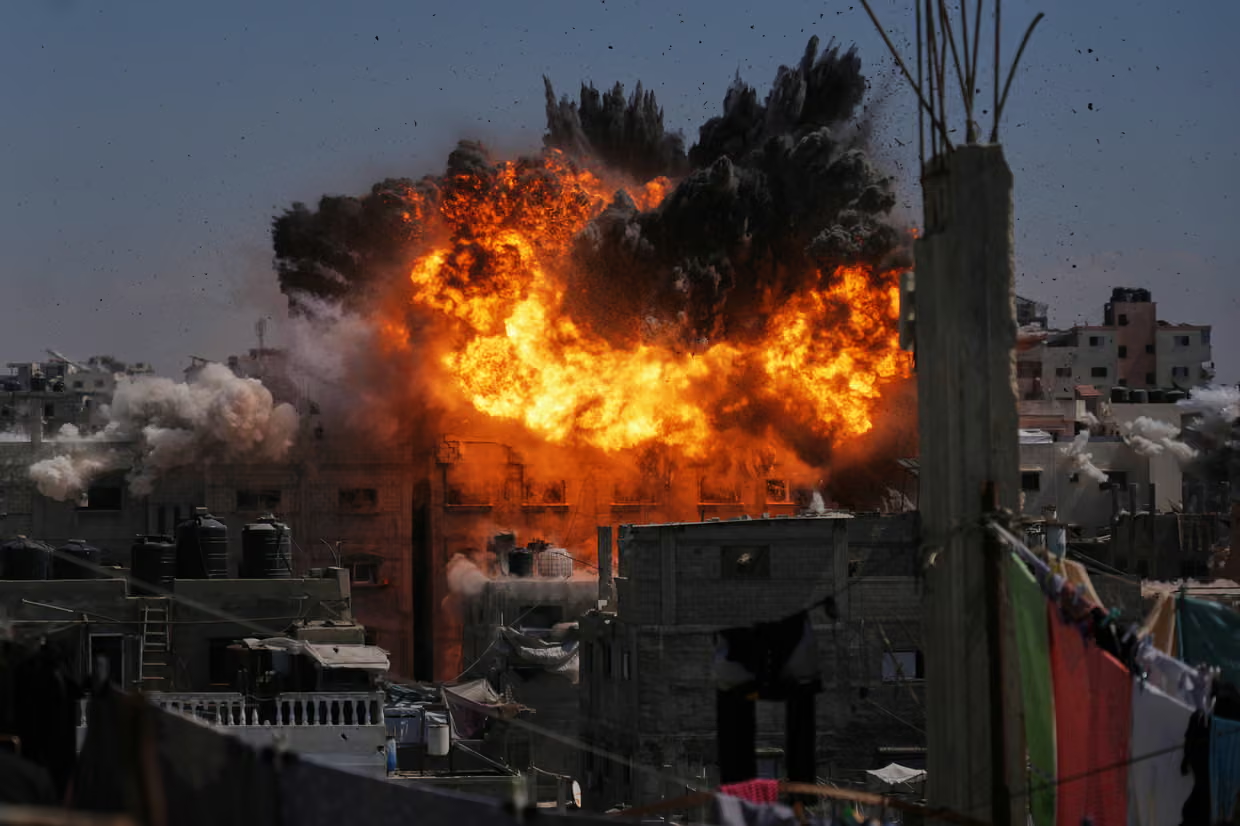
One of the key points the film focuses on is the targeting of suspects inside residential homes.
According to the testimonies, a family's presence inside a house did not necessarily lead to the cancellation of a strike. The film's directors say that some members of the system knew, through surveillance and intelligence means, that the people inside the building were going about their daily lives before authorisation for the strike was given.
According to the directors, one officer recounts that he was aware in real time of hundreds of cases in which families were carrying on their normal lives inside homes: a man speaking with his wife, the sound of a television, prayer, or a child crying, after which approval for the strike was given.
When asked about the reason for this, he said in his testimony in the film: "You understand that the goal is destruction."
The accounts of the anonymous witnesses cannot be independently verified in every case, but the film's significance lies in the fact that the accounts do not come from outside observers, but from people whom the directors say worked within military and intelligence units linked to the same targeting system.
One of the key points the film focuses on is the targeting of suspects inside residential homes.
Can Hundreds of Civilians Be Accepted in Exchange for a Single Target?
The most controversial testimony came when a former intelligence worker was asked about the largest number of expected civilian deaths he had seen accepted within a single operation.
The witness said he did not know how many were actually killed, because the outcomes, according to his account, were not always reviewed, but he said he had seen, in one case, approval of a strike for which the estimate reached 500 civilians.
Artificial Intelligence and the Widening of the Target Pool
The film reveals another aspect of the war system: the use of data-processing and artificial intelligence technologies to help produce targets at a broad scale.
According to the testimonies and investigations on which the film draws, systems were used to analyse huge quantities of data and signals and to propose individuals or buildings as potential targets.
The testimonies describe a system in which the process can begin with data analysed electronically, after which the target passes through a chain of intelligence workers until the strike decision is reached.
The Israeli military, for its part, maintains that artificial intelligence does not make the decision to strike, and that the selection of targets and approval of strikes are carried out by humans in accordance with army rules and international law, in its words.
This is an important point in understanding what the film reveals: the core claim is not that a "machine" pressed the button to strike by itself, but that technology helped humans produce and process large numbers of targets, while the final approval decision remained human.
Who Is Responsible When the Killing Is Divided Up?
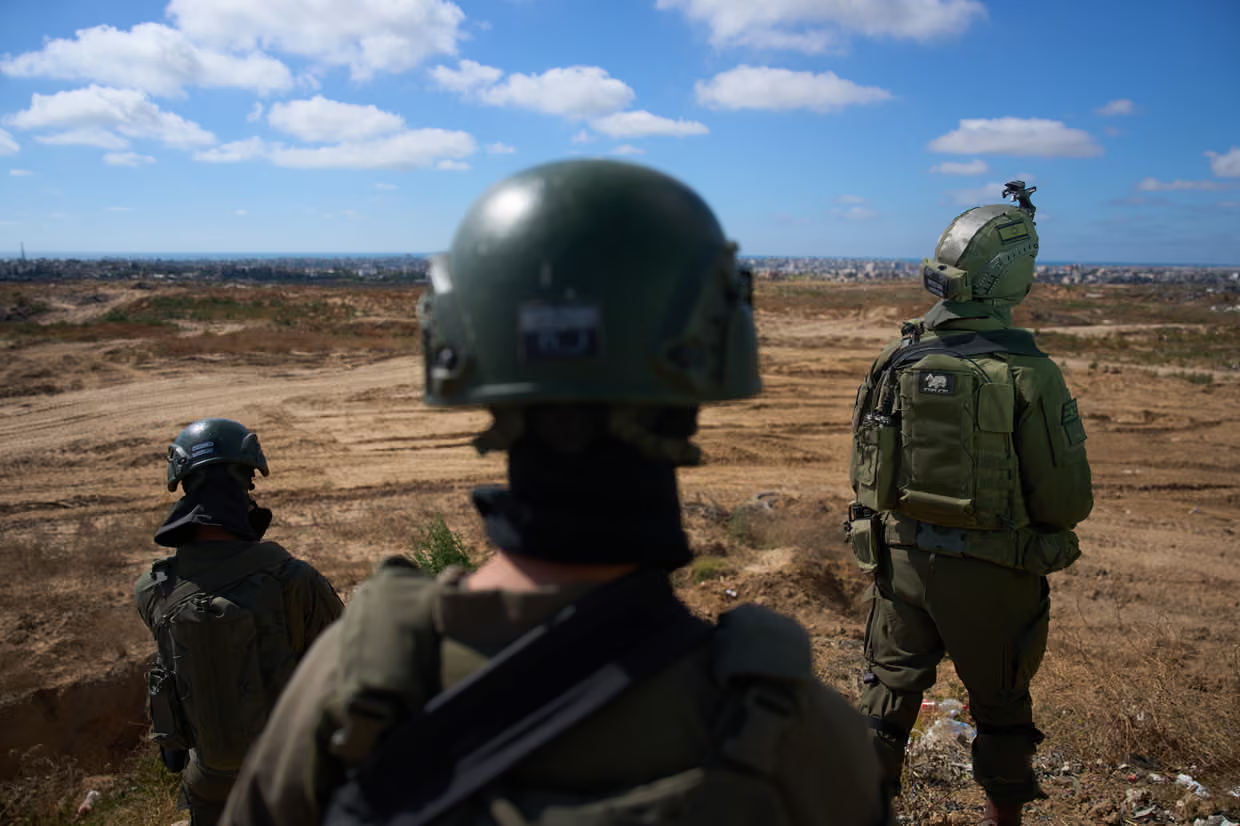
"NAZA" also draws attention to the division of the targeting process among a large number of workers.
One person gathers data, another develops the technical system, a third monitors the target, and another calculates the expected civilian losses, after which the information passes through a further chain before the strike is carried out.
One worker in the system says in the film: "My role is technical", while another describes himself as merely a "small cog".
This structure is one of the issues the directors wanted to highlight: when the operation is split into dozens of technical and administrative tasks, each participant can see himself as responsible only for a limited step, while the final result is the bombing of a house and the deaths of civilians.
The Issue Is Broader Than the Figure "500"

The figure of 500 is perhaps what drew the most attention in the film, but it is not necessarily the most important thing "NAZA" reveals.
The core issue the film raises is the existence of a system which, according to the testimonies, was in some cases capable of knowing that civilians were present at the target site, estimating how many of them might be killed, and then incorporating that number into the process of approving the strike.
Here, in the bureaucratic language the film discusses, the civilian becomes a figure within the category of "expected collateral damage".
This is why the directors chose "NAZA" as the title of their film: not only as a military term, but, in their view, as an expression of the way an entire family's life can turn into a number appearing on a screen before a bomb is dropped.
The directors say they wanted to document the "system" rather than individual cases of soldiers who disobeyed orders: the orders, policies, working mechanisms and language used in making decisions.
The Israeli military rejects this conclusion, claiming that the killing of civilians is not an objective of its operations and that its procedures are designed to minimise losses among them.
Between the two accounts, "NAZA" puts before the audience the testimonies of people who say they were inside the same targeting system, and raises a question that goes beyond the final death tolls: What does it mean for the expected deaths of civilians to be known and calculated before a strike is carried out, and for the strike to proceed nonetheless?


