

Myanmar's Refusal to Use the Term "Rohingya" Reveals Erasure of Identity at the Heart of the Genocide Case
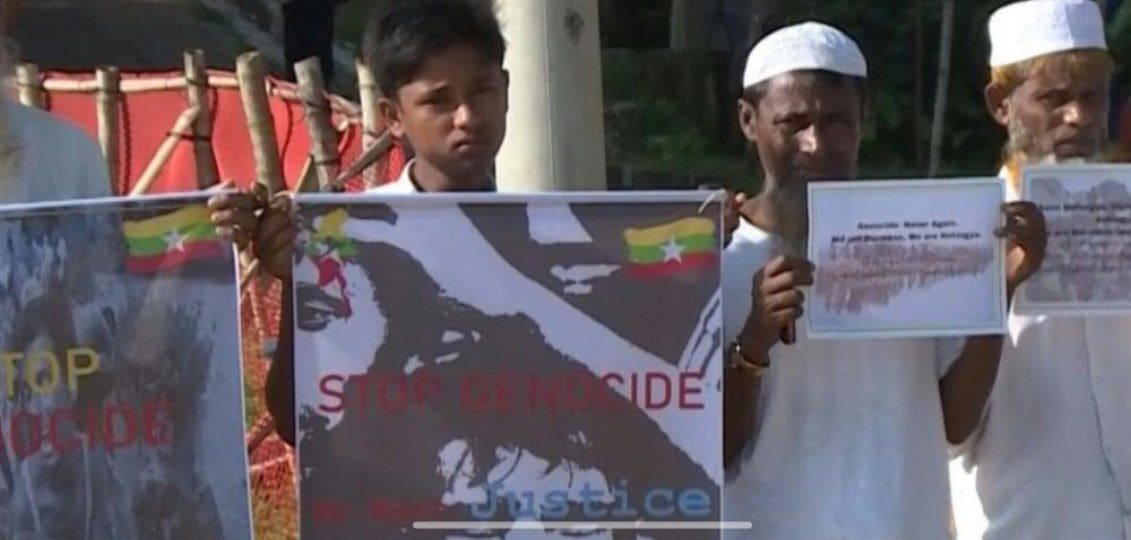
Hearings of the International Court of Justice, held three weeks after the parties presented their arguments in the genocide case concerning the Rohingya, revealed a clear absence of the word "Rohingya" from Myanmar's defence team.
This is a strong indication of a policy of denying identity.
Myanmar, also known as Burma, adopted its current name in 1409 AH (1989 CE) during military rule, a change that many pro-democracy advocates reject as illegitimate because it was imposed by the military council without popular consent.
During the closing arguments on 20 Jumada al-Akhirah 1447 AH (29 January 2026 CE), Myanmar's lawyers did not use the word "Rohingya" at all. Instead, they used the term "Bengali" — a designation that the Rohingya community considers demeaning and a sign of the denial of their historical presence in Myanmar.
UN Special Rapporteur Tom Andrews described this, saying: "Of all the words spoken in these historic sessions, the word that was not spoken was the most telling."
This linguistic avoidance highlights what many observers consider an attempt by Myanmar to deny the existence of the Rohingya not only physically, but also culturally and in terms of identity.
The strongest testimony, however, came from the survivors themselves. Yusuf Ali, a 52-year-old refugee who said he was tortured by Myanmar's forces, said: "The world has witnessed our suffering for many years — how we were expelled, how our homes were destroyed and we were killed…"
He expressed his belief that the court would vindicate the truth.
Andrews praised the courage of the survivors who travelled to The Hague to give their first-of-its-kind testimony.
He said their willingness to appear reflected "the light of truth amid the darkest of crimes."
In its defence, the government of Myanmar focused on discrediting the evidence presented by United Nations bodies and civil society organisations, describing it as biased and unreliable without careful examination.
The defenders also argued that the military operations carried out in 1437–1438 AH (2016–2017 CE) were legitimate responses to counter-terrorism against the armed group ARSA.
Myanmar also claimed that it is not legally bound to cooperate with United Nations investigative bodies, as it has been excluded from those bodies since 1442 AH (2021 CE).
The defenders said the fact-finding mission lacks adequate expertise and that there are only 42 relevant witness testimonies despite seven years of investigations.
The Gambian Minister of Justice, Dawda Jallow, called on the court to reject the defence's arguments and to declare genocide as a means of breaking what he described as "the cycle of atrocities and impunity."
A ruling by the court is expected within 3–6 months, although deliberations may take longer in this historic case.


