


Nearly nine years after the mass displacement campaign launched by the Myanmar army against Rohingya Muslims, satellite imagery reveals a new chapter of the tragedy in Rakhine State in the west of the country, where entire villages have disappeared, homes and farms have been demolished, and military facilities, camps for displaced people and new settlements have been built on their land, in areas that have come under the control of the Arakan Army, the armed group that seized most of northern Rakhine State from government forces during 2024.
An investigation published by the British newspaper "The Guardian" on 1 October 2026, based on satellite imagery, testimonies from survivors and United Nations research, revealed the seizure of at least 800 hectares of land in 23 Rohingya villages since 2024, and their repurposing for projects that their original residents cannot return to.
The new facilities include military camps, housing for other groups, and camps where displaced Rohingya live under strict restrictions on movement, while testimonies collected by the newspaper indicate that some residents were forced to remove their own homes and to work on building the facilities erected on their land.
These findings raise concerns that the tragedy has gone beyond temporary displacement to a permanent change in the demographic composition and land ownership, which could make the return of hundreds of thousands of refugees to their villages more difficult, even once the fighting ends.
Villages that were inhabited, now empty land
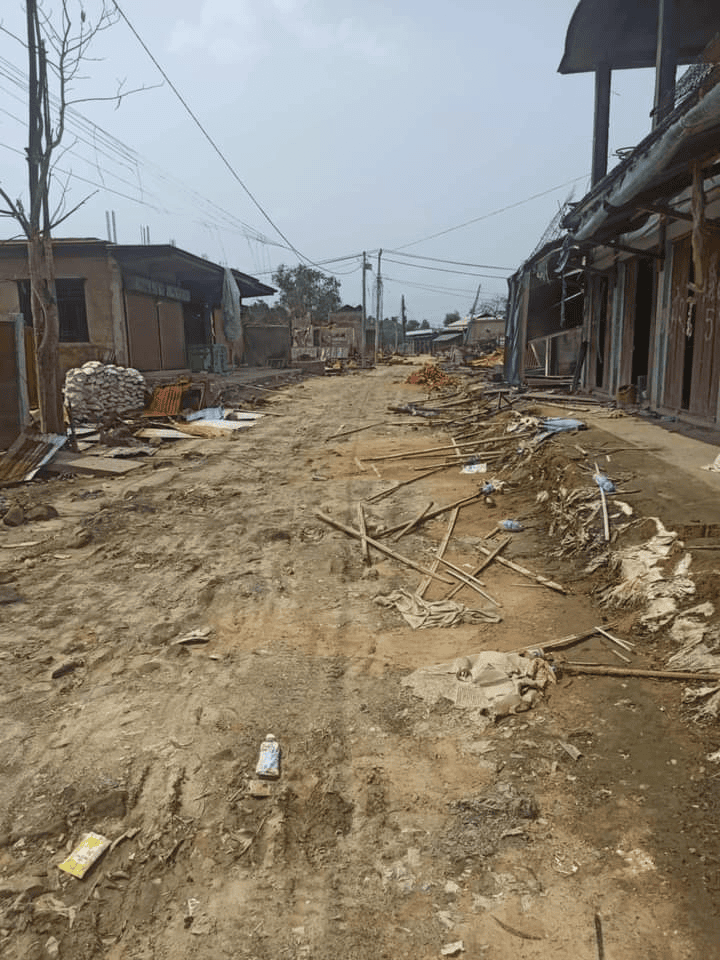
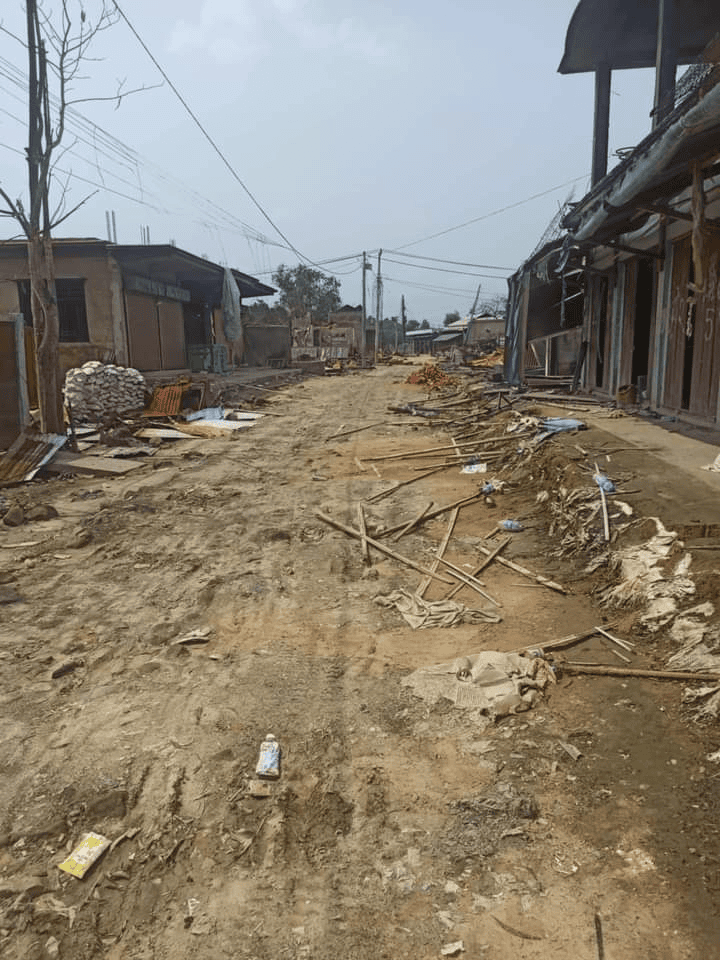
A comparison of satellite images taken before and after the Arakan Army's seizure of areas of the town of Buthidaung shows extensive changes in the land that once housed Rohingya communities.
In some locations where houses, trees, farms and local roads had been widespread, there are now areas free of the old buildings, or new facilities whose layout differs from the villages that previously existed.
The Guardian investigation drew on fire-tracking data provided by the US space agency NASA, together with video footage and testimonies from former residents, to determine the timing and locations of some of the destruction.
In the village of "Ywet Nyo Taung", near the Mayu River, footage provided by former residents showed extensive destruction affecting homes and public facilities.
The newspaper's team verified the filming locations by matching geographical features visible in the footage, including a large school near the river and the terrain of the mountains surrounding the village.
The scenes show the remains of burned buildings and piles of bricks along the roadsides, in areas where residents said their homes, mosques and shops had stood before the fighting broke out.
These scenes are of particular significance because some of them document what happened after the intensity of the fighting had subsided, which raises questions about why the demolition of buildings and the conversion of land to other uses have continued.
800 hectares of land in 23 villages
The investigation drew on an internal United Nations report that identified at least 800 hectares of land in 23 Rohingya villages that had been seized and reused since 2024.
The new uses were divided between military sites, centres housing displaced people, and residential settlements built for other groups.
The recorded area is roughly eight square kilometres. This figure alone does not reveal the full scale of the destruction, but it indicates that the changes were not limited to scattered houses; they affected agricultural land and extensive residential communities.
UN research has also documented repeated cases of land confiscation or the displacement of residents in areas under the control of the Arakan Army, according to Bangladeshi media outlets reporting on the investigation.
Concerns centre on the possibility that the demolition of old buildings and the redivision of land could erase the landmarks of villages and the boundaries of property, making it more complicated in future to establish residents' rights.
In rural areas where families depend on farming and livestock, the seizure of land means the loss not only of a home but also of a source of food and income and of the ability to remain settled.
At least ten camps, and Rohingya under movement restrictions
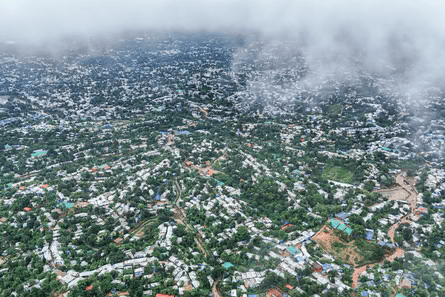
In the village of "Hnaythaya" in Buthidaung township, the land was used for rice cultivation until 2024, before being converted into a site containing around 120 buildings according to images reviewed by the investigation by 2026.
Rohingya who fled neighbouring villages live at the site, including survivors of violence that took place in the area during the Arakan Army's advance.
According to residents' testimonies cited by The Guardian, people there are subject to restrictions on entering and leaving, and cannot leave the camp without permission from the authorities controlling it.
The investigation identified at least ten camps established in northern Rakhine State after the armed group expanded its control.
The nature of these sites raises human rights concerns, particularly in light of reports of restricted freedom of movement, deteriorating living conditions, and limited access to food and medical care.
For its part, bodies linked to the Rakhine authorities say some of the new sites were set up to resettle displaced people who lost their homes during the fighting, and deny that all of them are detention centres.
The essential difference, from a human rights perspective, lies in whether residents can leave these sites freely and return to their property, or whether their presence there is imposed on them with no real alternative.
Testimonies on home demolition and forced labour
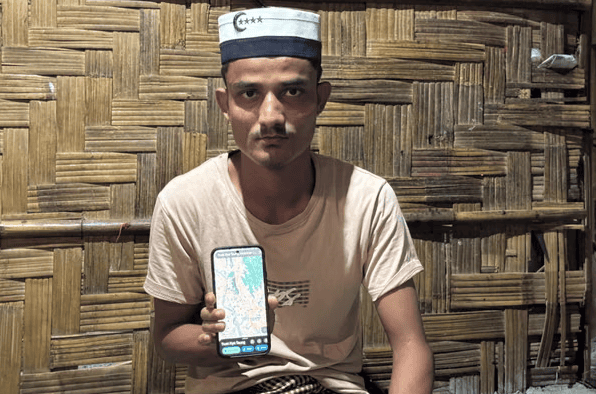
The evidence gathered by the investigation was not limited to satellite imagery; it also included testimonies from survivors who spoke of being forced to leave their homes and of the confiscation of their land and property.
Mohammed Aris, an 18-year-old Rohingya man currently living in Bangladesh, said that bulldozers cleared entire residential areas in his village, levelling homes, and that trees were cut down and the features of the old settlements removed.
He added that military facilities and posts belonging to the Arakan Army had been built at some of the sites where residents' homes had been demolished.
As for Mohammed Sadiq, aged 26, from the village of Ywet Nyo Taung, he said that members of the armed group prevented residents from continuing to farm and told them the land no longer belonged to them.
He stated that residents were forced into hard labour, including building roads, digging trenches and working inside the camps, and that their farming tools and land were confiscated without being returned to them.
Other testimonies spoke of Rohingya being forced to dismantle buildings in their villages to use the materials to construct military facilities, alongside the imposition of financial payments, the confiscation of livestock, and restrictions on movement.
The investigation also included testimonies about the forced recruitment of men, including some who were compelled to undergo military training, as well as allegations of physical and sexual assault against women and girls.
Some of these allegations are consistent with what the United Nations Office of the High Commissioner for Human Rights has documented regarding abuses suffered by the Rohingya at the hands of parties to the conflict in the state.
The "Hpare Seri" massacre: when the village became a graveyard for its residents
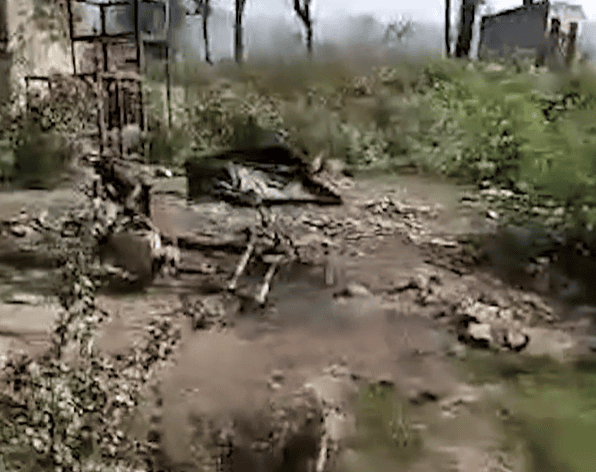
Among the most prominent sites linked to the investigation is the village of "Hpare Seri" in Buthidaung town, which witnessed on 2 May 2024 a mass killing of Rohingya civilians during fighting between the Arakan Army and government forces.
In an extensive report published by Human Rights Watch on 18 May 2026, the organisation concluded that Arakan Army fighters may have killed at least 170 Rohingya civilians, including women and children, during the attack.
The human rights investigation drew on interviews with 41 witnesses, satellite images, and videos and photographs that were analysed and verified.
The organisation said that gunmen opened fire on unarmed civilians who were trying to flee the fighting near military positions, and that the actual number of victims may be higher than the toll it was able to document.
Images reviewed by the organisation showed human remains at multiple sites, while survivors who returned to the village after the massacre reported that their homes had been looted and burned.
Analysis of satellite imagery revealed that most of the village's buildings disappeared after the attack, and only a limited number of structures remain at the site.
In February 2025, the Arakan Army ordered the survivors to move to another site, where some residents said they were subjected to severe restrictions on movement and harsh living conditions.
The political wing of the Arakan Army denied responsibility for the killing of civilians and said the fighting targeted armed elements and forces linked to the government army.
However, Human Rights Watch considered that the evidence it gathered points to serious violations of international humanitarian law that may amount to war crimes, and called for an independent investigation and accountability for those responsible.
The Arakan Army: from fighting the army to controlling Rohingya land
The Arakan Army was founded in 2009 as an armed group seeking autonomy or self-determination for the people of Rakhine of the Rakhine nationality.
The group fought intermittent battles with the Myanmar army from 2018, before clashes expanded considerably following the military coup the country witnessed in February 2021.
With the renewal of military operations in late 2023, the Arakan Army took control of large areas of the state, including most parts of northern Rakhine that had contained large Rohingya communities.
These developments had raised hopes among some residents that the control of the government army, whose name has been associated with campaigns of killing and displacement against the Rohingya, would come to an end.
However, reports by human rights organisations document abuses by the Arakan Army itself, including the killing and detention of civilians, the confiscation of their property, and forcing them to work or to be recruited.
At the same time, the government army is still accused of carrying out airstrikes and indiscriminate attacks on civilian areas in the state, as well as forcibly recruiting Rohingya during earlier phases of the fighting.
The United Nations Office of the High Commissioner for Human Rights affirms that the Rohingya are being subjected to abuses at the hands of both sides, placing civilian residents between two armed forces competing for control of their land.
The Arakan Army denies, and disagreement over the causes of destruction
Despite the photographic evidence and testimonies on which the investigation relied, responsibility for some of the village destruction remains disputed.
The "Global Arakan Network", which is close to the Rakhine point of view, published a response to The Guardian's investigation in which it argued that the report did not give sufficient attention to the military context.
The network said that many villages were shelled and set on fire during clashes between the Arakan Army, the government army and armed Rohingya groups, and that it is not possible to attribute all the destruction to a single party on the basis of images alone.
It also noted that some resettlement sites were established in coordination with local administrations, and that landmines and unexploded ordnance may hinder residents' return to former conflict zones.
In this context, Nicholas Koumjian, head of the United Nations Independent Investigative Mechanism for Myanmar, explained that the mechanism has not yet confirmed the Arakan Army's responsibility for all the destruction of Rohingya land cited in the investigation.
However, the failure to settle responsibility for every site does not cancel the evidence documented by Human Rights Watch regarding specific violations, nor does it dispel the concerns linked to the confiscation of land and the prevention of residents from returning to it.
155,000 new refugees, and displacement continues
The wide-scale change in control over Rohingya land coincided with a new wave of displacement towards Bangladesh.
According to data on which The Guardian's investigation relied, more than 155,000 Rohingya have arrived in Bangladesh since 2024, a figure equal to roughly a quarter of the number of Rohingya estimated to have remained inside Myanmar after previous waves of displacement.
Bangladesh currently hosts around 1.2 million Rohingya refugees, most of whom live in overcrowded camps in the Cox's Bazar district in the south-east of the country.
Refugees face difficult humanitarian conditions, including limited opportunities for work and education, and wide dependence on food aid and services provided by humanitarian organisations.
As for those who remained in Rakhine, many of them face multiple threats, including continued airstrikes, internal displacement, food shortages and restrictions on movement.
In the most recent military developments, Reuters reported on 5 October 2026 that eight people had been killed over two days in airstrikes carried out by the Myanmar army on displacement camps in Rakhine State, according to information provided by an armed group and a local youth organisation.
These attacks came after another airstrike that killed dozens in the state, confirming the continued danger to civilians despite the shifting balance of control on the ground.
From the 2017 displacement to the erasure of villages in 2026
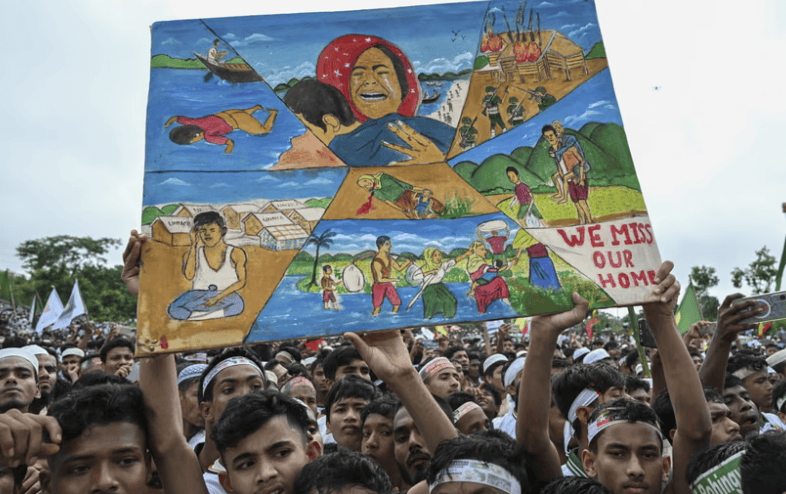
To understand the gravity of the new findings, it is necessary to go back to August 2017, when the Myanmar army launched a wide-scale military campaign against the Rohingya in northern Rakhine.
The operations resulted in the killing of large numbers of civilians, the burning of hundreds of villages, and the flight of more than 700,000 Rohingya to Bangladesh.
Human rights organisations at the time documented the army's use of burning and destruction to push residents to leave, before the remains of many villages were removed and government and military facilities were built on some of the sites.
In 2025, the United Nations Independent Investigative Mechanism for Myanmar revealed seven Rohingya villages that the army had destroyed during the 2017 campaign, on whose land military sites were subsequently established.
The new investigation raises concerns that a similar pattern is being repeated, this time in areas controlled by the Arakan Army rather than the government army.
Destruction followed by a change in land use may turn displacement into a lasting reality, particularly if the original owners are unable to prove their rights or reach their villages.
This issue is one of the important matters in the Rohingya file before the International Court of Justice, which is considering allegations of genocide against Myanmar over the 2017 campaign.
Could displacement and land confiscation amount to war crimes?
Legal experts argue that assessing what is happening in Rakhine should not be limited to the number of houses destroyed, but should also cover the circumstances under which residents were forced to leave, the fate of their property, and their ability to return.
Tom Dannenbaum, professor of international law at Stanford University, said that combining coercion with the displacement of populations within or outside the country could constitute a war crime in the form of forcible transfer of population, depending on the circumstances and the available evidence.
International humanitarian law prohibits the forcible displacement of civilians, except in exceptional cases required by their safety or imperative military necessity, and requires that safeguards for their protection and return be respected once the reasons for displacement cease.
Likewise, the seizure or destruction of civilian property without legitimate military necessity may constitute a violation of international law.
However, determining criminal responsibility for each incident requires an independent investigation that establishes the identity of the perpetrators, the nature of the orders, and the military circumstances surrounding them; satellite images alone are not sufficient to prove all of these elements.
When the village disappears, what remains of the right to return?
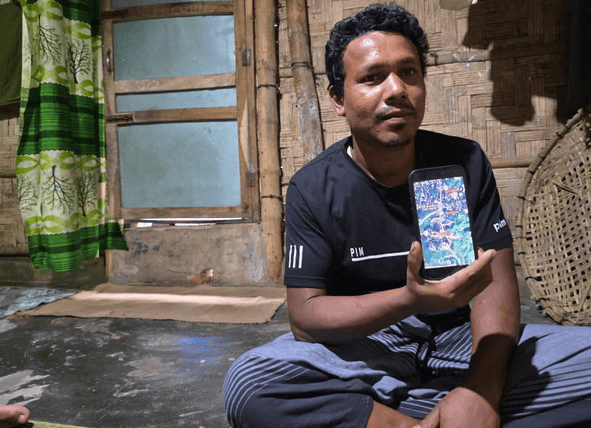
The investigation warns that what is happening may impose a new reality that is difficult to reverse, even if the armed parties in Myanmar reach a political settlement.
The return of refugees requires more than ending the fighting alone; it requires ensuring that homes and land exist for them to return to, recognising their legal rights, and protecting them from arrest, assault and discrimination.
The matter becomes even more complicated for the Rohingya, who have historically been denied citizenship and the rights attached to it, and who have been subjected to long-standing restrictions on movement, property ownership, education and employment.
Oung Kyaw Moe, a former Rohingya official in the National Unity Government, which opposes the military council, has warned that the crisis is entering a new phase in which the uprooting of the Rohingya from their land could become permanent.
When villages disappear, land ownership changes, and new structures are built where the old homes stood, return becomes more complicated, even for refugees who still hold documents proving ownership or who know where their former homes were.
For this reason, the importance of the Guardian's investigation lies not only in revealing the physical destruction, but in documenting changes that may affect the historical presence of the Rohingya in Arakan.
Nearly nine years after hundreds of thousands fled the government army's campaign, the Rohingya face a new danger: that the war may one day end, but their villages will have vanished and their lands will have been put to other uses, while their owners remain in refugee camps far from their homeland.
Thus the question raised by the satellite images becomes more pressing than merely counting the houses that were demolished: will the Rohingya still have a place to return to?
Main sources of the article
- The Guardian — original investigation and satellite imagery, 1 October 2026. The Guardian
- Human Rights Watch — investigation into the Hpaung Seik massacre, 18 May 2026. HRW
- United Nations — report on the human rights situation of the Rohingya and minorities in Myanmar, September 2026. ecoi.net
- Global Arakan Network — response to the Guardian investigation, October 2026. Global Arakan Network
- Reuters — report of 5 October 2026 on airstrikes on displacement camps in Arakan. Reuters


