


Less than two months before the US midterm elections, the presence of Muslims and Islam in the electoral rhetoric of a number of Republican politicians is growing, from the Michigan Senate race to the governor's races in Texas and Alabama and House races. Amid this, there are accusations that political discourse is re-linking Muslims to "extremism," "Sharia," and threats to American security.
An extensive report by the Reuters agency, published on 8 September 2026, documented how Muslims have become a prominent issue in the election campaign leading up to the 3 November vote, which will determine whether Republicans retain control of Congress during the last two years of President Donald Trump's term.
According to Pew Research Center figures cited by Reuters, some 5.5 million Muslims live in the United States, compared with about 2.4 million in 2007, and they currently make up around 1.6% of the country's population. At the same time, Muslims have achieved increasing political visibility in recent years in positions that had been out of their reach for decades.
Abdul El-Sayed at the Center of the Battle
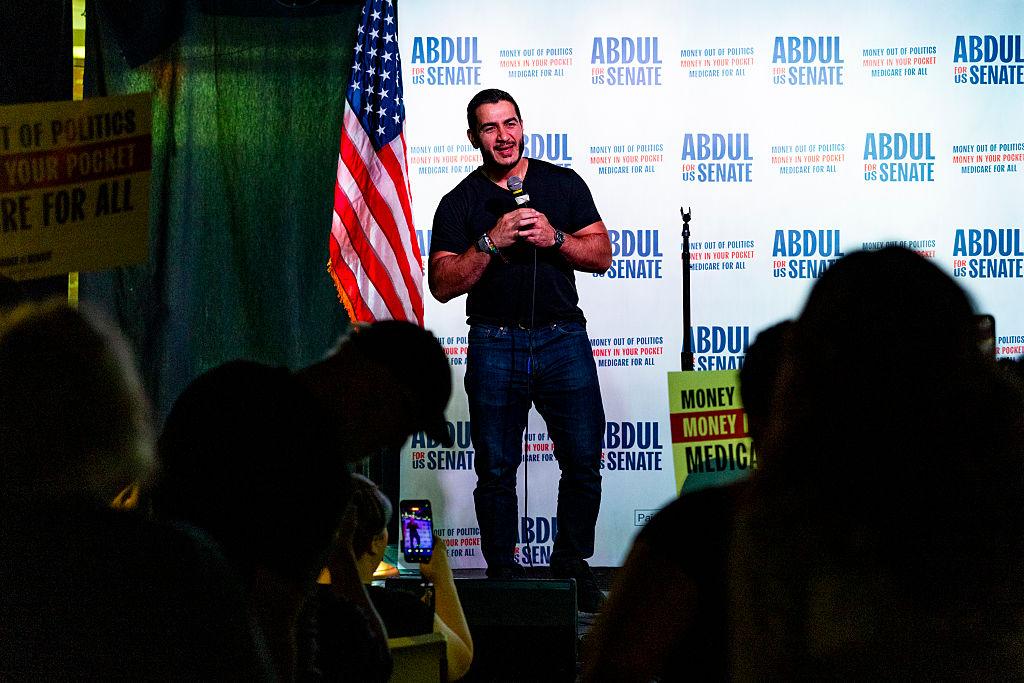
Egyptian-American physician and politician Abdul El-Sayed stands at the center of this debate, having become the Democratic Party's nominee for the US Senate in Michigan.
El-Sayed is facing Republican Mike Rogers in one of the most competitive Senate races in the country, with independent analysts rating the race as close and not settled. If El-Sayed wins, he will become the first Muslim elected to the US Senate.
He is also, according to Reuters, the only Muslim running in the 2026 elections for a statewide office, which has made him a main focus of Islam-related attacks during the campaign.
During an election rally in Michigan last week, US Vice President JD Vance described El-Sayed as "very, very evil," and accused him of defending terrorism over statements he made after an attack in March on a synagogue in the Detroit suburbs.
El-Sayed had condemned the attack, but also spoke about the attacker's background, noting that some of his relatives in Lebanon had recently been killed in an Israeli strike, and said that "hurt people hurt people." He later said his remarks may have been misunderstood and apologized for them.
El-Sayed responded to Vance's attack by shifting the debate to economic and political issues, accusing his opponents of using division to achieve electoral gains.
Republican criticism of El-Sayed is not limited to that episode. He has also been attacked over his relationship with left-wing influencer Hasan Piker, and over his critical positions on what is called "Israel."
In one interview, El-Sayed spoke about the social isolation experienced by some Americans and compared it with the community bonds he sees among his relatives in Egypt. Republican Senator Tommy Tuberville responded on the platform X, telling him: "If you hate America that much, go and live in Egypt."
Texas: "Sharia" Enters the Governor's Campaign
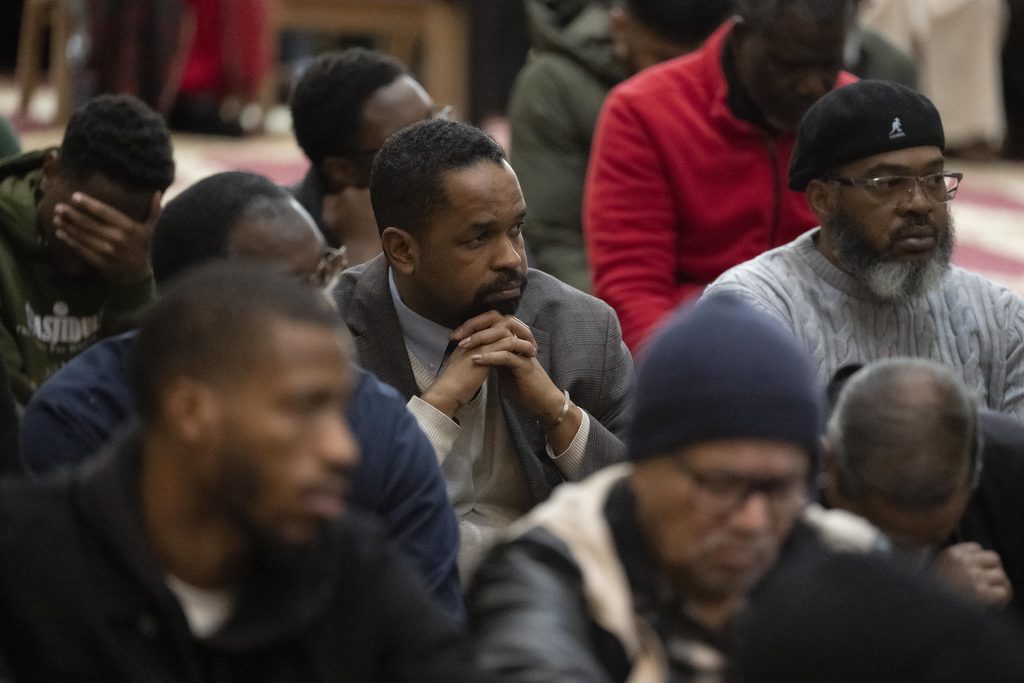
More than a thousand kilometers from Michigan, Islam has also become part of the electoral battle in Texas.
Republican Governor Greg Abbott, who is running a close race for a new term, has escalated his campaign against a real estate development project led by Muslim entities, and called for an investigation into what he described as attempts to establish "Sharia courts."
The project's organizers and civil rights organizations deny these accusations.
A spokesperson for Abbott's campaign told Reuters that the governor's actions relate to alleged legal violations and not religious beliefs, while his critics see the issue as part of a broader political discourse that portrays Muslims as a group seeking to establish a parallel legal system.
The issue did not stop at the real estate project.
In August, Abbott called for a federal investigation into ablution facilities at two Texas airports, arguing that government-owned airports may not favor one religion over another.
Houston Democratic Mayor John Whitmire responded that the ablution room and the adjacent prayer room are open to travelers, workers and stakeholders regardless of their beliefs, and that no one receives special privileges or is prevented from using them.
"The Enemy Inside the Gates"
In Alabama, where Muslims make up less than half of one percent of the population, Islam has also entered the campaign for the state governorship.
Republican Senator Tommy Tuberville, who is running for governor, warned that "the enemy is inside the gates," in reference to what he called "radical Islam."
This phrase carries particular significance because it concerns a state without a large Muslim voting bloc, such as Michigan, but rather one where Muslims represent a very small proportion, which reinforces the reading that the issue of Islam is being used to mobilize voters even in areas where Muslims do not constitute a significant demographic force.
"Sharia Free America Caucus"
The rhetoric has extended to the House of Representatives. Texas Republican representatives Keith Self and Chip Roy established a caucus within Congress under the name "Sharia Free America Caucus."
Florida Republican representative Randy Fine also introduced legislation that he said aims to counter what he described as the "rise" of Islamic Sharia in the United States.
This has not been limited to scattered electoral statements; it has reached the formation of a political group within Congress and legislative proposals that use "Sharia" as a political issue.
Why Now?
The rise of this rhetoric comes at a politically difficult moment for Republicans.
The midterm elections take place on 3 November and include all 435 seats in the House of Representatives and about one-third of the Senate seats.
Republicans currently hold a narrow majority in Congress, while Reuters/Ipsos polls show that approval of President Donald Trump's performance stands at around 33%, amid voter concern over rising living costs, the US-Israeli war on Iran, and tariffs.
Aaron Hughes, professor of religious studies at the University of Rochester specializing in Islam and Judaism, says the increased focus on Muslims comes at a time when Republicans are finding it difficult to build political momentum around issues such as the cost of living, the war on Iran, and immigration.
Hughes described this approach as fear-mongering, arguing that portraying an entire community negatively and linking it to Hamas or Iran allows the debate to be diverted away from the core issues that concern the American voter.
This reading is consistent with a broader electoral strategy that Reuters observed days earlier, in which Republicans are trying to portray the Democratic Party through its left-wing and progressive wing, at a time when marketing the economic record of the Trump administration has become more difficult. During his visit to Michigan, Vance spent more time attacking El-Sayed than promoting the Republican candidate Mike Rogers, whom he had come to support.
A Growing Muslim Political Presence
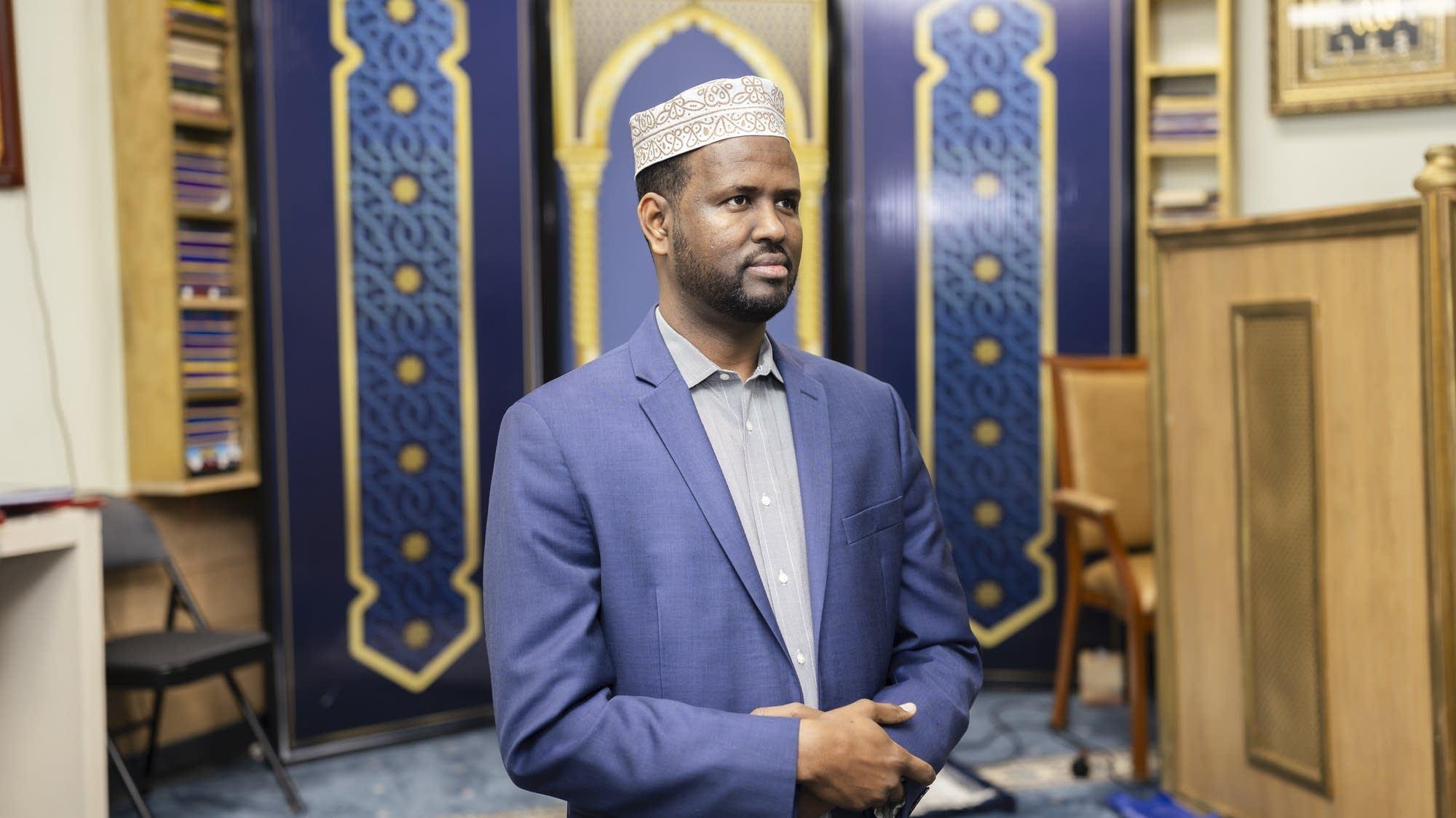
On the other side, the rise of anti-Muslim rhetoric comes at a time when Muslims' political representation in the United States is growing notably.
El-Sayed could add another historic milestone if he wins in Michigan, becoming the first Muslim elected in the history of the US Senate.
This political rise makes Muslims more present in election campaigns than ever before, whether as voters who can influence swing states such as Michigan, or as candidates competing for major offices.
Not a Phenomenon Confined to One Party
Although the Reuters report focused mainly on Republican rhetoric in the 2026 elections, it also noted that Islamophobia in American politics cannot be attributed to one party alone.
Ashik Siddique, co-chair of the Democratic Socialists of America, said that Democratic leaders have at times also contributed to this kind of rhetoric.
He cited statements by Andrew Cuomo during his earlier campaign for mayor of New York, when he raised a question about how Zohran Mamdani would have acted had he been mayor during the 11 September 2001 attacks.
The debate thus extends to an older phenomenon in American politics relating to invoking Islam and Muslims in contexts of security and terrorism, although its presence has become more pronounced in the current Republican campaign.
From the "War on Terror" to the Ballot Box
Their numbers have doubled, their political representation has grown, and a Muslim candidate is now competing for a Senate seat, while Muslims have reached prominent political positions at the city and state levels.
Yet this rise has at the same time been accompanied by a return of language that links Islam with "Sharia," "extremism," and the "enemy within."
What is notable in the 2026 elections is not the presence of an anti-Muslim statement here or there; American politics has seen that before. The new element that Reuters' report sketches is the accumulation of cases across different states and races, to the point that Muslims and Islam have become an electoral issue exceeding a single incident or a particular candidate.
From Michigan, where a first Muslim could enter the Senate, to Texas, where "Sharia" and Islamic facilities have become a political subject, to Alabama and Congress, the Muslim identity itself appears to have become part of a broader struggle over the shape and political direction of the United States.
While Republicans say they are raising legitimate questions about security, extremism, and the role of religion in public life, their critics argue that conflating millions of Muslims with extremism and political Sharia is less a security debate than a use of fear of a religious minority to mobilize voters.
Thus the Muslim minority enters the 3 November elections in a dual and unprecedented position: a growing political presence on one side, and increasing use as a target of electoral rhetoric on the other.


