


Muslims in Mozambique represent one of the oldest Islamic communities in southern Africa. They should not be viewed as a recent migrant community or a minority that emerged with the Asian migrations of the colonial era. The presence of Islam in northern Mozambique dates back to the first centuries of its spread along the Indian Ocean coasts, and it was linked from an early period to the navigation and trade networks that connected East Africa with the Arabian Peninsula, India, the Comoros and Madagascar.
Historical studies indicate the presence of Muslim merchants and sailors on the coasts of northern Mozambique since the eighth century CE, roughly the second century AH. Local Muslim communities then formed, in which those arriving across the Indian Ocean merged with the African coastal population. Over the centuries, Islam in Mozambique, particularly in the north, became part of the local identity of a number of peoples, and not merely a trace of passing foreign trade.
How many Muslims are there in Mozambique?
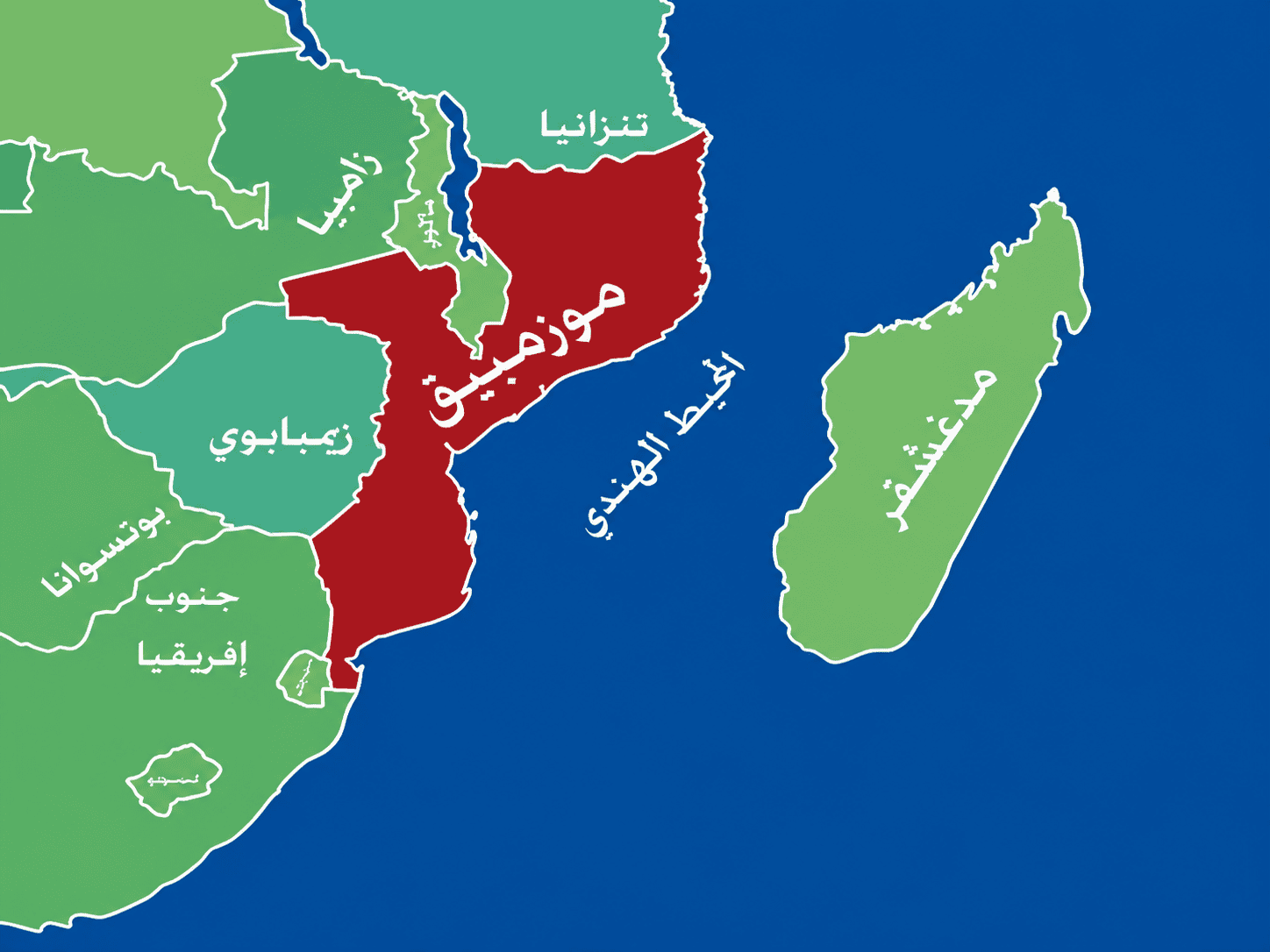
The most recent comprehensive census providing detailed data on religious affiliation is the 2017 census, corresponding approximately to 1438–1439 AH. According to official data, Muslims made up 18.9% of Mozambique's population, compared with 17.9% in the 2007 census, corresponding to 1427–1428 AH. Islam was thus the second-largest religious affiliation recorded nationally, after Christianity in its various denominations.
The detailed tables of the 2017 census show more than 5.1 million people registered as Muslim. Later official population estimates indicate that Mozambique's total population reached about 33.24 million in 2024, corresponding to 1445–1446 AH. However, these estimates do not constitute a new religious census; therefore, it is not valid simply to treat 18.9% as a fixed proportion and calculate the current number of Muslims on that basis.
Some leaders of Islamic institutions in the country have for years argued that the true proportion of Muslims may be higher than the official figure, and some have put forward estimates of between 25% and 30%.
Where do Muslims live?
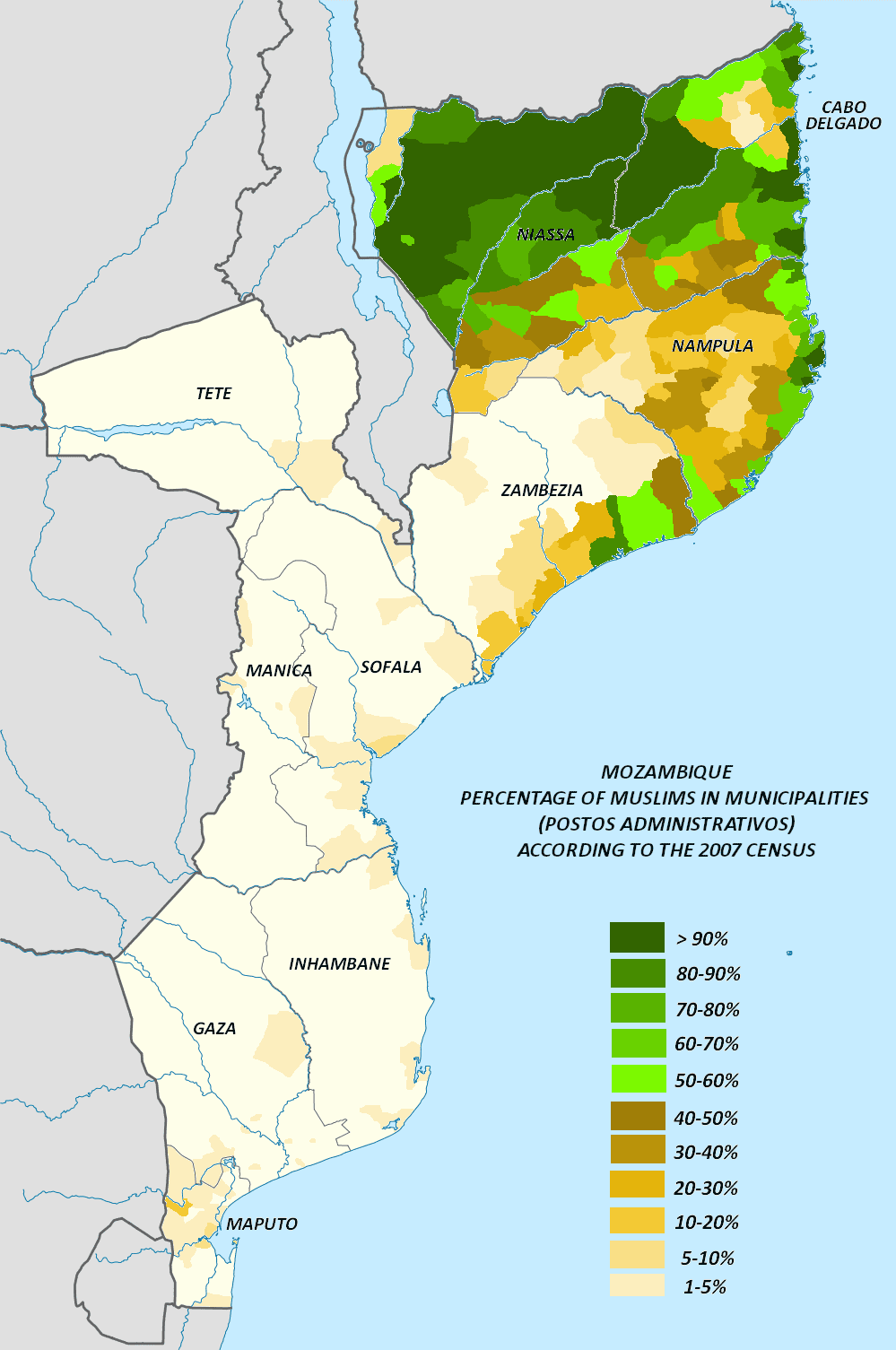
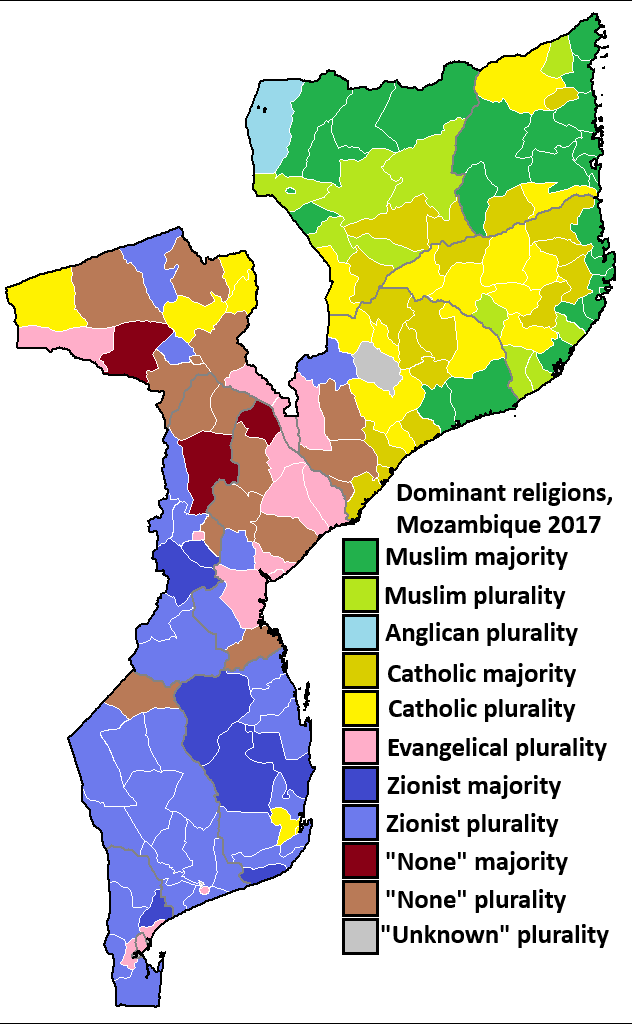
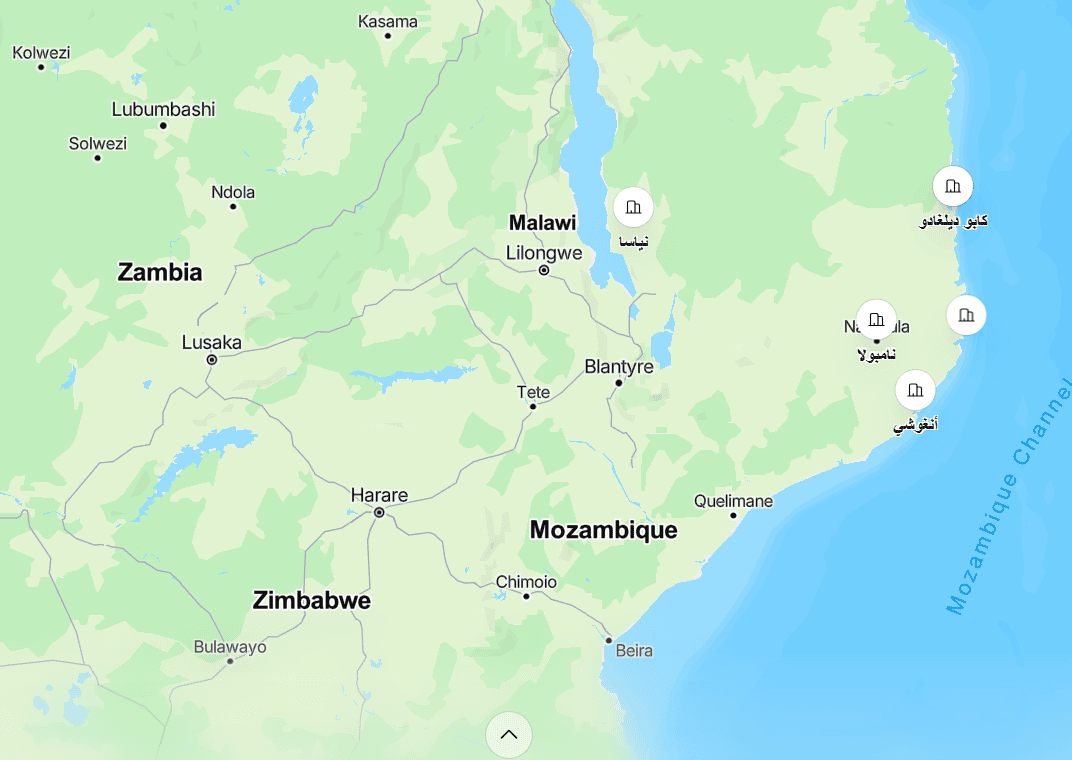
A map showing the religious distribution in Mozambique by district according to the 2017 census, showing the concentration of Muslims mainly in the north of the country, particularly in Niassa, Cabo Delgado and Nampula.
The Muslim presence in Mozambique is clearly concentrated in the north. The largest Muslim communities are found in the provinces of Niassa, Cabo Delgado and Nampula, in addition to a long strip of coastal towns and villages overlooking the Indian Ocean.
In Niassa, data from the National Institute of Statistics showed that Muslims made up 59% of the population in the 2017 census, meaning Islam is the largest religion in the province by a clear margin, while Catholics accounted for 26.3%. Muslim density increases in a number of rural and northern areas historically connected with East Africa, Malawi and Tanzania.
In Cabo Delgado, the far northeast of the country, the National Institute of Statistics counted about 1.192 million Muslims in the 2017 census, out of roughly 2.27 million people registered in the province at the time, meaning more than half the population. Islam was the largest religious affiliation in the province, ahead of Catholicism and other religions.
Nampula, the most populous province in the country, also hosts one of the largest Muslim concentrations numerically. Data based on the 2017 census put the Muslim share there at about 39.7%, compared with about 37.8% for Catholics. The proportion rises in some towns and coastal areas; according to the same tables, in the urban areas of Nampula it exceeded half the population.
This does not mean there are no Muslims in the centre or south of the country. There are Muslim communities in Zambezia, Sofala, the capital Maputo and other commercial cities, and population movement and internal migration have contributed to the spread of mosques and Islamic institutions beyond the historical areas of concentration. Nevertheless, the general picture remains clear: the further north one goes, particularly towards the coast, the older and larger the Islamic presence becomes.
Who are Mozambique's Muslims?
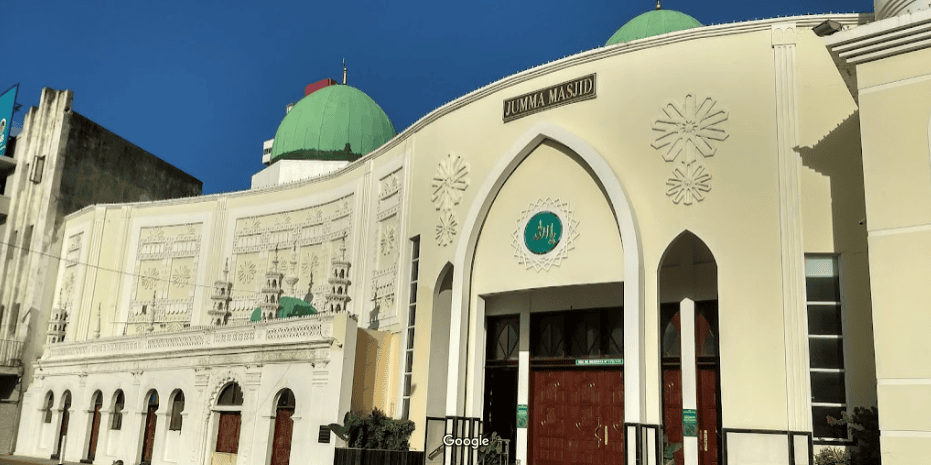
Muslims in Mozambique do not belong to a single ethnic group. The largest bloc is local African, and Islamic affiliation overlaps with a number of peoples and languages that have lived in the north of the country for centuries.
Among the most important of these groups is the Makhuwa (Makua), one of Mozambique's largest peoples, concentrated largely in Nampula, Cabo Delgado and parts of Niassa. There are also the Mwani, a coastal community historically closely linked to Swahili culture, who inhabit parts of the Cabo Delgado coast, including the area around Mocímboa da Praia and other coastal areas.
In Niassa there is also a large number of Muslims from the Yao people, whose communities extend into Malawi and Tanzania. On the Nampula coast there are groups such as the Koti in the Angoche area, in addition to other coastal communities that historically emerged from the mixing of local inhabitants with Muslim merchants and sailors arriving across the Indian Ocean. Historical studies confirm that these processes produced African Muslim communities with a complete local culture, rather than foreign settlements separate from the indigenous population.
There is also a smaller minority of Muslims of Indian and South Asian origin, part of whom are linked to migrations during the colonial period, particularly from Gujarat and other areas on the Indian Ocean. However, these groups are not the origin of the Islamic presence in Mozambique; African local Islam preceded them by many centuries.
Islam reaches Mozambique centuries before the Portuguese
The story of Islam in Mozambique is part of the broader history of the Indian Ocean. As Islamic trade networks expanded along the East African coast, sailors and merchants began using the islands and harbours on the Mozambican coast as stations on their voyages between the Red Sea, East Africa and India.
Evidence discussed by researchers points to the presence of Muslims on the northern coast from the eighth century CE, roughly 80–183 AH, and relations deepened in the following centuries. By the tenth century CE, roughly the late third and early fourth centuries AH, Mozambique Island had become a known part of the navigation and trade network of the Indian Ocean. Some sources state that the island played a role in trans-regional trade links from the tenth century at the latest.
As some Muslim merchants and sailors settled and married into the local population, Islam gradually passed from port communities into a permanent local society. This process was connected to the Swahili world, which extended from southern Somalia, Kenya and Tanzania to northern Mozambique and the Comoros.
For this reason, northern Mozambique has historically been closer, in maritime civilisational terms, to the Swahili coastal system and the Indian Ocean than to the common image of southern Africa as a continental region isolated from the Islamic world.
Mozambique Island: an Islamic centre before the arrival of the Portuguese
Mozambique Island holds a special place in this history. It lies off the coast of Nampula province, and the modern state took its name from it.
When the Portuguese navigator Vasco da Gama reached the island on 2 March 1498, corresponding to Jumada al-Akhira 903 AH, he did not arrive at an empty land or at a society unfamiliar with Islam. Rather, he found a trading centre governed by a Muslim leader, with a social structure linked to Muslim merchants and the Swahili coast.
Historical documents cited by UNESCO indicate that da Gama was initially received by the island's sultan and its inhabitants, who took him to be a Muslim, an important indication of the Islamic character of the trading centre the Portuguese encountered on their arrival.
The Portuguese subsequently established a trading post on the island in 1502, roughly 907–908 AH, and then built a fort in 1507, roughly 912–913 AH. Mozambique Island later became one of Portugal's most important bases on the sea route to India.
However, the arrival of the Portuguese did not lead to the disappearance of Islam from the north. Specialist studies show that a number of coastal Muslim communities and lineages maintained their ties with East Africa and the Comoros, and some areas remained outside full Portuguese control until a late phase of colonial rule.
How did Islam move from the coast to the interior?
In its early stages, Islam was strongest in the islands and coastal towns, but this pattern gradually changed, particularly during the nineteenth century CE, roughly 1214–1317 AH.
Coastal Muslim families established political, commercial and marriage ties with community leaders in the interior. Teachers, jurists and traders moved with them, and Arabic writing, Quranic schools and new networks of religious influence spread.
This expansion should not be presented in an idealised way detached from its historical context. The nineteenth century also saw the flourishing of the slave trade in the Indian Ocean, and various African, coastal and regional powers took part in that trade. Historical research indicates that some Islamic trade and power networks in northern Mozambique at the time overlapped with this economic system. At the same time, political relations, intermarriage and education contributed to the spread of Islam beyond the coast.
Madhhab and religious trends
Most Muslims in Mozambique are Sunni. The historical Islamic traditions of the northern coast have been particularly associated with the Shafi'i school, as with large areas of the Swahili coast, the Indian Ocean islands and southern Yemen.
Field studies indicate that Muslims on Mozambique Island, Angoche and other parts of Nampula historically identified themselves as Shafi'is, and that well-known Shafi'i texts were used in education and local jurisprudence.
In the late nineteenth and first half of the twentieth century, Sufi orders spread in the country, particularly the Qadiriyya and Shadhiliyya, and became influential in a number of northern communities. Researchers date the entry and organised spread of some of these networks to a period beginning roughly in 1896 CE, corresponding to 1313–1314 AH.
During the twentieth century, reformist and Salafi currents also appeared, some influenced by graduates who had studied at Islamic institutions in East Africa, India, Saudi Arabia and other Arab countries. In different phases, this led to debates and disagreements within the Muslim community over religious practices, education and legal authority. The general description of Mozambique's Muslims is therefore not a fully uniform religious bloc: they are a community that is Sunni in its majority, but that has historically known multiple schools, trends and institutions.
Quranic schools and the preservation of Islamic identity
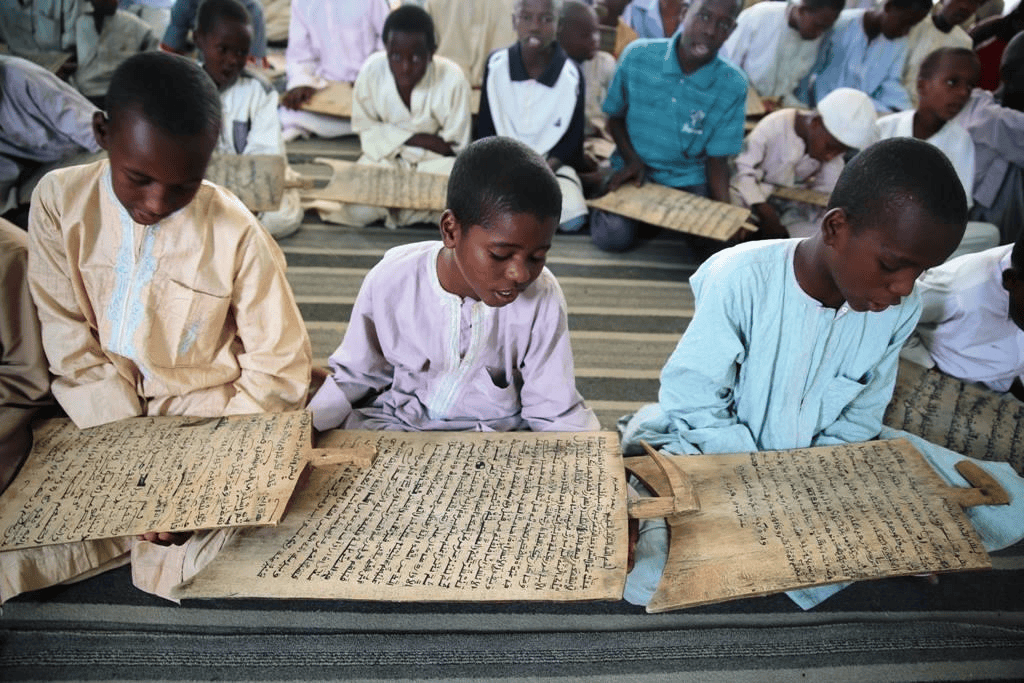
Traditional education played a central role in the survival of Islam, especially in areas where there were no higher Islamic educational institutions.
In many areas, the Quranic school is locally called "madrasa", and the teacher is called "mu'allim", a term close to Arabic. Field studies on Mozambique Island and Angoche have shown that Quranic schools remained among the most important institutions for transmitting the Quran and religious principles from one generation to the next.
Arabic writing and Islamic education in the late nineteenth and early twentieth centuries also played a role beyond worship alone, contributing to the formation of a class of literate people in northern Mozambique before the widespread introduction of modern state education.
Muslims under Portuguese rule
The relationship between Muslims and Portuguese authority was not uniform throughout the roughly five centuries of colonial presence.
After early clashes with Muslim trading centres in the sixteenth century CE, roughly the tenth century AH, Portugal was unable to eliminate Islamic institutions in the north. Religious and commercial ties with the Swahili coast, the Comoros and the wider Islamic world continued.
As the colonial era drew to a close, particularly during the liberation war that began in 1964, corresponding to 1383–1384 AH, Portuguese authorities increasingly turned their attention to Muslims. Lisbon recognised that the war was concentrated largely in the north of the country, where large Muslim communities live, and in its final years it sought to build relations with some Islamic leaders. It supported religious activities, mosques and even arrangements for the Hajj, as part of a policy aimed at winning Muslims politically.
Independence and the subsequent period of restrictions on religion
Mozambique gained independence from Portugal on 25 June 1975, corresponding approximately to 15 Jumada al-Akhira 1395 AH.
After independence, the Mozambique Liberation Front (FRELIMO) adopted a Marxist socialist course, and in 1977, corresponding to 1397–1398 AH, it declared its ideological orientation more explicitly. The new government regarded religion at that stage as an obstacle to its socialist project, and both Islamic and Christian religious institutions suffered from state policies.
However, this policy began to recede in the early 1980s. The system gradually shifted from open confrontation to recognition of religious institutions and an attempt to organise relations with them. In January 1981, corresponding approximately to 1401 AH, the Islamic Council of Mozambique (Conselho Islâmico de Moçambique) was established in the context of reshaping the relationship between the state and the Muslim community, and the country subsequently saw the emergence of other Islamic umbrella bodies and institutions, and competition among them.
By the 1990s, particularly after the political and constitutional transition of 1990, corresponding to 1410–1411 AH, the public sphere opened up to religion, and Islamic institutions returned with greater force to education, social work and public life. A recent study from Oxford University describes this period as a transition from post-independence repression to monitored tolerance in the 1980s and then to the expansion of religious and political space in the 1990s.
The status of Islam in the state today
Mozambique is constitutionally a secular state, and there is no official state religion. The constitution guarantees freedom of belief and worship, prohibits religious discrimination, and allows religious groups to organise themselves and operate educational institutions, while religious instruction is not permitted within state schools.
Numerous mosques, schools and Islamic associations operate in the country today, and there are Islamic media outlets, among them the radio station Voz do Islam, which the United States Department of State described in its report as a widely reaching station.
Portuguese remains the country's official state language, while Muslims in their daily lives use many local languages such as Emakhuwa, Kimwani and Ciyao, among others, while Arabic retains its religious status in the Quran, prayer and some areas of religious education.
Cabo Delgado: armed insurgency
In recent years, the image of Muslims in Mozambique abroad has become associated with the conflict in Cabo Delgado, a severe reduction of a Muslim community whose history spans more than a thousand years.
The armed insurgency in Cabo Delgado began in October 2017, corresponding to Muharram 1439 AH, when an armed group attacked government positions in Mocímboa da Praia. In 2019, corresponding to 1440–1441 AH, the fighters became more clearly associated with the Islamic State ("ISIS").
However, specialist studies confirm that the historical presence of Islam in the region alone does not explain the emergence of the insurgency, and that Muslims in Mozambique are surrounded by multiple factors: transnational jihadist appeals, recruitment networks, poverty and unemployment, a sense of political marginalisation, disputes over land and resources, unequal benefit from gas and mining projects, as well as older local tensions.
Why are Mozambique's Muslims an important case in the history of African Islam?
The importance of Mozambique's Muslims lies in the fact that they represent roughly the southern limit of one of the oldest continuous Islamic zones on the African coast of the Indian Ocean.
This Islamic presence links the history of Mozambique with that of Kilwa, Zanzibar, Tanzania, the Comoros, Madagascar, Yemen and India. It also shows that the history of Islam in Africa was not confined to the north of the continent or to the Sahel and Sahara region; on the south-eastern coast of the continent, authentic African Muslim communities also emerged, possessing their own mosques, schools, leaderships and commercial and cultural networks for centuries.
The Mozambican case also reveals the ability of those communities to survive major transformations: Portuguese control, attempts to dominate Muslim ports, economic changes in the Indian Ocean, direct colonial rule, a policy of restricting religion after independence, and then the civil war and recent political transformations.
Conclusion
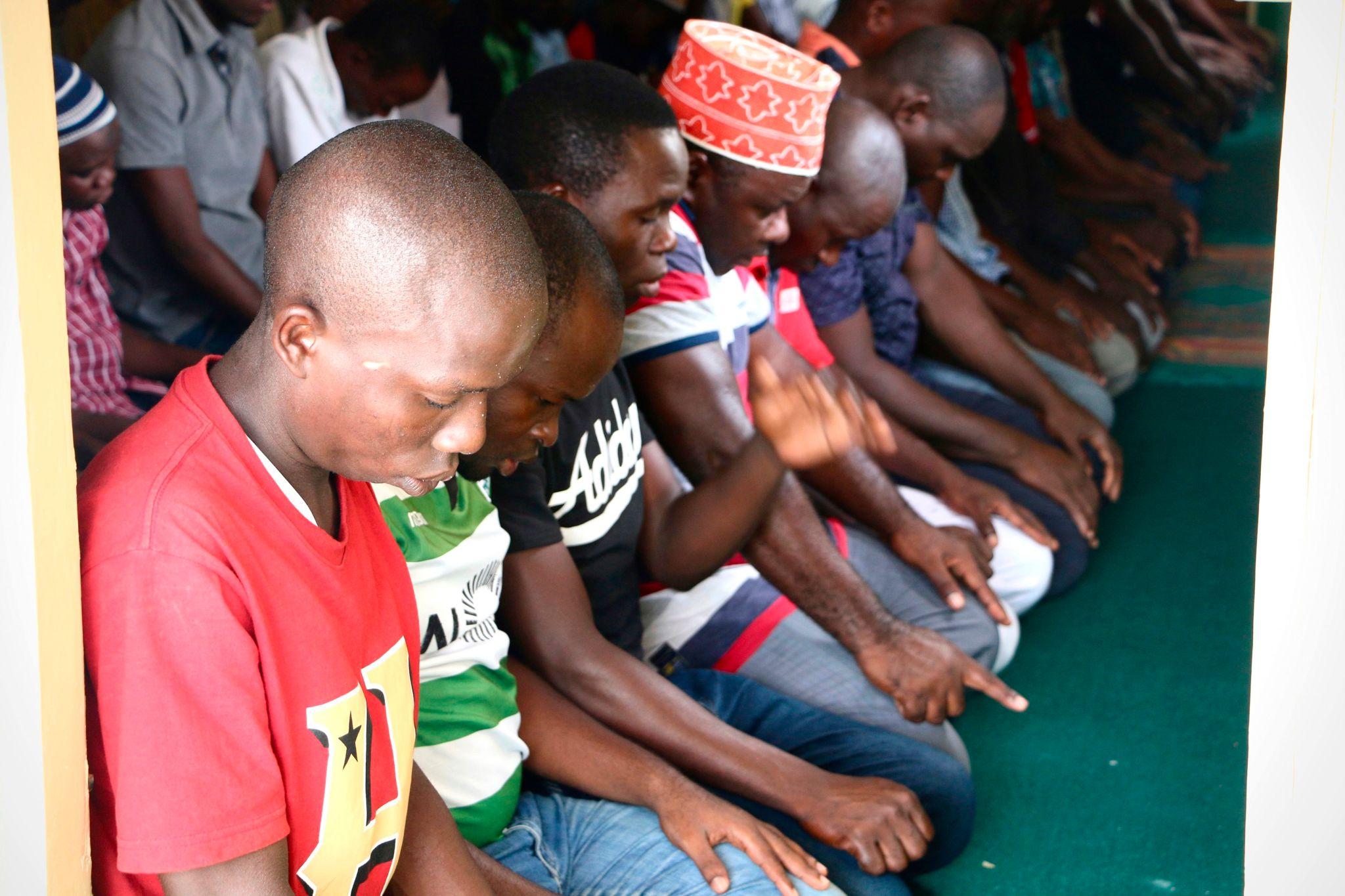
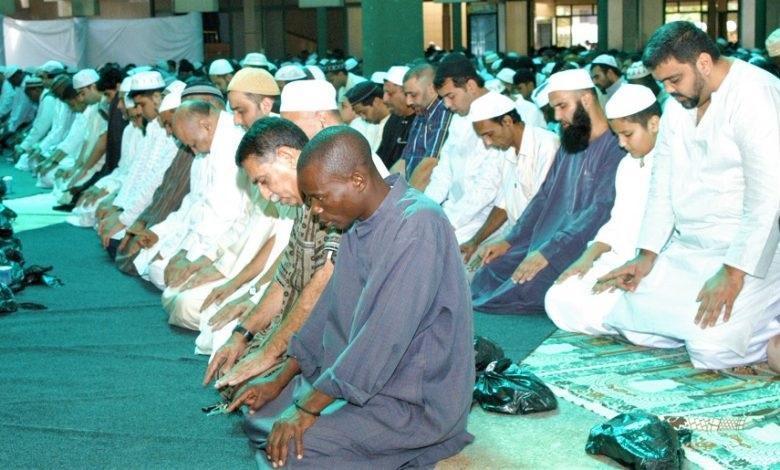
Mozambique's Muslims are not a recently arrived community but an authentic component of the country's population, whose organised presence predates the arrival of the Portuguese by centuries. Islam entered the northern coasts of Mozambique from the eighth century CE, that is, the second century AH, and took root in coastal centres such as Mozambique Island and Angoche, before spreading inland and becoming part of the identity of peoples such as the Makhuwa, the Mwani and the Yao, among others.
According to the most recent comprehensive religious census of 2017 (1438–1439 AH), Muslims make up 18.9% of the country's population, with a clear concentration in the north: in Niassa they account for 59%, in Cabo Delgado they constitute the largest religious community and more than half of the population according to census data, and in Nampula they approach 40% of the population.
The majority are Sunni, with deeply rooted Shafi'i roots linked to the Swahili world and the Indian Ocean, and throughout history Sufi orders and reformist currents and various Islamic trends have emerged. Thus, the study of Mozambique's Muslims cannot be completed by looking at the figures alone; it is in reality a study of an ancient Islamic civilisational extension that has remained present on the far south of the East African coast for more than twelve centuries.
Mozambique's Muslims remain an authentic part of the body of the Muslim world, and their presence should not be reduced to census figures or to news of the conflict in the north of the country. Many areas of Muslim concentration, particularly in the north, need greater support in education, improving livelihoods, healthcare, water, and youth training, with attention to Quranic schools and educational institutions that preserve Islamic identity while at the same time opening wider doors to knowledge and work.
It is important that news about Mozambique's Muslims not remain distant from the concern of Muslims, but that knowledge of their conditions be turned into lasting ties and useful, well-studied projects: from building schools and digging wells, to supporting orphans and needy families, to educational endowments and financing small enterprises and vocational training. Engaging with these communities and investing in their development is not merely a situational response to crises, but a long-term investment in the stability of an ancient Muslim community that has preserved its identity for centuries and deserves the attention and solidarity it merits.
Editorial note:
For figures and statistics, the article relied primarily on the National Institute of Statistics of Mozambique, supplemented by the studies of researcher Liazat Bonate on the history of Islam in northern Mozambique, recent academic studies published by Oxford and Cambridge, and religious freedom reports for comparison and verification.


