


As indicators of attrition grow among US forces deployed in the Middle East, the United States is preparing to send the aircraft carrier USS George Washington to the region to replace the aircraft carrier USS Abraham Lincoln, which has spent more than 250 days on an extended deployment due to the war with Iran.
The changeover comes as American reports describe severe strain on the Lincoln's crew, alongside significant military losses sustained by Washington during the war, including the loss of at least 45 MQ-9 Reaper drones, roughly a quarter of its fleet of this type.
Lincoln: a deployment exceeding nine months
The mission of the aircraft carrier Abraham Lincoln was originally scheduled to end in May, but the outbreak of war with Iran led to an extension of its deployment.
According to reports, the carrier has spent more than 250 days at sea, without stopping at a port for more than 200 days, while operating in the Arabian Sea and taking part in air operations against Iran, then carrying out missions linked to the blockade imposed on Iranian ports.
This prolonged deployment has affected the conditions of the crew.
Military Times and Stars and Stripes reported, citing families of service members, growing concerns about the pressure faced by sailors and Marines aboard the carrier, with reports of multiple attempts to jump overboard.
CNN reported that one sailor had already fallen from the ship earlier in August, before being rescued about an hour later and medically evacuated from the carrier.
Supply shortages and internal problems
The complaints have not been limited to exhaustion caused by the length of the deployment.
US Senator Richard Blumenthal sent a letter to Secretary of War Pete Hegseth and Acting Secretary of the Navy Hung Cao requesting clarifications on the conditions of the crew members.
The letter referred to reports of shortages of essential supplies, water contamination, problems with plumbing systems, deteriorating mental health, concerns about the safety of flight decks, disruptions to the mail system, and the loss of packages sent by service members' families for months while being transported to the ship.
Blumenthal considered that these reports call for immediate intervention, but they also raise a broader question about the US Navy's ability to sustain this high level of operations at a time when Washington increasingly relies on aircraft carriers to conduct extended military operations.
The George Washington on its way
For its part, the USS George Washington and its carrier strike group have begun moving toward the Middle East.
According to USNI News, the group was in the Strait of Malacca on 13 August, after transiting the Singapore Strait, on its way west toward the area of operations.
Its arrival means that Washington still maintains a strong carrier presence in the region, despite the pressures revealed by the prolonged deployment of the Abraham Lincoln.
A quarter of the Reaper fleet disappears in the war
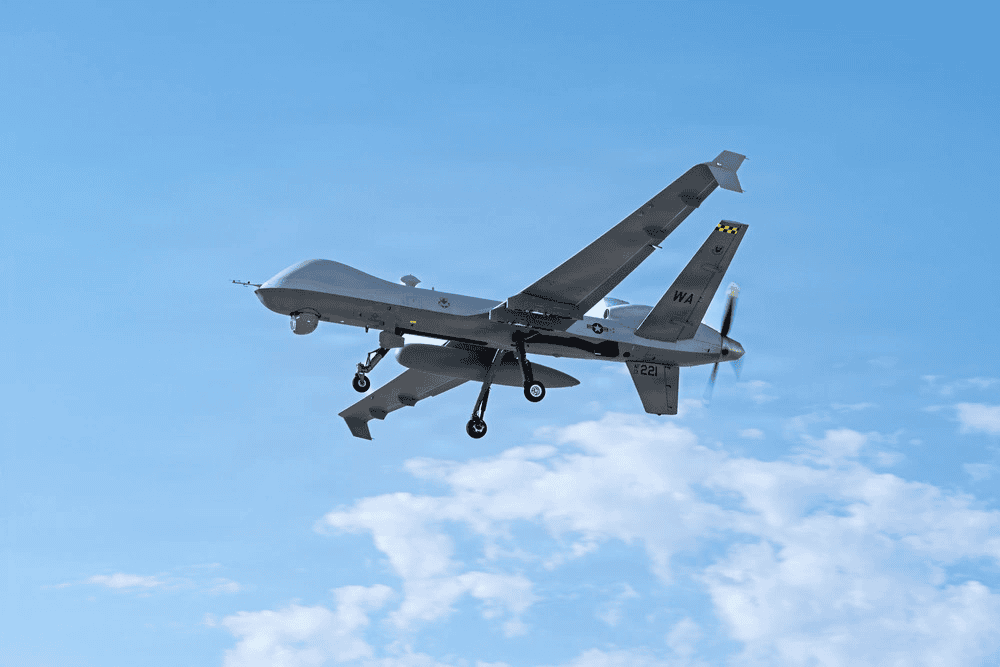
In another indication of the scale of attrition, the Washington Post reported that during the war with Iran the United States lost at least 45 MQ-9 Reaper drones, equivalent to about 25% of its total fleet of this type.
Washington uses these aircraft for reconnaissance and air strikes, and they have played a broad role in its military operations over past decades.
However, the war with Iran exposed a basic weakness: their high effectiveness in environments lacking strong air defences does not mean they are equally suitable for confronting an adversary possessing advanced air defence systems.
During the war, the United States lost Reaper aircraft as a result of being shot down or targeted by Iranian missiles and drones, in addition to crashes linked to communications problems.
According to the calculations in the report, the cost of manufacturing the MQ-9 fleet that Washington lost could reach up to $2.25 billion if the United States needs to replace 45 aircraft.
A weapon that "does not endanger soldiers" but is subject to attrition
Paradoxically, the commander of the US Air Force, General Kenneth Wilsbach, described the MQ-9 aircraft as among the most important platforms the United States used in the war, noting that they carried out a large number of strikes without exposing pilots to danger.
Yet this advantage does not cancel the cost of losing them.
An aircraft without a pilot on board does not mean it is not costly, nor that its loss has no impact on operational capability. With dozens of aircraft lost during a single war, pressure increases on the American stock of platforms, munitions and equipment.
MQ-9 aircraft are still flying over the Strait of Hormuz, while Iran announced on 3 August that it had shot down another US aircraft of the same type.
Attrition beyond aircraft
The simultaneous developments show that the American problem is not limited to the loss of drones.
On one hand, there is an aircraft carrier whose crew has spent more than eight months at sea, with reports of problems in supplies and mental health.
On the other hand, Washington is losing dozens of drones to Iranian air defences, while continuing to deploy more forces to the region.
In the background, the United States continues to impose a blockade on Iranian ports, while the possibility of resuming US strikes on Iran remains open.
The war thus becomes a test of Washington's ability to sustain a high tempo of military operations over a long period without depleting its human and military resources.
Sending the George Washington may ensure the continued presence of a US aircraft carrier in the Middle East, but on its own it does not solve the exhaustion affecting ship crews, nor does it replace the dozens of drones the United States has lost.
The broader question these developments raise is: to what extent can the United States sustain a long war in a more costly and dangerous military environment, while its human resources and its stock of platforms and munitions are gradually eroding?


