


The Moroccan consulate in the Libyan capital, Tripoli, is working to expedite procedures for repatriating Moroccan citizens detained in Libya, amid administrative and legal obstacles delaying the return of some of them, particularly those who have lost their passports or identity documents.
According to consular sources quoted by Moroccan media outlets, a number of Moroccans detained in the city of Misrata completed the legal and administrative procedures and returned to Morocco on 14 July, while other groups are still awaiting the completion of identity verification and the issuance of exit permits.
Around ten people from a group held east of the capital, Tripoli, have also departed, while the files of others are being processed by the Libyan Ministry of Interior in coordination with the International Organization for Migration (IOM) to provide travel tickets for migrants who do not hold official documents.
Complications of Proving Identity Delay Return
Each case is handled separately, as consular authorities begin by verifying whether the migrant holds a passport or identity card. If documents have been lost, fingerprints and photographs are collected and sent to Morocco to confirm identity, a process that can take several weeks.
Consular staff said that some families of detainees in Morocco have been forced to bear their relatives' expenses for months while awaiting the completion of verification procedures and the issuance of temporary travel documents.
The sources also explained that it is difficult to determine the exact number of Moroccans in Libya, due to the presence of detainees in official government centres and others in areas controlled by armed groups outside official control.
Difficult Conditions Inside Detention Centres
The repatriation of Moroccans comes amid wide international criticism of the conditions of migrants in Libya. Human rights organisations affirm that many migrants who are returned or intercepted within Libyan territory end up in detention centres suffering from overcrowding, poor conditions and a lack of basic services.
Reports have described detainees suffering from a shortage of food and medical care, in addition to physical and other abuses in some centres.
The International Organization for Migration has repeatedly stated that Libya cannot be considered a safe port for the return of migrants, due to the risks they may face after being intercepted or returned.
Migration in Search of Better Opportunities
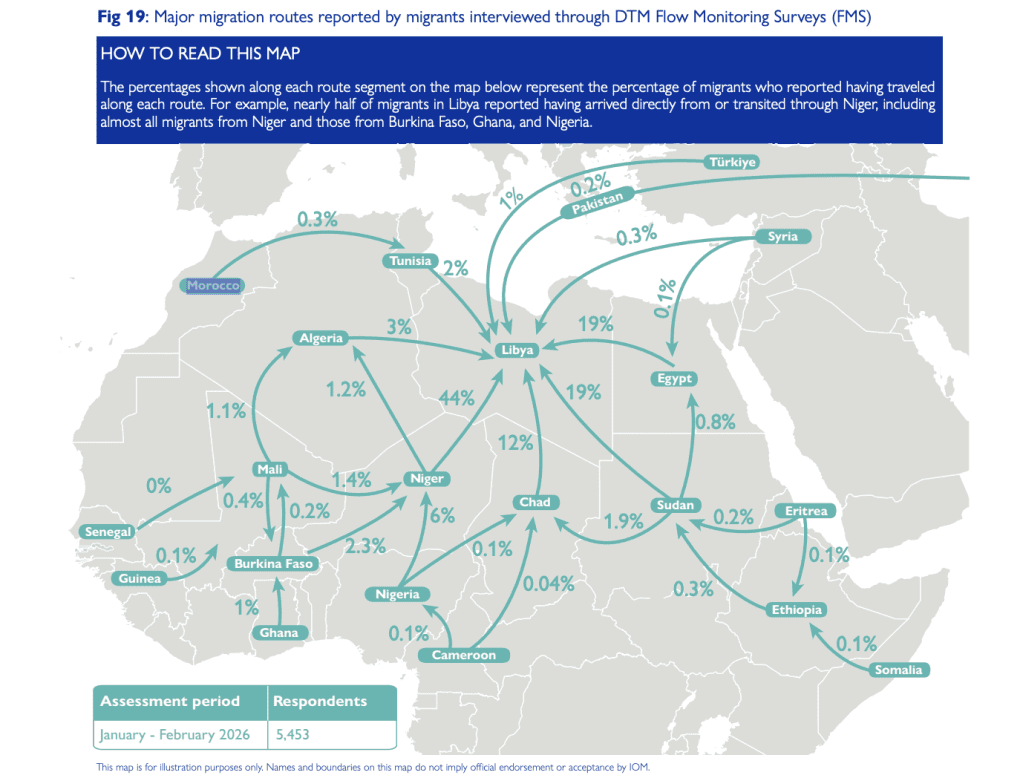
Moroccans account for 0.3% of migrants heading to Libya, and they often travel overland through Tunisia in an attempt to reach Europe via the Mediterranean Sea route | Screenshot: International Organization for Migration report on migrants, Round 61
The migration of many Moroccans towards Europe is linked to economic factors, such as the search for better job opportunities and improved living conditions.
However, many who take irregular migration routes find themselves stranded in Libya after failed attempts to cross into Europe.
Mediterranean Routes Become More Dangerous
Sea migration routes from Libya to Europe have become more difficult due to tightened European security measures, which has reduced crossing opportunities and left numbers of migrants in an unstable situation within Libya.
Irregular migrants there face the risk of detention, fines and confiscation of documents, turning the search for a better future into a long experience of waiting and suffering.
According to a recent International Organization for Migration report, Moroccans represent only about 0.3% of the total migrants transiting through Libya, compared with far larger numbers of migrants arriving from Egypt and sub-Saharan Africa.
Despite the limited numbers of Moroccans compared with others, their case reveals the humanitarian and administrative challenges facing migrant repatriation operations, especially when documents are lost and proof of identity becomes an essential condition for return.
Past experience indicates that repatriating migrants from Libya requires complex coordination between embassies, Libyan authorities and international organisations, while many detainees remain waiting for an opportunity to return to their countries after perilous migration journeys.


