


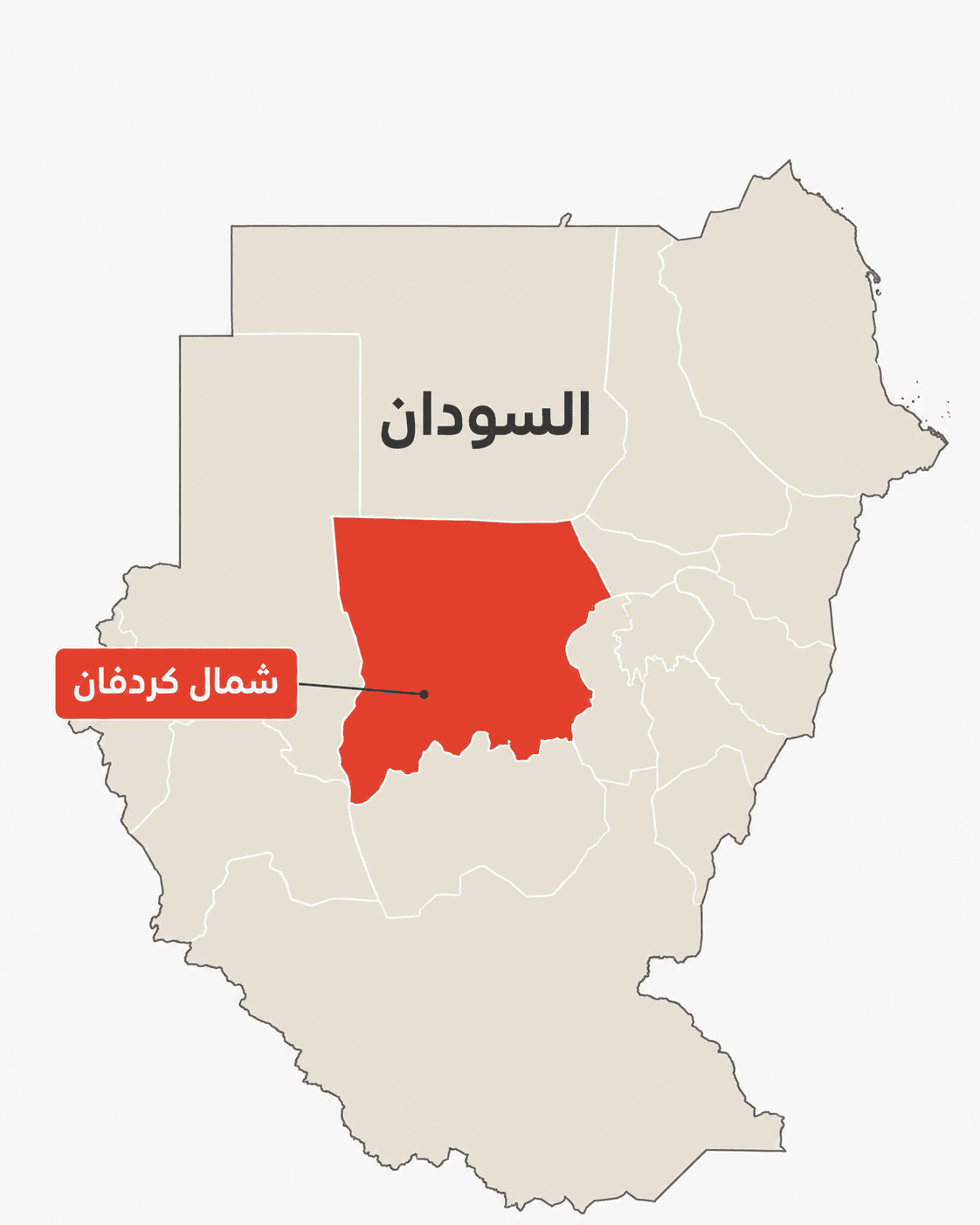
The deteriorating security situation in Sudan's North Kordofan state has forced more than 4,000 people to leave their villages within just two days, in the latest wave of displacement in the area as clashes continue between the Sudanese army and the Rapid Support Forces and fighting spreads across the Kordofan region.
The International Organization for Migration said, on Sunday 16 August 2026, corresponding to 3 Rabi al-Awwal 1448 AH, that its Displacement Tracking Matrix teams estimated the number of displaced people at about 4,250 from three villages in Shaikan locality in North Kordofan.
According to the organization, residents fled the villages of Umm Ardah, Tamid and Al-Khor al-Abyad on 14 and 15 August 2026, corresponding to 1 and 2 Rabi al-Awwal 1448 AH, as a result of the rapid deterioration of the security situation.
Displacement to other areas and Omdurman
The displaced families spread to other areas within Shaikan locality, while some of them headed to the city of Omdurman, west of the capital Khartoum, in search of safer areas.
The International Organization for Migration warned that the situation in the area remains tense and volatile, confirming that it will continue to monitor developments and population movements on the ground.
The latest wave of displacement reflects the scale of the pressures facing civilians in North Kordofan, where several villages and rural areas have come to lie on shifting front lines between the army and the Rapid Support Forces.
14 civilians killed in Umm Ardah
The displacement followed violent incidents in the Umm Ardah area, south-west of the city of El Obeid, capital of North Kordofan state.
The independent human rights group Emergency Lawyers said that 14 civilians were killed and dozens more were injured in an attack it attributed to the Rapid Support Forces in the area on Friday 14 August 2026, corresponding to 1 Rabi al-Awwal 1448 AH.
These developments coincided with military confrontations around the area, where Sudanese military sources said the army repelled an attack by the Rapid Support Forces in the Jabal Hashaba and Umm Ardah areas, south-west of El Obeid.
The Sudanese army also announced that it foiled another attack by the Rapid Support Forces on the Jabrat al-Sheikh area in North Kordofan, and said the attacking forces suffered losses in personnel and equipment, without an independent tally available through which the extent of those losses could be verified.
Kordofan becomes a major front
The three Kordofan states, North Kordofan, West Kordofan and South Kordofan, are witnessing escalating confrontations between the Sudanese army and the Rapid Support Forces, with clashes in the region intensifying since late October 2025.
Kordofan is of great strategic importance because of its location between central Sudan and the Darfur region, in addition to important supply routes and military movements passing through its territory, which has made control of its towns and roads an increasing focus of the fighting.
As the battles move between villages and towns, civilians bear the greatest burden, whether through deaths and injuries, the loss of homes and livelihoods, or displacement to other areas.
Around 13 million displaced since the war began
Sudan has been engulfed in a wide-scale war since April 2023 between the army led by Abdel Fattah al-Burhan and the Rapid Support Forces led by Mohamed Hamdan Dagalo "Hemedti", after the dispute between the two sides over arrangements for the transitional period and plans to integrate the Rapid Support Forces into the regular army erupted.
The war has killed tens of thousands, while United Nations estimates indicate that about 13 million people have been forced to flee inside Sudan or seek refuge in other countries.
More than three years after the conflict broke out, waves of displacement continue to recur with each shift of the fighting to a new area, while displaced families face shortages of food, shelter and basic health services.
Recent developments in North Kordofan highlight the fragility of the humanitarian situation in the region: a security deterioration lasting just two days led to the flight of more than 4,000 people, amid warnings that continued fighting around El Obeid and the rural area of Shaikan could push additional numbers of residents to leave their villages in the coming period.


