


The displacement crisis in Taiz Governorate in southwestern Yemen is worsening as fighting continues and spreads, after recent clashes forced tens of thousands of civilians to leave their homes and head to camps that already suffer from acute shortages of shelter, water and basic services.
According to the United Nations High Commissioner for Refugees, at least 100,000 people have fled their homes due to renewed fighting, while many left hastily and with few of their belongings because of the rapid developments on the ground.
The new wave of displacement followed advances by the Iran-backed Houthis in the western coastal areas, which, according to a report by Al Jazeera English, took control of the city of Mocha and other areas on the Red Sea coast, in parallel with escalating clashes with forces loyal to the internationally recognised Yemeni government.
Taiz bears the greatest burden
Ali al-Shamiri, General Manager of the Executive Unit for the Management of Displacement Camps in Taiz Governorate, said that 65,845 people were displaced in the governorate between 10 August 2026 (27 Safar 1448 AH) and 15 September (4 Rabi al-Akhir 1448 AH).
He added that approximately 95% of these people came from five districts that witnessed the fiercest clashes: Jabal Habashi, al-Maafer, Maqbana, al-Wazi'iya and Mawzaa.
As families continue to arrive, some camps have begun to be unable to absorb the new numbers.
In a camp located in Wadi Bakhlan in Taiz, a local official said that more than 1,500 families arrived in just six days, while most of the new arrivals live in the open because there are not enough places to shelter them.
As for the al-Munayyij camp in the al-Bayrain area, about 40 kilometres southwest of Taiz city, it has once again become a refuge for those fleeing the war, although the camp has hosted displaced people since previous rounds of conflict.
Its residents say the available services are extremely limited, with interrupted or irregular supplies of drinking water and too few toilets relative to the population.
Displacement under shelling
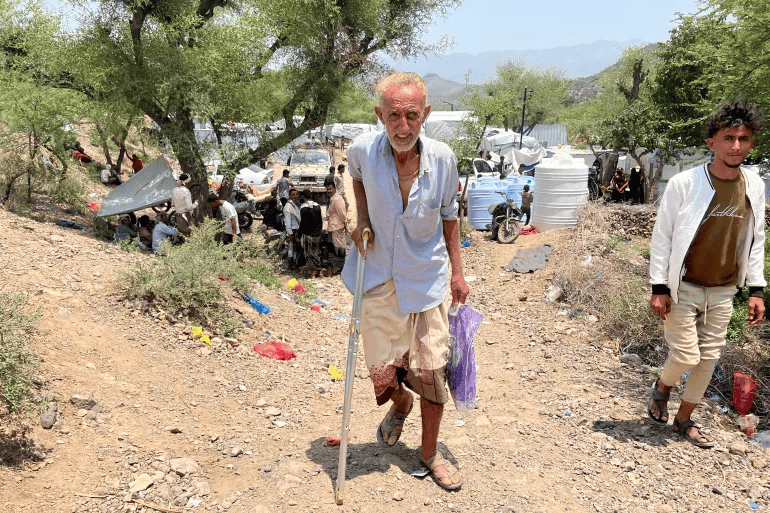
The testimonies of displaced people reveal the scale of suffering that accompanied their flight.
Fatima Mohammed Saleh, a 70-year-old Yemeni woman from Maqbana district, said she was forced to leave her village after shelling and gunfire intensified.
Fatima has a mobility impairment, and she had to leave her wheelchair behind because it was unsuitable for the rough road her family took to flee the fighting.
She says she had to crawl on her hands for a long distance, through rain and flash floods, before the family found a vehicle to carry them to a safer place.
In the al-Munayyij camp, Saif Qaed Thabit, 73, lives with his wife and four children in an open area since their arrival on 10 September 2026 (28 Rabi al-Awwal 1448 AH).
The man left behind his farm and livestock in the al-Kadhha area west of Taiz, and said his family fled because of bullets and artillery shells, and they are still waiting to obtain suitable shelter.
Families displaced more than once
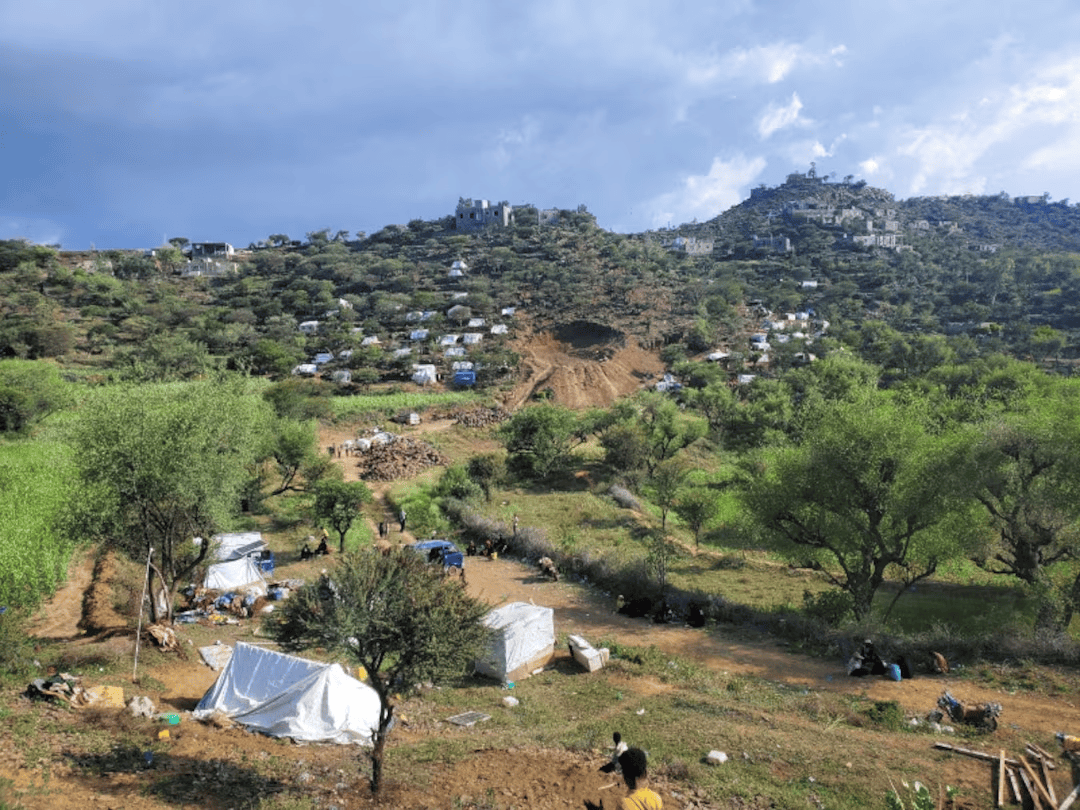
The journey of displacement does not always end with reaching the first safe area.
Malouk Ahmed Ali, 55, said that her family of 14 people, including several children and an elderly grandmother, fled on foot from drones, shelling and gunfire.
The family initially sought refuge in an area near their village, hoping that the fighting would stop quickly and that they could return to their homes, but the fighting spread toward the new area, forcing them to displace again until they reached the camp on board a military vehicle.
The family says they currently live in a single small tent, while they fear that their property has been looted and that most of their livestock has died or been lost.
The crisis is likely to worsen
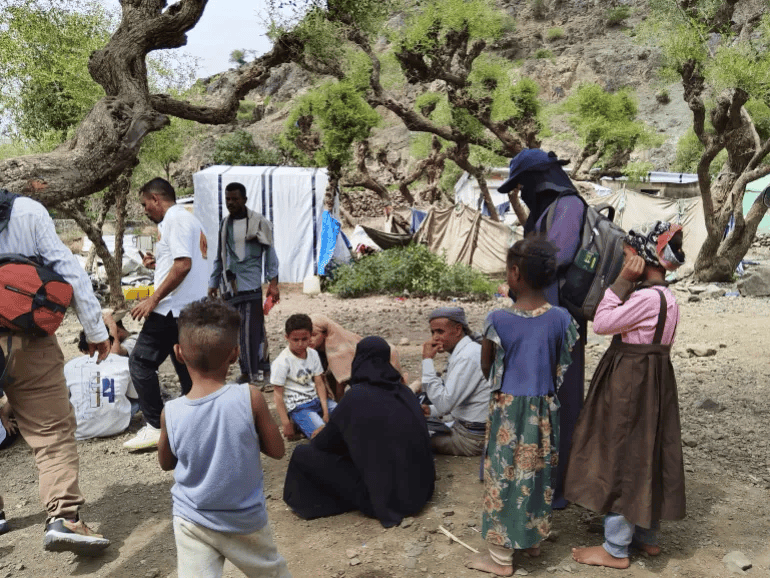
Field indicators warn that the wave of displacement may not yet have reached its peak.
With fighting continuing on several fronts in Taiz and around the western coast, and ongoing military operations between the Houthis and government forces, thousands of civilians in areas close to the front lines remain at risk of new displacement.
At the same time, the camps receiving those fleeing face a dual challenge: a growing number of displaced people and limited resources that are insufficient to provide them with shelter, water and basic services.
While attention focuses on military shifts and control over strategic cities and ports, the camps spread across Taiz reveal the other face of the war: families who leave their homes, farms and livestock within hours, elderly people and children who cross rough roads under shelling, and then arrive at camps that in many cases have only the bare minimum for life.


