


Amid the rising anti-Islam rhetoric in a number of Western capitals, a dangerous media pattern is emerging that uses mockery and ridicule as a systematic tool to cover up grave violations against Muslims in conflict zones. The case of Kashmiri activist Shakeel Ahmad Bhat and his family is a stark example of this dual approach.
First: Using the Image in Mockery Campaigns
Anti-Islam groups used the image of Shakeel Ahmad Bhat in broad campaigns of mockery and ridicule, presenting him as "a model of Islamic rage and extremism," and his picture was printed on clothing, mugs and products bearing demeaning slogans. These campaigns, however, deliberately ignored the real context of the two circulating photographs and the human story behind them.
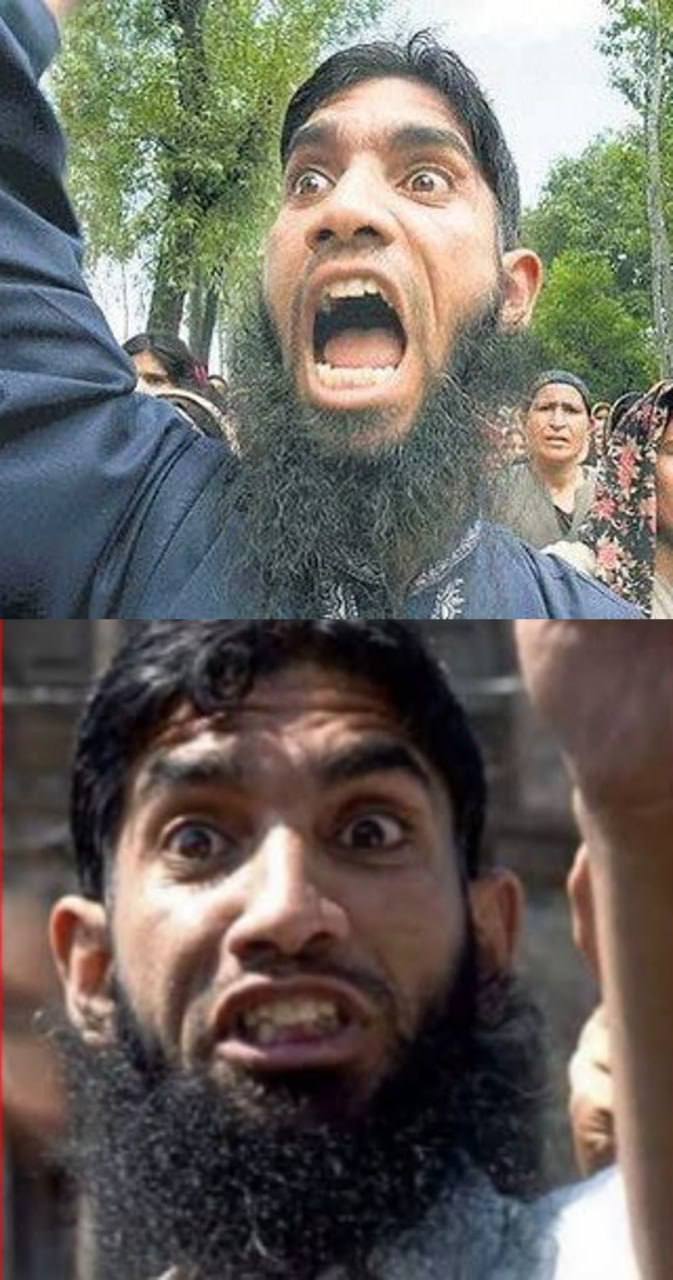
Second: The Real Context of the Two Photographs
In the first photograph, dated 19 June 2007, Shakeel was taking part in a funeral procession and chanting slogans in support of Kashmir's independence. In the second photograph, dated 22 June 2007, he was taking part in a protest against the granting of a knighthood by the Queen of Britain to the writer Salman Rushdie, as a reward for his literary "achievements," including writing a book that attacks the Messenger of God, peace and blessings be upon him.
Third: The Human Story Behind the Face
Shakeel Ahmad Bhat is a Kashmiri activist who campaigns for the rights of Muslims in Kashmir, who have been subjected to the most brutal forms of persecution since 1947, including closure of mosques, killing and arrest. In press interviews he has spoken of being tortured and given electric shocks during his detention, and that an injury to his arm has left him unable to lift objects, forcing him to rely on his brothers for support.
The violations did not stop at Shakeel alone; they extended to his entire family:
· His sister: She was treated brutally during a security raid on the family home. The writer Patrick French noted that she was thrown from a window, breaking her spine, and she died years later as a young woman.
· His father: He was beaten until his leg was broken, and he remained bedridden for the rest of his life.
· His brother Hilal: He died in June 2020 while Shakeel was imprisoned, far from his family.
Fourth: Double Standards in the International Community
The case of Shakeel and his family is an example of the international system's complicity in the persecution of Muslims, which is then followed by their portrayal as terrorists and their mockery, while the mockers are given a glowing image, as with Salman Rushdie. This stark contradiction reveals clear double standards in dealing with human rights issues, as crimes committed against Muslims in Kashmir and elsewhere are overlooked, while rewards and titles are granted to those who insult their sanctities.
Conclusion
What Shakeel Ahmad Bhat and his family have endured is not an isolated case; it is part of a systematic policy that uses mockery to distort the image of victims and mislead public opinion about the real crimes. It is the duty of media and human rights platforms to expose these practices and restore recognition to the stories of victims whose voices have been buried under mockery and exaggeration.


