


In the past two centuries, the Islamic world has suffered a series of systematic military defeats that were not merely the result of weak land armies, but of a deeper strategic deficiency: the absence of a capable air force and a deterrent missile arsenal. Muslim countries fought their battles with conventional weapons in a world where the rules of war had changed. Air power, which in the twentieth century became the backbone of modern armies, remained the preserve of Western states and Israel, while the states of the Islamic world were confined to the role of spectators or victims.
The defeats of 1367-1387 AH (1948 / 1967 CE) were not merely military losses; they announced the end of the era of traditional Arab armies in the face of a superior air machine. When America invaded Iraq in 1424 AH (2003 CE), the Iraqi army possessed no significant air force, so defeat was inevitable before the battle began.
Missiles, which became the cornerstone of deterrence in the twenty-first century, remained for decades beyond the reach of the Islamic world. While Israel was developing the Jericho nuclear missile in the 1960s, and India was testing its ballistic missiles in the 1980s, Muslim states were importing surplus weapons that the West no longer needed, or remained hostage to American and European export conditions. Even when Saudi Arabia acquired Chinese DF-3 missiles in 1408 AH (1988 CE), these missiles were inaccurate and operationally ineffective, a symbol of independence more than a weapon of war. Egypt, the first Arab state to launch a missile programme in the 1960s, saw it halted a few years after its launch, losing decades of technological development.
This air and missile weakness was not merely a military shortcoming but a reflection of a deeper political weakness. Islamic states, divided between competing axes and governed by regimes that depend on the West for survival, were unable to make an independent strategic decision. The technological blockade, international sanctions and internal corruption all contributed to keeping the Islamic world outside the circle of real missile power. Even Pakistan, which today possesses a nuclear arsenal, relied only a few years ago on American aid that could be cut off at any moment.
This report will review each country's experience in developing missiles, the strategic role these missiles play in its foreign and defence policies, the current types and their capabilities, their battlefield uses, the models under development, and the countries to which they are exported.
Turkey's Experience
Turkey relies on its missile arsenal as a tool for three integrated strategic objectives. First, technological independence, which ensures it does not submit to Western conditions in the field of defence. Second, regional influence extending from Syria and Iraq to Libya and Azerbaijan. Third, military deterrence against its neighbours, especially Greece. Its missiles are not only for defence but are tools for deep preemptive strikes anywhere in the region.
Background to Development
Turkey began its missile programme in the 1990s after years of humiliation at the hands of its ally America. In a landmark agreement, Turkey obtained production rights for the Chinese B-611 missile from the China Academy of Space Technology's Chinese partner company. This cooperation enabled the Turkish firm Roketsan to manufacture the missile locally under the name J-600T Yıldırım, including a battery and more than 200 units.
In 1430 AH (2009 CE), the Presidency of Defence Industries awarded Roketsan the contract to develop the Bora missile. On 9 Jumada al-Awwal 1438 AH (6 February 2017 CE), the Presidency of Defence Manufacturing announced Roketsan's work on a long-range version reaching 280 kilometres. On 14 Sha'ban 1438 AH (11 May 2017 CE), the first successful test was conducted from a site near the Black Sea. On 22 Dhu al-Hijjah 1438 AH (14 September 2017 CE), a second test was conducted near Sinop, confirming operational reliability over the full 280-kilometre range.
In Rabi' al-Awwal 1444 AH (October 2022 CE), the first test of the Typhoon missile from a mobile platform was conducted at Rize, flying 561 kilometres. In Sha'ban 1446 AH (February 2025 CE), a third test struck a naval target at 561 kilometres with a accuracy of 5 metres. On 27 Muharram 1447 AH (23 July 2025 CE), Roketsan unveiled the more advanced Typhoon Block 4. In Dhu al-Qa'dah 1447 AH (May 2026 CE), Block 4 entered service officially.
Current Types and Capabilities
- The Bora is a short-range tactical ballistic missile developed by Turkey's Roketsan. It is 8 metres long, 610 millimetres in diameter and weighs 2,500 kilograms. It uses a single-stage solid-fuel motor. Its range is between 80 and 280 kilometres. It uses an inertial navigation system augmented by GPS and GLONASS with a probable circular error of less than 10 metres. It carries a high-explosive warhead weighing 470 kilograms. It is launched from an 8x8 tactical mobile launcher. The export version is called Khan, and Indonesia purchased it.
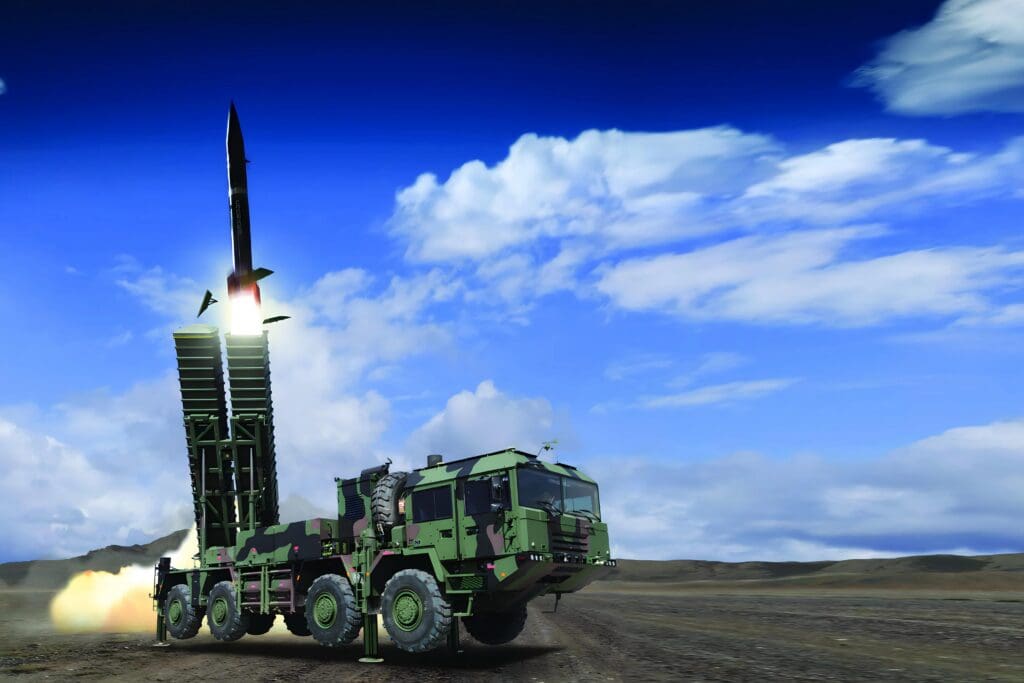
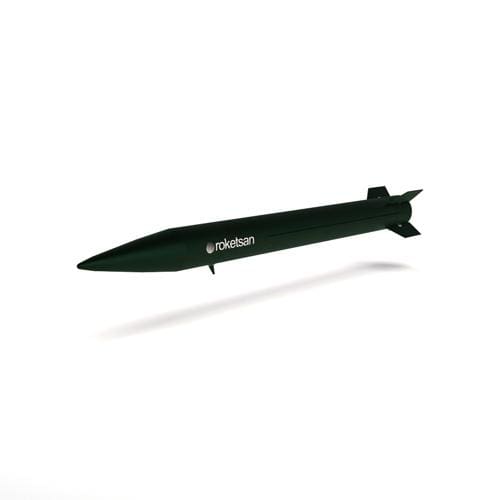
- The Typhoon is a tactical ballistic missile considered the longest-range in the Turkish arsenal. It is 6.5 metres long and weighs 2,300 kilograms. It reaches hypersonic speeds. In recent tests it struck targets at 561 kilometres with a accuracy of 5 metres. The Block 4 version, which entered service in April 2026, is 10 metres long, weighs 7 tonnes, has a range between 1,000 and 1,500 kilometres and a speed between Mach 5 and Mach 10.
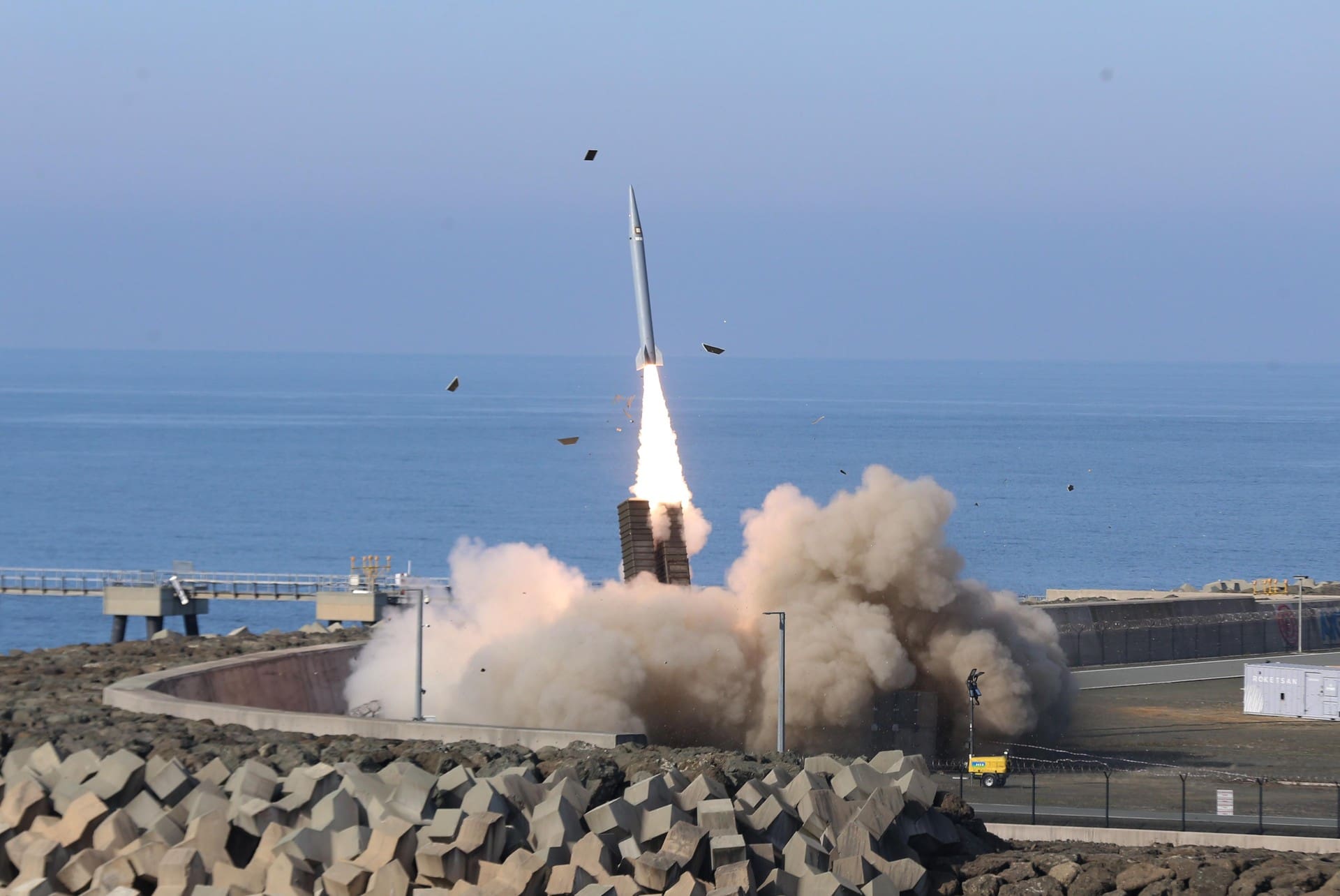
- The SOM is an air-launched cruise missile developed by Roketsan in cooperation with Tubitak Sage. Its range is 250 kilometres and it carries a 230-kilogram warhead. It is launched from F-16, F-4 and F-35 aircraft. It has been exported to Azerbaijan, Qatar and Pakistan.
- The Atmaca is an anti-ship cruise missile with a range of 250 kilometres. It has been exported to Ukraine and Qatar.
- The Çakır is an air-to-surface cruise missile with a range of 150 kilometres.
- The Kasirga, and the Yildirim Khan with a range of 6,000 km.
Battlefield Use
On 24 Ramadan 1440 AH (29 May 2019 CE), the Bora missile was used for the first time in real combat during Operation Claw against PKK targets in the Kurdistan Region of Iraq. In Syria, Bora and Yıldırım missiles were used against targets belonging to the SDF and the deposed Syrian regime. In Libya, SOM missiles were used from drones against targets belonging to Khalifa Haftar's forces. In Nagorno-Karabakh in 2020, Azerbaijan used Turkish missiles against Armenians.
Models Under Development
- The Cenk is a medium-range ballistic missile under development.
- The Türksat is a satellite and space-launch project.
- The Bora 2 is an upgraded version.
- The Steel Dome is a multi-layered missile defence system under development.
Exports
Azerbaijan bought SOM missiles and multiple rocket launchers. Qatar bought SOM missiles. Pakistan bought SOM missiles. Indonesia bought Khan missiles in 1444 AH (November 2022 CE), and delivery began in 1446 AH (2025 CE). Ukraine bought Atmaca missiles. Morocco bought Atmaca missiles.
Pakistan's Experience
Strategic Role: Nuclear Deterrence and Survival Against India
Pakistan relies on its missile arsenal as a guarantor of its survival as a state in the face of its neighbour India, which is larger in population and stronger economically. Its missiles are not only for nuclear deterrence but are an existential necessity. After the United States withheld F-16 aircraft from Pakistan under the Pressler Amendment in 1405 AH (1985 CE), Islamabad realised that reliance on Western technology was a risky strategy.
Background to Development
In 1380 AH (1961 CE), the Space and Upper Atmosphere Research Commission, SUPARCO, was established as Pakistan's space agency. In 1381 AH (1962 CE), NASA assisted in training Pakistani scientists. However, the wars with India in 1384-1391 AH (1965 and 1971 CE) led to the division of Pakistan.
In 1405 AH (1985 CE), the US Congress passed the Pressler Amendment, which banned American aid to Pakistan. In 1409 AH (1989 CE), the Hatf 1 missile was launched for the first time with a range of 80 kilometres. In 1410 AH (1990 CE), the United States withheld F-16 aircraft from Pakistan.
In Dhu al-Hijjah 1418 AH (April 1998 CE), Pakistan tested the liquid-fuelled Ghauri missile with a range of 1,300 kilometres. In Muharram 1419 AH (May 1998 CE), Pakistan conducted nuclear tests in response to India's tests. In Ramadan 1419 AH (January 1999 CE), it announced its readiness to test the solid-fuelled Shaheen 1 with a range of 750 kilometres. In 1421 AH (2000 CE), the National Command Authority was established. In 1423 AH (2002 CE), the Ghaznavi was tested. In 1425 AH (2004 CE), the Shaheen 2 was tested. In 1428 AH (2007 CE), the Babur and Ra'ad were tested. In 1432 AH (2011 CE), the Nasr was tested. In 1436 AH (2015 CE), the Shaheen 3 was tested. In 1438 AH (2017 CE), the Ababeel, Pakistan's first multiple-warhead missile, was tested.
Current Types and Capabilities
- The Ghaznavi is a short-range solid-fuelled ballistic missile with a range of 290 kilometres.
- The Shaheen 1 is a solid-fuelled ballistic missile with a range between 750 and 900 kilometres.
- The Shaheen 1A is an upgraded version with a range of 1,100 kilometres.
- The Ghauri is a medium-range liquid-fuelled ballistic missile with a range between 1,150 and 1,300 kilometres.
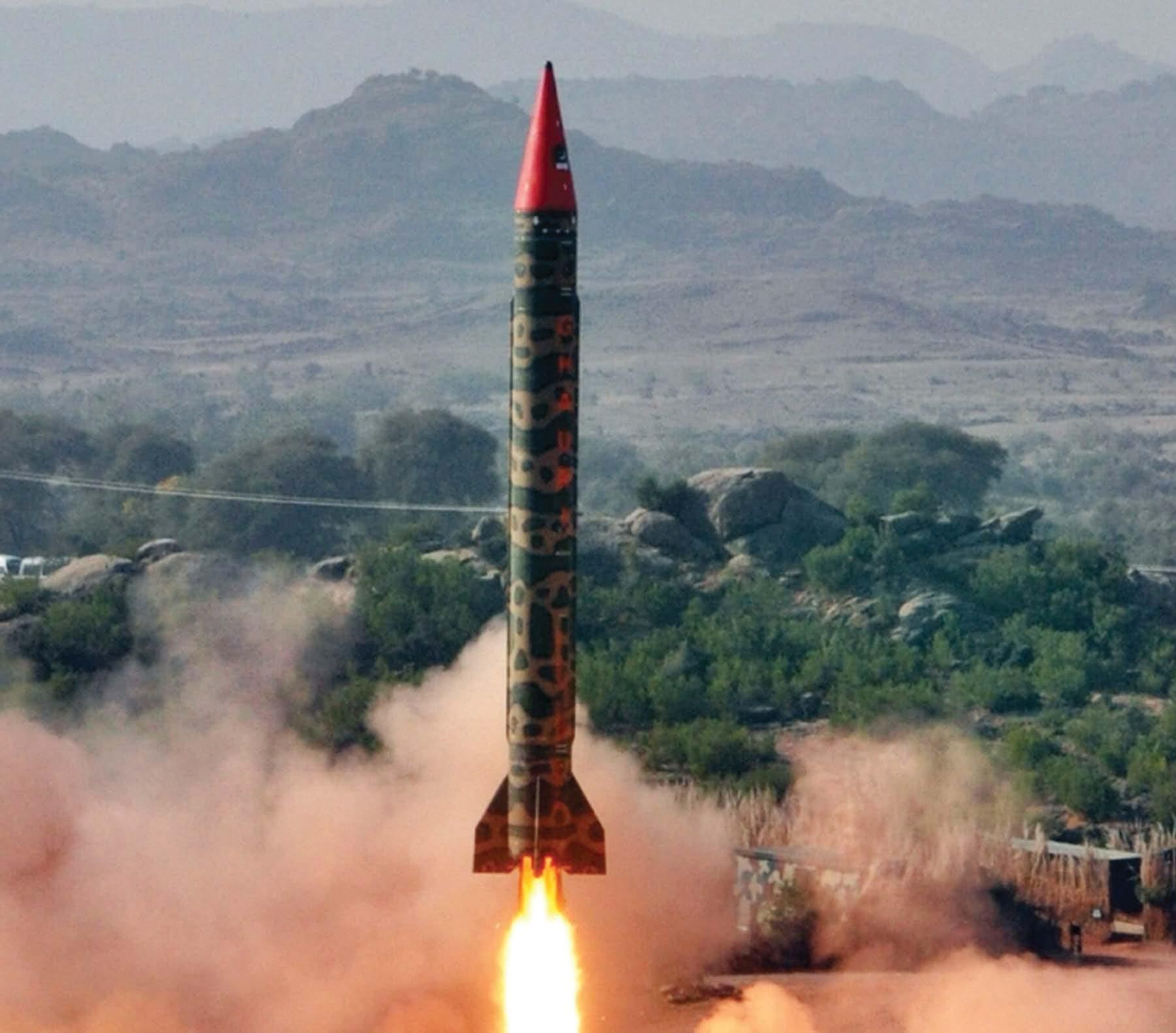
- The Shaheen 2 is a medium-range solid-fuelled ballistic missile with a range between 1,500 and 2,500 kilometres.
- The Shaheen 3 is a long-range solid-fuelled ballistic missile with a range of 2,750 kilometres. It ensures the ability to strike any target in India, including the Andaman and Nicobar Islands.
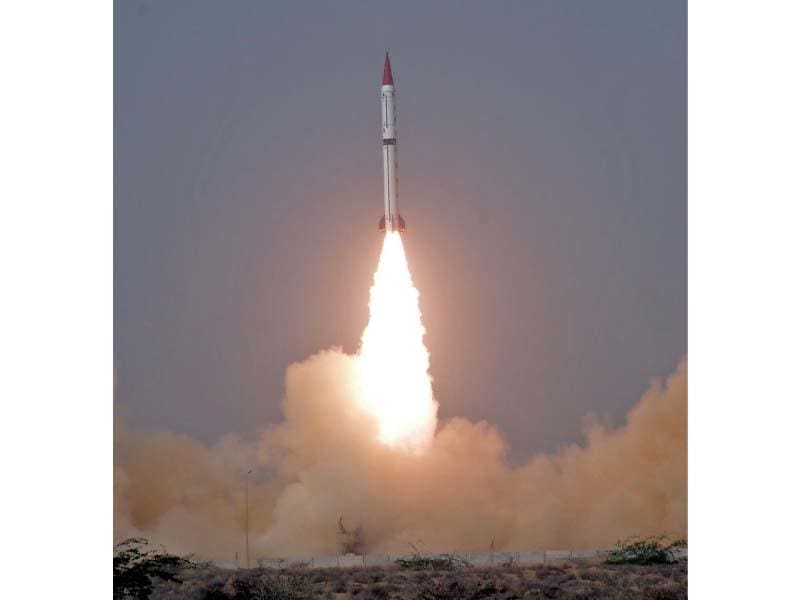
- The Ababeel is a medium-range ballistic missile with a range of 2,200 kilometres that carries multiple independently targetable warheads.
- The Babur is a subsonic land-attack cruise missile with a range between 500 and 700 kilometres.
- The Ra'ad 2 is a subsonic air-launched cruise missile with a range of 600 kilometres.
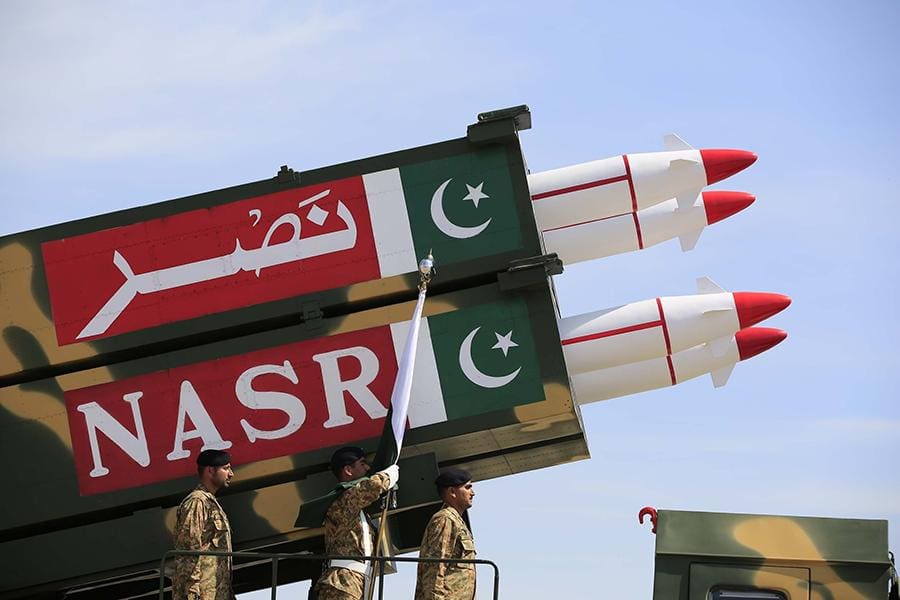
- The Nasr is a short-range ballistic missile with a range of 60 kilometres for tactical nuclear battlefield strikes.
Models Under Development
- The Taimoor is an export version of the Ra'ad 2.
- The Babur 3 is a naval version of the Babur for submarine launch.
- The Shaheen 1A and Shaheen 2A are upgraded versions.
- A hypersonic missile project is under study in cooperation with China.
Exports
Pakistan does not export its ballistic and nuclear missiles because of restrictions under the Missile Technology Control Regime. However, it exports conventional missiles and drones.
Saudi Arabia received technical support for its missile programme. Turkey bought SOM missiles. China received technologies from the programme of Abdul Qadeer Khan in exchange for missile support. The UAE received technical support.
Iran's Experience
Strategic Role: Deterrence and Regional Influence Through the So-Called "Axis of Resistance"
Iran relies on its missile arsenal as a tool for three integrated strategic objectives. First, deterrence against the United States, Israel and the Arab states of the Gulf. Second, regional influence through support for its allies in the so-called Axis of Resistance. Third, building independent national missile capabilities despite international sanctions.
Its missiles are not only for defence but are tools for preemptive and deep strikes in the region.
Background to Development
The Iranian missile programme began during the Iran-Iraq War of 1400-1408 AH (1980-1988 CE) as a means of deterring Iraqi Scud missile attacks during the "War of the Cities". In 1404 AH (1984 CE), Iran received its first batch of ballistic missiles (20 Soviet Scud B missiles) from Libya, then purchased Scud derivatives and launchers from North Korea and China. Hassan Tehrani Moghaddam, considered the father of the Iranian missile programme, sought expertise and designs from North Korea. He designed missiles with an operational range of up to 2,000 kilometres.
In the 1990s, Iran reverse-engineered the Scud B to produce the Shahab 1 with a range of 330 kilometres and the Shahab 2 with a range of 500 kilometres, in addition to the short-range Zelzal and Fateh missiles. In the 2000s, longer-range systems such as the liquid-fuelled Shahab 3 with a range of 1,300 kilometres were introduced, and testing of solid-fuel designs such as the Sejjil 2 began. Key milestones included the appearance of the Shahab 3 in 1418 AH (1998 CE) and the solid-fuel Sejjil in 1429 AH (2008 CE). In 1431 AH (2010 CE), Iran unveiled the Qiam 1, and in 1437 AH (2016 CE), the Zolfaghar.
In Dhu al-Qa'dah 1444 AH (June 2023 CE), Iran unveiled the alleged Fattah missile with hypersonic capabilities. In Sha'ban 1446 AH (February 2025 CE), a shipment containing 1,000 tonnes of sodium perchlorate, a chemical critical to producing solid rocket fuel, arrived at the port of Bandar Abbas. This shipment could facilitate fuel production for approximately 260 Khorramshahr missiles or approximately 200 Haj Qassem Soleimani ballistic missiles.
Current Types and Capabilities
- The Fateh-110 is a short-range solid-fuelled ballistic missile with a range of 300 kilometres.
- The Zolfaghar is a ballistic missile with a range of 700 kilometres.
- The Qiam-110 is a medium-range ballistic missile with a range of up to 1,800 kilometres.
- The Emad is a ballistic missile with a range of 1,700 kilometres and improved accuracy.
- The Khorramshahr is a ballistic missile with a range of 1,450 kilometres.
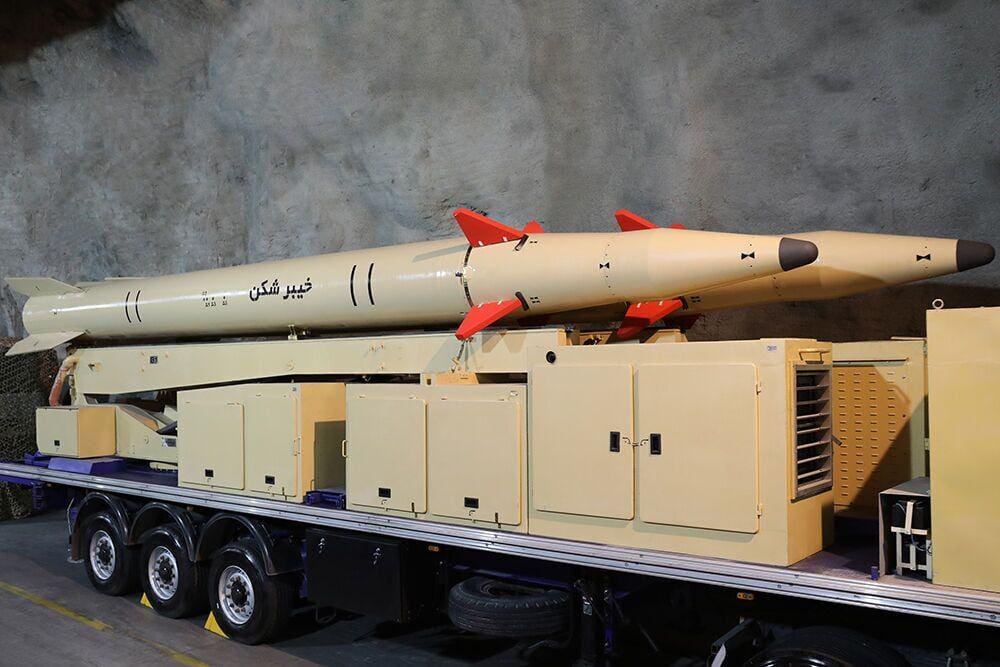
- The Sejjil is a medium-range solid-fuelled ballistic missile with a range between 1,500 and 2,000 kilometres.
- The Khorramdarreh 4 is a ballistic missile with a range of 2,000 kilometres.
- The Fattah 2 is an alleged hypersonic missile.
- The "Haj Qassem Soleimani" is a ballistic missile with a range of 1,400 kilometres.
Battlefield Use
In Dhu al-Hijjah 1439 AH (September 2018 CE), Iran launched Fateh-110 and Zolfaghar missiles at headquarters of Kurdish opposition groups in Koya in the Kurdistan Region of Iraq. In 1441 AH (January 2020 CE), in response to the assassination of Qassem Soleimani, Iran launched Operation "Martyr Soleimani", in which Qiam ballistic missiles struck American bases at Ain al-Asad and Erbil. This was the first direct Iranian ballistic attack on American positions acknowledged officially.
In 1445 AH (2024 CE), Iran carried out two large waves of strikes on Israeli targets, using a combination of drones, cruise missiles and ballistic missiles, including the Qiam 110, Emad and Khorramshahr. During the 12-day Israeli-Iranian war in 1446 AH (June 2025 CE), Iran launched approximately 500 missiles at Israel.
In the recent war with the United States and Israel, various types of missiles in the Iranian arsenal were used against Gulf states, Jordan, American bases in the region and occupied Palestine.
Models Under Development
- The Fattah 2 is a hypersonic missile under development.
- New Khorramshahr missiles with improved capabilities.
- A satellite and space-launch programme.
- Advanced naval cruise missiles.
Exports
Iran does not officially export its missiles because of international sanctions, but it transfers technologies and expertise to its militias and proxies across the Islamic world. The Hizbullah militia in Lebanon possesses an arsenal estimated at between 120,000 and 200,000 rockets and missiles, making it the most heavily armed non-state actor in the world. The Houthis in Yemen receive Iranian missiles and drones through maritime and land smuggling routes. Iran-backed Shia militias in Iraq possess Zelzal, Fateh and Zolfaghar missiles. The former Syrian regime hosted Iranian missile factories in Masyaf and Albukamal.
Experiences of Other Arab and Islamic Countries
Saudi Arabia
Strategic Role: Deterrence Against Iran and Building Independent Missile Capabilities
In 1408 AH (1988 CE), Saudi Arabia bought Chinese DF-3A missiles at a cost estimated between $3 and $3.5 billion. This deal was China's first with Saudi Arabia, before diplomatic relations were established in 1410 AH (1990 CE). Beijing helped build two missile bases south of Riyadh and provided Chinese personnel for maintenance, operation and training. In 1428 AH (2007 CE), Saudi Arabia bought Chinese DF-21 missiles. In recent years it has negotiated the purchase of French SCALP missiles and British Storm Shadow missiles.
Current types
- DF-3A missiles with a range of 3,000 kilometres, but they are not accurate.
- DF-21 missiles with a range of 1,750 kilometres.
- Pakistani Ghauri missiles.
Exports
Saudi Arabia does not export its missiles, but it imports from China, France, Pakistan, the United States and Turkey.
Egypt
Overview of the development history
In the 1960s, Egypt launched an accelerated missile programme with German assistance at Factory 333 in Helwan. Three missiles were under development: al-Zafran with a range of 375 kilometres, al-Qahir with a range of 600 kilometres, and al-Raid with a range of 1,000 kilometres. However, Germany halted cooperation in 1385 AH (1966 CE), and the programme was stopped and the focus shifted to importing.
In the 1970s, the Soviet Union supplied Egypt with Frog-7 and Scud-B missiles. Also in the 1970s, Egypt began cooperation with North Korea, supplying it with Scud-B missiles and launchers. In the 1980s, Egypt signed an agreement with North Korea to manufacture Scud-C missiles locally. In 1410 AH (1990 CE), it signed a protocol with China to modernise the Siqr factory for producing Scud-B missiles, Silkworm missiles and Siqr missiles.
Current types
- Siqr-80 missiles with a range of 80 kilometres.
- Scud-B missiles and possibly Scud-C missiles with a range of 450 kilometres.
- British Storm Shadow missiles, purchased in the late 2020s.
- French SCALP missiles, purchased as part of Rafale deals.
Morocco
The strategic role: deterrence against Algeria and the Polisario Front militia, and building a defence partnership with the United States and Israel
In recent years, Morocco has strengthened its military cooperation with Israel. In 1446 AH (2025 CE), Morocco bought Israeli Elbit Systems' ATMOS 2000 self-propelled artillery systems. It bought Barak MX air and missile defence systems. It bought PULS rocket launcher systems. It bought LORA ballistic missiles from Israel with a range of 280 kilometres.
Current types
- LORA missiles with a range of 280 kilometres and an accuracy of 10 metres.
- Barak MX air defence systems.
- PULS rocket launcher systems.
- EXTRA missiles with a range of up to 150 kilometres,
- HIMARS missile system.
The missile equation in the Islamic world reflects deep geopolitical shifts: Turkey seeks influence, Pakistan seeks to endure, Iran seeks deterrence and influence, and the Arab states seek protection.
References
- VIF India, Pakistan's Nuclear and Missile Programme: An Assessment.
- Wisconsin Project, Stations of Pakistan's Missile Programme 1961-2014.
- Defense Watch, Roketsan Unveils Typhoon Block 4 at a 2026 Event.
- Global Tender News, Turkey's Typhoon Block 4 Hypersonic Missile Enters Serial Production 2026.
- The Defense Post, Turkey's Longest-Range Typhoon Ballistic Missile Exceeds 500 km.
- Defence Security Asia, Turkey Deploys Typhoon Block 2 Hypersonic Missile.
- Arms Control, Turkey Tests a Short-Range Ballistic Missile.
- The Arab Weekly, Turkey's Khan Missiles Redraw the Deterrence Map in Southeast Asia.
- The Amargi, Behind Iran's Missile Programme: Development, Deterrence and Survival.
- Alestiklal, Iran's Strategy: Exporting Arms Factories Beyond Its Borders.
- Wall Street Journal, Iran Rearms Its Militias.
- Washington Institute, Do Not Assume Iran's Supply Lines to Hezbollah Are Cut.
- Britannica, Axis of Resistance.
- USCC, Reported Chinese Ballistic Missile Sales to Saudi Arabia.
- Global Security, Saudi DF-3 Missiles.
- FAS, Missile Proliferation in Egypt.
- Defence PK, Egypt's Missile Programme: A Timeline.
- North Africa Post, Moroccan-Israeli Joint Military Committee Sets Action Plan for 2026.
- IAI, LORA Long-Range Artillery.
- CSIS Missile Threat, LORA.
- Defence Security Asia, HIMARS Fires in Malaysia for the First Time.
- Reports from the Moroccan newspaper Al-Omq.
- Reports from Turkish TRT.
- Reports from Al Jazeera Net.


