

A recent study issued by the International Institute for Strategic Studies (IISS) has revealed new details concerning allegations that the Sudanese army used chemical weapons during the ongoing war with the Rapid Support Forces, drawing on press investigations, documents, images and video footage that point to an alleged military programme to develop munitions containing chlorine gas, with some of them reportedly used in attacks attributed to the Sudanese Armed Forces in 2024.
The two researchers concluded that the evidence that emerged in recent months has strengthened the credibility of the allegations compared with earlier reports, but they stressed that this information has not yet been subjected to a decisive international field investigation that independently establishes the nature of the programme, the weapons used, or the parties responsible.
The study comes as Sudanese authorities continue to deny possessing or using chemical weapons, despite the United States imposing sanctions on the Sudanese government after it announced that its forces had used these weapons during the war.
The institute published the study on 3 November 2026, under the title "Persistent Allegations: Sudan Denies Chemical Weapons Claims", and it was prepared by researcher Annemieke Dolls and researcher Carl Dewey.
The study examines the available evidence, the long history of chemical weapons allegations in Sudan, and the challenges facing international investigation and accountability mechanisms.
Classified documents reopen the chemical weapons file
The most significant new information is based on two investigations published by the American newspapers The New York Times and The Washington Post on 5 September 2026, after they obtained a set of documents, images, video footage and correspondence attributed to Sudanese military officials.
The material was provided by an unidentified Middle Eastern intelligence agency, and the two newspapers carried out verification procedures that included analysis of the images and video footage and consultation with experts in chemical weapons and digital investigations.
According to the study, the documents indicate that the Sudanese army may have established a limited programme to manufacture munitions containing chlorine gas, with the aim of using them against the Rapid Support Forces during the battles the country witnessed in 2024.
The material included images of what appeared to be munition assembly facilities, video footage of detonation tests in desert areas, and correspondence discussing the production of weapons that combine explosive and chemical effects.
It also contained information on sources of chlorine, the development of munitions that can be dropped from aircraft, and the possibility of their use in attacks targeting sites controlled by the Rapid Support Forces.
However, the institute stresses that the source of these documents raises important questions, given that the intelligence agency that provided them has not been identified and its motives are unknown.
The two researchers believe that the efforts made by the newspapers to verify the material enhance its significance, but they do not replace an independent international investigation capable of examining the sites, munitions, samples and testimonies directly.
An alleged programme that began in July 2024
The documents reviewed by the American newspapers indicate that work on the alleged programme began in July 2024 and included the development of munitions containing chlorine gas, with explosive materials added to increase the damage they cause.
The correspondence referred to importing twenty large chlorine cylinders through Egypt, and one of the military officials to whom the messages are attributed said the quantity was sufficient to produce about 1,100 bombs.
Information was also reported about obtaining chlorine from local sources, including water treatment facilities.
According to the documents, samples of the munitions were tested in the Sudanese desert during July 2024, before the alleged expansion in their production and storage.
One of the correspondences reported that the stockpile had reached about 300 munitions by October of the same year.
The reports included a description of a munition combining an explosive charge with a load of chlorine gas weighing about 15 kilograms.
The documents indicated that the addition of explosives and shrapnel was not only aimed at increasing destructive force, but may also have aimed at concealing some traces that could indicate the use of a chemical substance.
Nevertheless, all these details remain derived from the documents and correspondence attributed to the alleged programme, and they have not been confirmed by independent international inspections.
Al-Jaili refinery: allegations of chlorine use in September 2024
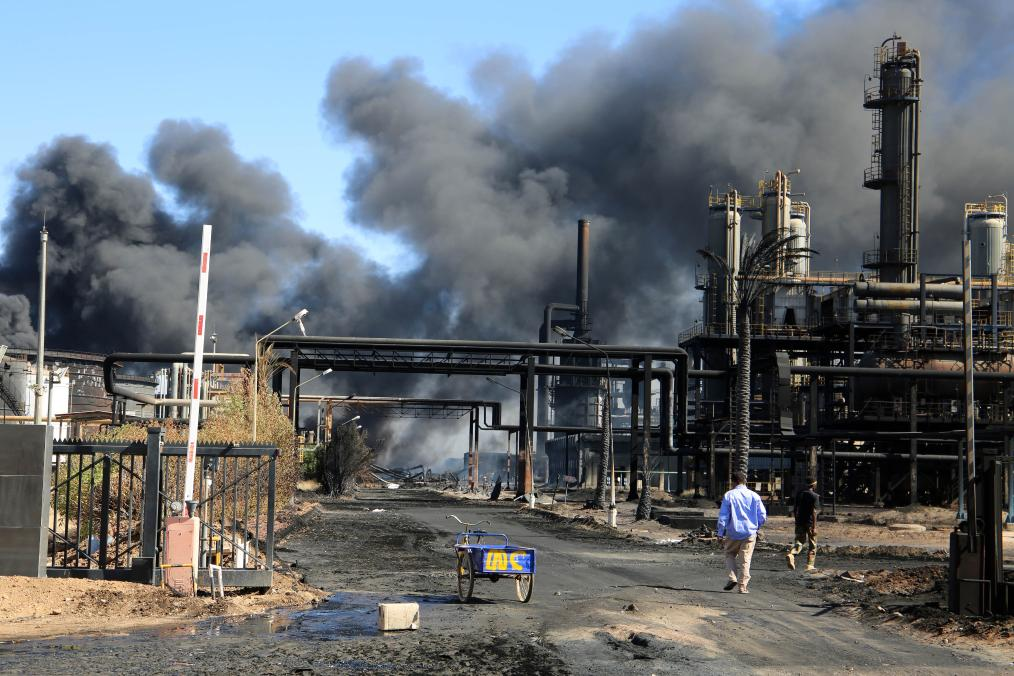
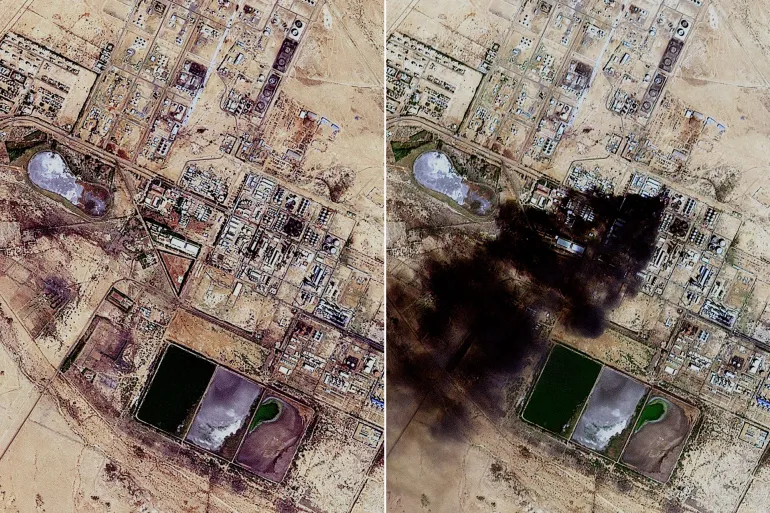
The area surrounding the Al-Jaili oil refinery, north of the capital Khartoum, is one of the most prominent sites addressed by the study.
According to the published information, two incidents took place in which chemical materials are suspected to have been used in September 2024, during attempts by the Sudanese army to recapture sites controlled by the Rapid Support Forces.
Media outlets, including France 24, had previously published investigations into these incidents, drawing on images and video footage showing damaged chlorine cylinders at sites linked to the fighting.
The study notes that the nature of the damage visible on some of the cylinders is consistent with the possibility that they were dropped from aircraft.
However, these observations are not sufficient on their own to prove that the cylinders were deliberately used as chemical weapons, or to definitively determine responsibility for their use.
Some of the evidence relating to the incidents also differs from the military designs that appeared in the later documents, which raises questions about the stages of development of the alleged programme and the weapons that may actually have been used.
The study emphasises the importance of obtaining reliable environmental and medical samples, and examining the remains of munitions and attack sites, before issuing a final international conclusion on the nature of the substances used.
Was chlorine intended for drinking water purification used?
Among the most alarming aspects of the investigations are allegations that quantities of chlorine used in water treatment were diverted to military purposes.
Chlorine is a substance legitimately used to disinfect drinking water and kill germs, and its importance increases in countries suffering from the collapse of water and sanitation networks and the spread of waterborne diseases.
However, its deliberate use to cause poisoning or suffocation makes it a chemical weapon prohibited under the Chemical Weapons Convention.
The documents indicated the possibility of obtaining chlorine cylinders from water treatment facilities that had received supplies from humanitarian organisations.
However, these allegations do not mean that it has been proven that materials provided by those organisations were diverted to military use.
The United Nations Children's Fund (UNICEF), responding to the Washington Post investigation, confirmed that it supplied chlorine to water treatment facilities in Khartoum, but said it has no record indicating that the materials it provided were diverted or misused.
This distinction is particularly important, because providing chlorine for water purification is a necessary humanitarian activity to protect the population from disease, and unproven allegations about the fate of some supplies should not turn into an accusation that humanitarian organisations are involved in military activities.
US sanctions: from accusation to economic measures
The current allegations did not begin with the reports of last September, as the United States Department of State announced in May 2025 that the Sudanese government had used chemical weapons during the war in 2024.
The decision was based on an American law concerning the prevention of the use of chemical and biological weapons, under which Washington imposed restrictions on certain assistance, transactions and licences related to American exports to Sudan.
The measures took effect on 27 June 2025, with specific exemptions and waivers that included aspects of humanitarian assistance and other activities.
The United States then announced additional sanctions in 2026, after it considered that the Sudanese authorities had not met the conditions required to address the violations identified by Washington.
These decisions are an official affirmation of the position of the US government regarding the allegations.
However, they do not in themselves constitute the outcome of an independent investigation by the Organisation for the Prohibition of Chemical Weapons, nor an international judicial ruling establishing criminal responsibility for the alleged attacks.
Sudan rejects the allegations and calls for an investigation
For its part, the Sudanese authorities continue to reject the allegations directed at the army.
On 21 October 2026, Sudan's representative to the First Committee of the United Nations General Assembly, Chargé d'Affaires Faisal Abdelaziem Salim, reiterated his country's rejection of the American claims regarding the use of chemical weapons.
He said, according to the Sudan News Agency, that the United States had refused to send a technical delegation to conduct a joint investigation, and had also refused to provide the evidence it says it possesses to the Organisation for the Prohibition of Chemical Weapons.
He affirmed Sudan's commitment to the Chemical Weapons Convention and its readiness to cooperate with the competent bodies to verify the allegations.
The Sudanese authorities had previously announced an internal investigation which concluded, according to their statements, that there was no evidence of chemical or radiological contamination at the sites that were examined.
However, the study points out that internal investigations alone cannot settle the international dispute, especially as there continues to be reliance on information that has not been subjected to comprehensive independent inspection.
The confrontation therefore continues between American accusations supported by material published in press investigations, and an official Sudanese denial that calls for their substantiation through the internationally recognised procedures.
Old allegations dating back decades
The institute's study places the recent allegations in a broader historical context, noting that claims about Sudan's interest in chemical weapons have surfaced since the late 1980s.
In 2000, Médecins Sans Frontières documented reports of the possible use of unconventional weapons during earlier conflicts in Sudan.
In 2016, Amnesty International also published an investigation that spoke of 32 suspected chemical weapons attacks in the Jebel Marra area of Darfur.
However, those investigations did not rely on comprehensive international field inspections that included collecting environmental samples and analysing them in accredited laboratories.
Following the Amnesty International report, the Organisation for the Prohibition of Chemical Weapons had confirmed that the available information did not allow conclusive findings to be reached without additional evidence.
The two researchers point to the importance of these precedents for understanding the new allegations, while warning against previous intelligence errors in cases involving unconventional weapons.
Among the prominent examples discussed in the study is the American attack on the Al-Shifa pharmaceutical factory in Khartoum in 1998, on the basis of allegations that it was linked to the production of prohibited chemical materials, allegations that later sparked wide controversy over the validity of the evidence on which Washington relied.
The two researchers believe that such precedents call for extreme caution, and for not relying solely on intelligence information or conclusions based on visual evidence alone.
However, this does not diminish the importance of the new press investigations, which the institute considers provide stronger indications than some earlier allegations.
The Organisation for the Prohibition of Chemical Weapons: who has the right to investigate?
Sudan has been a party to the Chemical Weapons Convention since 1999, a convention that prohibits the development, production, acquisition, stockpiling, transfer and use of chemical weapons.
The Convention obliges states parties to cooperate with the international mechanisms designated to verify compliance with its provisions.
The study notes that Sudan holds a seat on the Executive Council of the Organisation for the Prohibition of Chemical Weapons for the period from May 2026 to May 2027.
The two researchers believe that Sudan's presence on the council gives it additional responsibility to deal with the allegations transparently, but at the same time raises questions about the credibility of the organisation if the allegations continue without sufficient verification procedures.
The Convention provides several investigation mechanisms, including challenge inspections and investigations of alleged use of chemical weapons.
However, activating these mechanisms is subject to legal and regulatory procedures, and requires access to the relevant sites and evidence.
In September 2026, the United Nations indicated its readiness to assist in the investigation if an appropriate mandate is issued.
The United States, in a statement before the Executive Council of the Organisation for the Prohibition of Chemical Weapons, also called on Sudan to disclose any chemical production facilities or munitions, and to cooperate in verifying and disposing of them in accordance with international obligations.
On 6 October, the British government confirmed that it is reviewing the new information carefully, that it had raised the matter with representatives of the Sudanese army, and it called on the authorities to complete their investigation and inform the Organisation for the Prohibition of Chemical Weapons of the results.
Nevertheless, as of the date of publication of the study, no results have been announced from an independent and conclusive international investigation that proves all the details of the alleged programme or determines final responsibility for the incidents under accusation.
Did chemical weapons change the course of the Sudanese war?
Despite the gravity of the allegations, the two researchers conclude that the alleged chemical use, if confirmed, has remained relatively limited compared with the wide scope of violence that the Sudanese war has witnessed.
Since fighting broke out between the army and the Rapid Support Forces in April 2023, Sudan has witnessed mass killings, extensive displacement and destruction of infrastructure, as well as allegations of war crimes and serious violations against civilians by multiple parties.
For this reason, the researchers do not believe that the disclosure of these allegations or increased international pressure concerning them will by itself change the course of the war.
However, the study indicates that American sanctions may have contributed to halting the alleged programme, as the published information indicates that work on it ended after the first round of sanctions was imposed in May 2025.
Nevertheless, this conclusion relies on reports concerning the programme's cessation, and is not the result of an independent international verification of its complete dismantlement.
Fundamental questions also remain without clear answers, including the fate of the munitions alleged to have been produced, whether all of them have been destroyed, and the individuals responsible for planning, production and possible use.
Mounting evidence and an unfinished investigation
The International Institute for Strategic Studies study reveals that the file on allegations of Sudanese army use of chemical weapons has entered a new phase, as the published material has become more detailed than earlier allegations.
The images, video footage, correspondence and cross-referenced reports offer indications that deserve serious investigation, but they do not eliminate the need to gather independent field evidence, examine samples, verify the sources of the documents and their chain of custody, and hear the statements of the parties concerned and of witnesses.
At the same time, an official denial alone is not sufficient to close the file, just as American sanctions or press reports alone are not sufficient to issue a final international ruling on responsibility.
The importance of this case lies in the fact that it concerns the possible violation of one of the most fundamental prohibitions established by international humanitarian law, namely the use of toxic chemical substances as weapons in armed conflicts.
For Sudanese civilians, who already face one of the most severe humanitarian crises in the world, truth and accountability are part of the requirements of protection, alongside an end to attacks and violations and the guarantee of access for humanitarian aid.
The study concludes that the new evidence has made the allegations more serious than before, but it also affirms that the path to establishing the facts conclusively still runs through an independent international investigation capable of distinguishing between intelligence information, journalistic evidence and established material evidence.
In the meantime, the question remains: will international pressure lead to an investigation that reveals the truth about the alleged chemical programme and the fate of its munitions, or will the case remain suspended between the published evidence and official denial, while the Sudanese war and its humanitarian repercussions continue?
Primary source: International Institute for Strategic Studies (IISS), Annemieke Dols and Carl Dewey, 3 November 2026.
Additional references: The Washington Post and The New York Times, 5 September 2026; the United States Department of State; Sudan News Agency, 21 October 2026; the Organisation for the Prohibition of Chemical Weapons; the British government, 6 October 2026.


