


Irregular migration routes to Europe are showing a striking paradox in 2026: fewer migrants are reaching the continent, while more of them are losing their lives during the journey. According to data from the International Organization for Migration (IOM), fewer crossings no longer necessarily mean that the routes have become safer; the figures indicate that the journeys have become more dangerous and harsh.
1,570 Deaths in Six Months
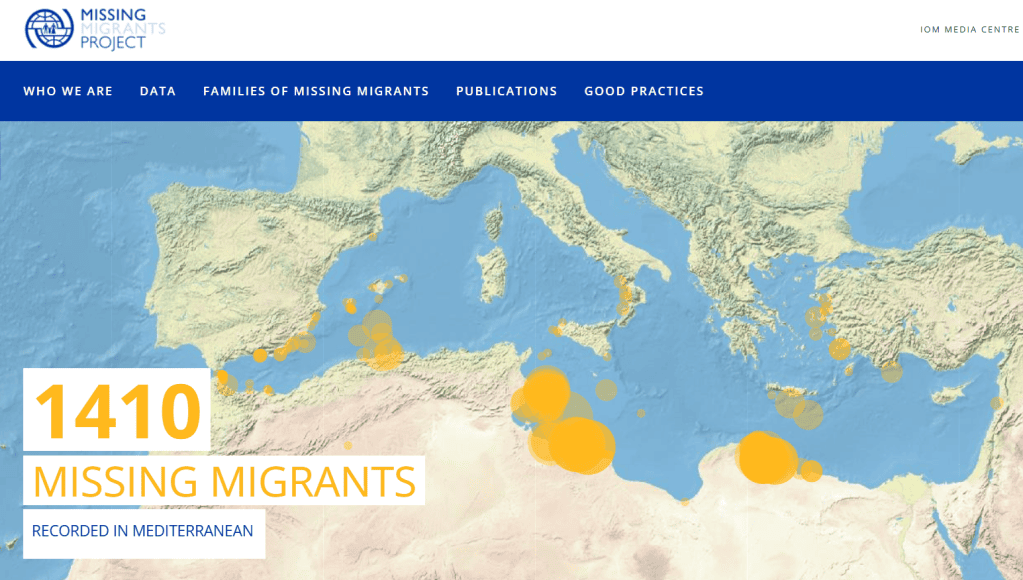
Data from the IOM's Missing Migrants Project showed that 1,570 people died during the first half of 2026 while attempting to reach European shores by sea, an increase of 27% compared with the same period of 2025, when 1,232 deaths were recorded.
The rise in fatalities comes at a time when irregular arrivals to the European Union have declined. The European Border and Coast Guard Agency, Frontex, recorded last year the lowest level of irregular crossings since 2021, with fewer than 178,000 detections. The decline continued in 2026, with arrivals in the first months falling by about 40% compared with the previous year.
These figures, however, reveal that tighter border controls and fewer migrant arrivals have not made the journeys safer, and may instead have pushed some crossing routes into areas that are more dangerous and less monitored.
New, More Dangerous Routes
The IOM notes that all of the main sea routes to Europe have become more dangerous, whether in the eastern, central or western Mediterranean.
The deadliest route was the central Mediterranean, where deaths rose by 57%, while the number of victims in the eastern Mediterranean doubled from 120 to 320, as a result of an increase in crossings from eastern Libya towards the Greek island of Crete.
The organisation explains that these journeys have become more dangerous due to the use of unsuitable boats, severe overcrowding, and weak search and rescue operations in some of the new areas.
The Atlantic route to the Spanish Canary Islands also saw an increase in the fatality rate, despite a significant drop in the number of arrivals along it. Migrants are now departing from areas further south, such as The Gambia, rather than Morocco and Mauritania, meaning the journey stretches over more than two weeks at sea.
"Invisible" Deaths Absent from the Statistics
The crisis is not limited to recorded figures. The IOM warns that the true number of deaths may be far higher because of what it describes as "invisible deaths."
Many boats disappear at sea without ever being found, and the decline in search and rescue operations, together with the difficulty of accessing data, makes it hard to document all victims.
The organisation notes that more than 1,500 people were reported missing at sea over the past year, but their cases have not been officially verified and therefore were not included in the confirmed death toll.
A Humanitarian Crisis Extending to Families
The tragedy of migration does not end with the loss of life; it extends to the families of the missing, who live through years of searching and waiting. The IOM estimates that some 340,000 family members around the world have been directly affected by deaths recorded during migration journeys.
Since the launch of the "Missing Migrants" project in 2014, around 84,000 deaths or disappearances have been recorded worldwide, roughly half of them on migration routes leading to Europe, with the central Mediterranean remaining the deadliest of these routes, recording nearly 27,000 deaths and disappearances.
Why Does Migration Continue Despite the Risks?
The IOM believes that the reasons migration continues are not linked solely to European policies, but to a set of factors in countries of origin and transit, including:
- Wars and armed conflicts.
- Poverty and limited job opportunities.
- Climate change and natural disasters.
- Political and security instability.
- Difficulty obtaining legal migration pathways.
The organisation stresses that tightening procedures alone does not address the problem, because migrants seeking safety or better opportunities may resort to more dangerous routes when legal options are closed to them.
Europe Between Border Control and Humanitarian Responsibility
Despite the decline in irregular arrivals, the number of refugees and asylum seekers in Europe held steady during 2025 at around 9.6 million people in the European Union and the United Kingdom, after a decade of continuous increase.
These developments show that Europe faces a difficult equation: protecting its borders and regulating migration on one hand, and preventing migration routes from turning into sea graveyards on the other.
The 2026 figures show that the migration crisis to Europe has not disappeared but has changed shape: fewer people are arriving, yet a larger proportion are paying with their lives to get there. While European states try to reduce irregular migration, the greater challenge remains preventing migrants from being pushed onto more dangerous routes, beyond the reach of relief and rescue efforts.


