

Middle East: Washington Paves the Way for a "Security Partnership" by Reducing Its Troops in Iraq
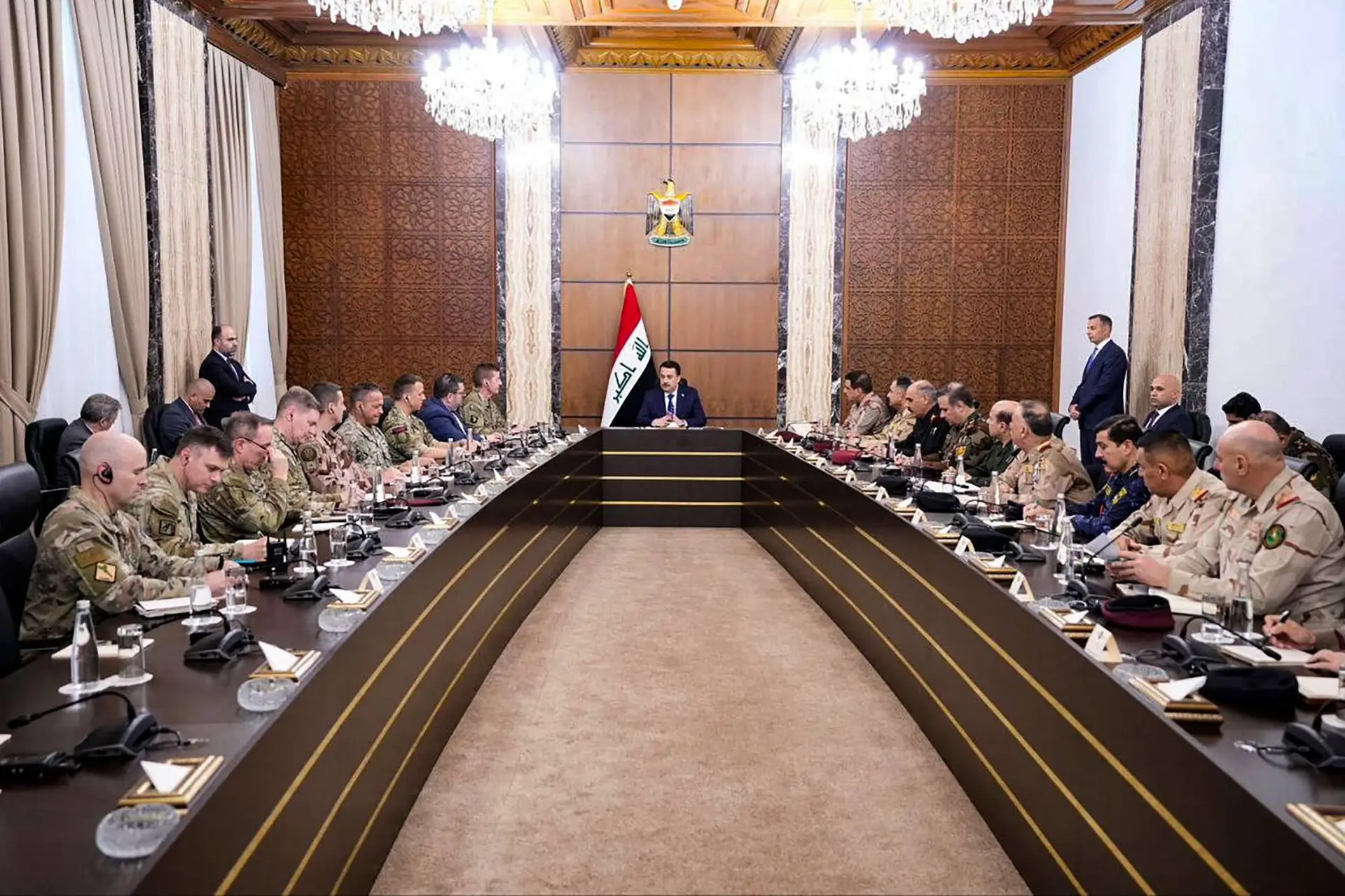
While the Iraqi government says it is moving the international coalition's mission to fight the Islamic State group toward stable defence relations with its member states, particularly the United States and Britain, the US Department of War has reaffirmed its commitment to scaling back its military mission in Iraq, in line with an agreement it reached with Baghdad last year, saying the transition of the US-led coalition's operations is the result of its success in fighting the Islamic State group.
In a statement, the department said: "The US government will continue close coordination with the Iraqi government and coalition members to ensure a transition that is worthy of trust," a move that has been welcomed by the government in Baghdad.
Pentagon spokesperson Sean Parnell stated that "this step (the reduction) reflects the joint successes in fighting the Islamic State group, and represents a new phase towards establishing a lasting security partnership between Washington and Baghdad, consistent with US national interests, the Iraqi constitution, and the Strategic Framework Agreement signed between the two countries."
He added that "the anticipated partnership will contribute to strengthening the security of both countries, supporting Iraq's capacity to achieve economic growth and attract foreign investment, along with enabling it to play a leading role at the regional level."
The reduction step comes within the framework of an agreement reached last year between Washington and Baghdad, which provides for a partial withdrawal from some bases that began at the end of September last year and is expected to end in the same month of next year, without including a full withdrawal.
US forces are likely to move from Ain al-Asad base in Anbar Province and Victoria base in Baghdad towards Harir base in the Kurdistan Region.
A Sustainable Partnership
Commenting on the US reduction plan, Hussein Allawi, adviser to the Iraqi prime minister for security sector reform, said the country is in the process of "transitioning to a lasting security partnership between Iraq and the United States, and between Iraq and the United Kingdom."
Speaking to Asharq Al-Awsat, Allawi said this course is consistent with the shared interests between Iraq and the international coalition, and in line with the Iraqi state's priorities of strengthening its security, protecting its national interests, building its armed forces, and developing bilateral relations on the political, economic, cultural and educational levels, as well as in the fields of energy, investment, technology and banking with Washington and international coalition states.
He added that all of this "is based, in the field of Iraqi-American relations, on the course of the Strategic Framework Agreement between Iraq and the United States of America, and with the United Kingdom in light of the Cooperation and Partnership Agreement between Iraq and the United Kingdom."
The said Framework Agreement was signed between the Iraqi government and the United States of America in 2008, and includes defining the "key provisions and requirements" governing the temporary presence of US military forces in Iraq, their activities there, and their withdrawal from Iraq.
The government adviser points out that his country has worked on the path of implementing the Iraqi government's programme "through building the Iraqi armed forces, ending the coalition's missions, and transferring security relations with international coalition states to stable bilateral defence relations governed by political, economic and cultural relations, especially with the United States of America and the United Kingdom."
All of this, he said, means that "the implementation of the agreement between Iraq and international coalition states is moving forward in accordance with the joint statement between the Republic of Iraq and the international coalition states issued in September 2024."
A New Phase
Last year, Iraq reached an agreement with international coalition states providing for the end of the coalition's mission according to a publicly announced timeline beginning in September 2025 and ending in 2026, after which it will move to a new phase of joint security cooperation in "advisory, capacity-building for Iraqi security forces, armament and joint training."
Military estimates indicate there are about 2,500 US soldiers in Iraq, while Iraqi sources confirm the number exceeds 3,000 soldiers, while Washington keeps about 700 soldiers in Syria.
Adviser Allawi says that "the government is working toward a sustainable relationship covering all fields, including the security field, which has been worked on through a set of methodical foundations beginning with the military committee that discussed the coalition's mission and the implementation of ending its tasks, after the relations were subjected to discussion in the ongoing dialogues to implement the agreement and sustain the bilateral partnership."
He pointed out that the government affirmed "its commitment to implementing the agreement on ending the international coalition's missions and transferring relations towards bilateral relations, to return Iraqi-American relations, Iraqi-British relations and relations with international coalition states to normal relations of the period before the fall of Mosul to (the Islamic State group), with relations between the countries stabilised under the course of strategic agreements."
Adviser Allawi concluded that "the second phase of ending the international coalition's missions in Iraq will be in September 2026, with Iraqi-American, Iraqi-British and Iraqi relations with international coalition states continuing towards sustainable relations, and their comprehensive courses."
Washington established and led the international coalition after the Islamic State group took control of large parts of Iraq and Syria in 2014, before Iraqi forces, backed and supported by the international coalition, were able to defeat the group at the end of 2017.
The Ruling Coalition Welcomes It
The Shiite "Coordination Framework" forces that formed the government of Sudani welcomed the US reduction step. Coalition member Adi al-Khadran said in press statements: "We welcome the Pentagon's announcement of reducing the military presence in Iraq and the transition to a phase of strategic partnership. This is an important step that serves Iraq's interest and sovereignty."
He added that the decision represents "an important shift in the nature of the relationship between Iraq and the United States, from a field military relationship to a partnership based on strategic cooperation in the security, economic and technological fields, in a way that strengthens Iraq's capabilities and preserves its national sovereignty."
Al-Khadran noted that the "Coordination Framework" forces stress that "the presence of foreign forces in Iraq must be governed by the decisions of the Iraqi state, and in line with the constitution and the national will."
The withdrawal of US and international forces from Iraq is among the most important demands adopted by some armed factions under the umbrella of the "Coordination Framework."
Source: Asharq Al-Awsat


