

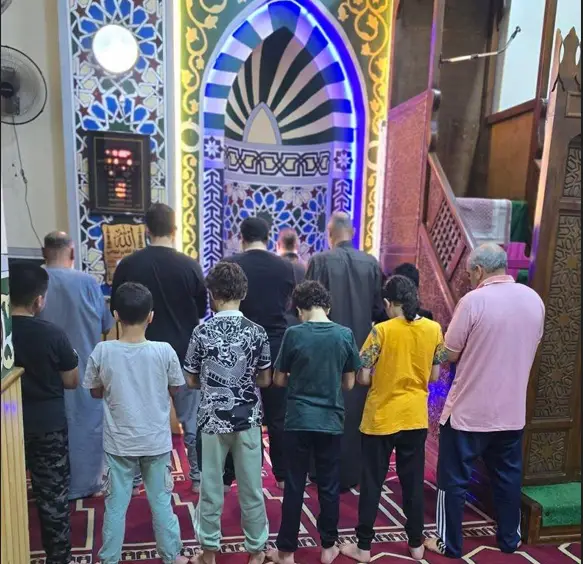
None of those six children who set out in the darkness of dawn from eastern Algeria, particularly in the wilayas of Bordj Bou Arréridj and Sétif, knew that their small steps toward the mosque would echo in countries thousands of miles away, or that their simple initiative would inspire children they had never met and whose names they had never heard.
Behind them were no large institutions, no media budgets, and no carefully planned promotional campaigns. The idea was, at its core, simple: that children should become accustomed to praying the dawn prayer in the mosque, that they should compete in obeying God, and that in each other's company they would find what helps them wake up and persevere.
But some ideas carry meanings that make them far greater than the size of their beginnings, and this is what happened with the "Men of the Dawn" initiative.
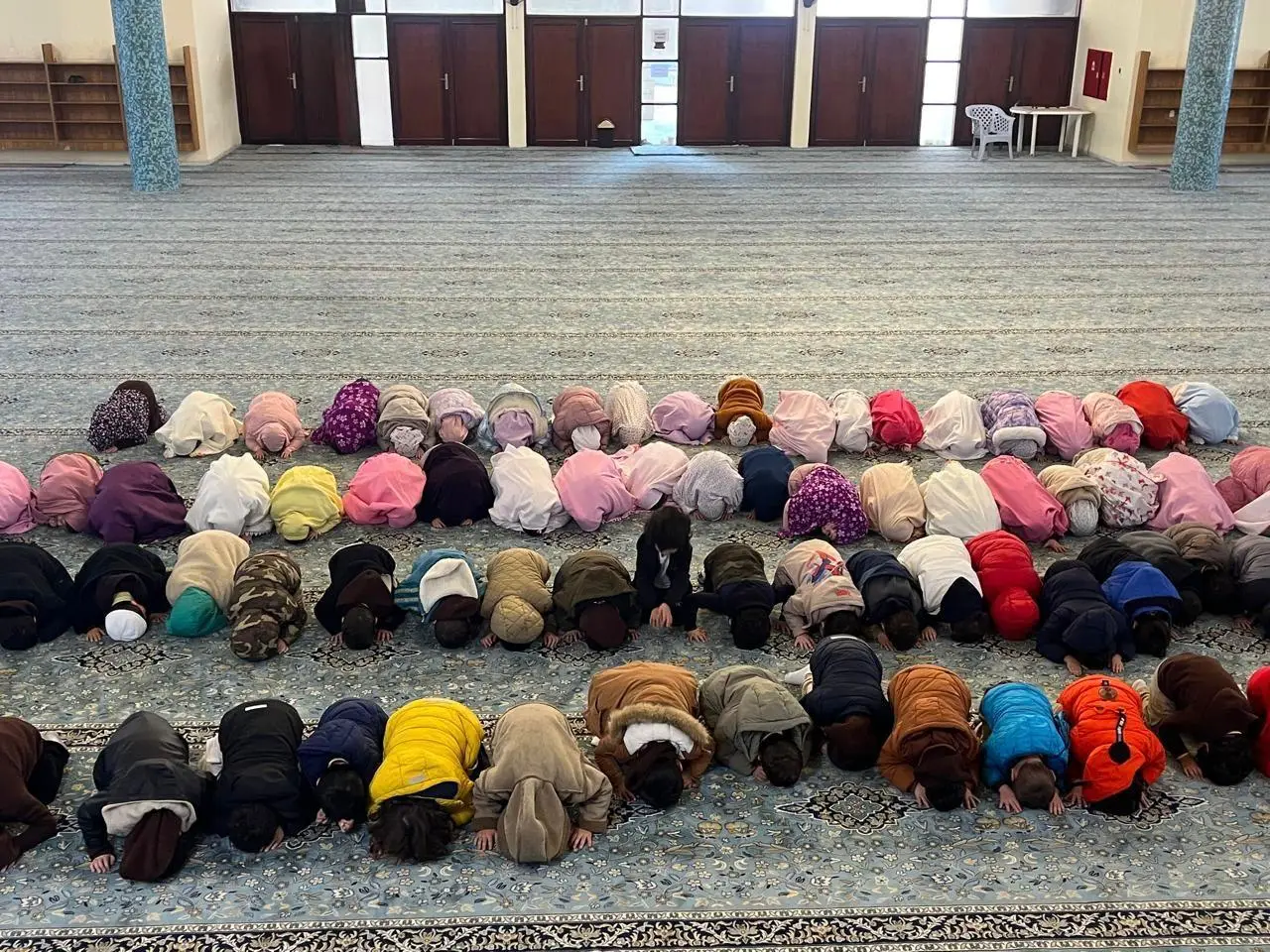
Jordan: Turnout for the dawn prayer at several mosques

And the honouring of the participating children in Mafraq Governorate.
From Eastern Algeria to Mosques Around the World
From Bordj Bou Arréridj and Sétif to other Algerian regions, and then to Jordan, Morocco, Egypt, Tunisia, Qatar and Yemen, the idea began to travel among Muslim communities, taking on in each country a name that reflects its character: here "Men of the Dawn", there "Lions of the Dawn", and elsewhere "Knights of the Dawn".
The initiative's echoes also reached other countries, including India, Canada, Germany, Spain, Turkey, Lebanon and Libya, according to media reports and videos circulating on social media platforms. The widening circle of engagement reveals a remarkable capacity for the initiative to travel among Muslims, however distant their homelands and however different their dialects.
In Jordan, the founder of the "Lions of the Dawn" campaign spoke of the ground floor of one mosque filling up, which required opening the second floor to accommodate worshippers, something that normally happens only on Fridays and during the month of Ramadan.
In Qatar, media outlets broadcast footage of young boys heading to mosques in Doha for the dawn prayer, while Yemeni media outlets reported scenes of the initiative reaching mosques in Yemen.
Even in Sudan, a country exhausted by war and whose people's lives have been torn apart by conflict, activists circulated footage of children performing the dawn prayer as part of the initiative.
What a beautiful meaning these scenes carry, when the hearts of Muslims converge on a single act of worship, without being united by a central leadership or bound by a single institution, but rather joined by a call they hear every morning: Prayer is better than sleep.

Egypt: Launch of the initiative at al-Gohary Mosque in the city of Mahmoudia, Beheira Governorate.
When the Mosque Becomes Part of Childhood Memory
The greatest thing about this initiative is not the number of children who woke up for the dawn prayer, but what this experience can shape in their souls over the course of their lives.
The child who leaves the warmth of his bed, overcomes his desire to sleep, and walks to the mosque in the company of his father or peers, learns a lesson in self-discipline that dozens of theoretical lectures cannot deliver in the same way.
He learns that life holds aims higher than comfort, that a person can triumph over his desires, and that love of God is not merely words uttered by the tongue, but deeds offered and sacrifices made.
When that child stands in the prayer row beside adults, he feels that he is part of a community greater than himself, that he has a place in one of God's houses, and that the mosque is not a strange space foreign to his world, but a home of tranquility, brotherhood and belonging.
Years may pass, and the child may forget many of the prizes he received and the toys he owned, but he will continue to remember those mornings when he walked beneath the light of the lamps, when the imam greeted him with a smile, and when he met his friends in the mosque before the city had awoken.
Such memories are how identity is built, how love is planted, and how a person's relationship with his religion takes shape from his earliest years.

Morocco: The initiative of the city of Tiznit to encourage young people to pray in congregation.
In an Era When Screens Compete for Children's Hearts
The "Men of the Dawn" initiative comes at a time when technology companies and entertainment platforms are competing to capture children's attention, and when enormous resources are being devoted to making them ever more attached to screens, games and virtual worlds.
At a time when many parents complain of the difficulty of separating their children from electronic devices, this initiative offers a practical model of society's ability to create attractive educational alternatives that respond to the child's need for companionship, encouragement, a sense of achievement and belonging.
Children do not need sermons alone. They need an environment that makes goodness beloved, obedience accessible, role models present, and righteous companionship available.
It is neither wise to blame our children for their attachment to what is presented to them day and night, without making a similar effort to create alternatives that fill their time and hearts with what benefits them.
Perhaps this is one of the most important secrets of the initiative's success: it did not limit itself to calling children to prayer, but made it a collective experience in which they encourage one another.


Why Do the Children of Dawn Provoke So Much Controversy?
The spread of the initiative has not been free of controversy and objections, whether in Algeria, Tunisia or Morocco, where questions have been raised about children's participation in these activities, and in some cases the matter escalated to the intervention of the authorities.
In Morocco, local media reported that the activity of the "Knights of the Dawn" in the city of Tiznit had been halted after it attracted around forty children over three days, while the person overseeing the initiative explained that the decision concerned gatherings outside mosques, not the performance of prayer inside them.
It is natural for any educational initiative to be examined in terms of children's safety, the organisation of activities, and consideration of their ages and their health and educational needs.
But there is a great difference between the legitimate concern for a child's welfare and portraying a child's attachment to the mosque and upbringing in prayer as something suspicious in itself.
If it is accepted that children learn discipline through sporting, artistic and scouting activities, then Muslim families also have the right to raise their children to pray and to help them build their personalities in the light of Islamic values.
The presence of a child in the mosque should not become a defensive matter that a Muslim is forced to justify and apologise for every time.
From the Enthusiasm of an Initiative to Building a Generation
The real challenge facing the "Men of the Dawn" is not reaching the largest number of countries, nor achieving millions of views on social media platforms, but preserving its impact after media attention fades.
How many initiatives have started with enthusiasm and then faded, and how many beautiful ideas have been weakened by focusing on their appearance at the expense of their substance!
For this initiative to bear fruit, it should develop into a comprehensive educational project in which parents, imams and educators take part, combining the teaching of prayer, reflection on the Qur'an, good character, service to the community, and the building of righteous companionship.
It is also important to observe gradualness and gentleness with children, to respect their need for sleep and rest, and to avoid burdening them with what they cannot bear, or turning competition into a source of pressure and embarrassment.
And they should learn that the purpose of prayer is not to obtain a prize, nor to appear in a video clip, nor to win people's admiration, but to worship God and seek His pleasure.
The Messenger of God ﷺ said: "The most beloved of deeds to God are those that are most consistent, even if they are small." Agreed upon (Muttafaq 'alayh).
The measure is not that the mosque fills with children for one morning, but that the mosque remains present in their hearts as they grow up, when the competitions end and the cameras disappear, and nothing stands between them and standing for prayer except their faith in God, the Mighty and Majestic.
When the Nation Awakens Its Children
Amid what the Islamic nation is experiencing of wars and tragedies, and the challenges its minorities face that touch their identity and religion, these small scenes come to remind us that there is life in the body of the nation, and that it holds sources of goodness that deserve care and cultivation.
Not every good news in the world of Muslims is a military conquest, a political victory or a major economic achievement. Good news may be a child who has learned to answer the call of God, a father who has regained his role in upbringing, an imam who has opened his heart to the young, or a community that has realised that building the human being is among the greatest forms of investment in the future.
Perhaps the finest thing the children of Ain Kebira have done is to remind Muslims that great initiatives do not always require great means, and that sincere goodness may begin with a few steps in a small neighbourhood, then find its way into the hearts of people at the ends of the earth.
Six children went out to the mosque in the darkness of dawn, and they inspired others to walk the same path.
How blessed are small steps when they are taken toward God!
How beautiful it is that a generation should grow up in our nation carrying in its memory that its first victory was over itself, and that its first step of the day was toward the house of its Lord.
A nation that knows how to wake its children for the dawn prayer, and how to raise them well in its meanings, lays a stone in building its future, for raising men begins before children reach manhood, and it is among the obligatory preparations in an age whose seasons have been overcome by weakness.
O God, bless these efforts and make them beneficial.


