

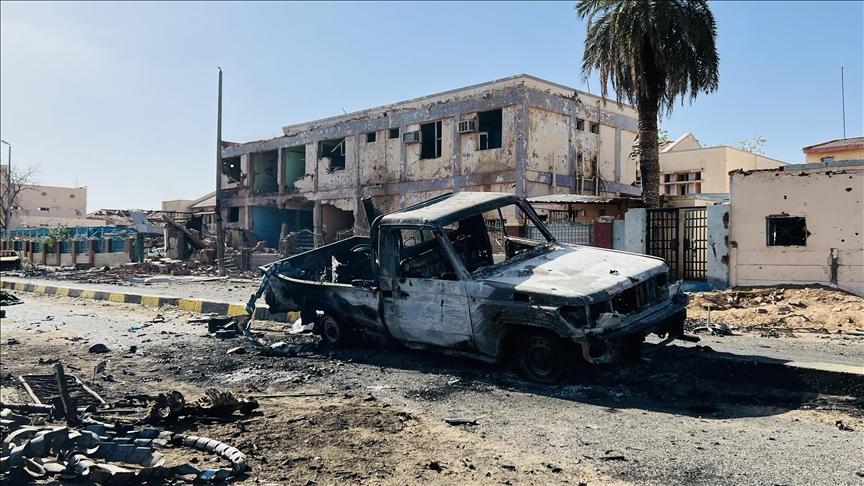
The Youth Citizen Observers Network in Sudan (YCON) published a new statistical study on Friday, 30 October 2026, tracking violent incidents and attacks that caused large numbers of casualties during last September. The study seeks to draw a clearer picture of the geographic distribution of violence, identify the parties to which the incidents are attributed, and assess the scale of the human losses associated with them.
The study is titled "Violence and Mass Casualty Events in Sudan, September" and presents aggregated statistical data that classifies incidents by their nature, the parties involved, and their locations, alongside records of the numbers of dead and injured.
The study gains its significance from the continuing war between the Sudanese Army and the Rapid Support Forces, and from the widening scope of military operations that has accompanied it and the growing risks faced by civilians, particularly in areas witnessing ground clashes and drone attacks.
Kordofan and Darfur: Hotspots of Military Escalation
The study comes in the context of a month that saw successive military and security developments, according to the separate periodic report the network issued on September 2026.
The periodic report noted the continuation of clashes and the shifting of front lines, especially in the state of North Kordofan, alongside the expanded use of drones in a number of Sudanese states.
Kordofan stands out in this monitoring as one of the arenas of military escalation, while Darfur has remained among the regions affected by the repercussions of the war, displacement, and the collapse of basic services.
However, determining which states witnessed the largest number of mass-casualty incidents, or recorded the highest death tolls during September, requires consulting the detailed tables of the statistical study; this ranking cannot be drawn from the published summary alone.
Classification of Incidents and Responsible Parties
A key feature of the YCON study is that it does not limit itself to recording the numbers of dead and injured. It links each incident to a set of variables, including the type of violence, the place where it occurred, and the party associated with it.
When the detailed data is analysed, this classification makes it possible to distinguish between areas that witness repeated incidents and areas that are subject to fewer attacks but are more lethal.
It also helps in studying the patterns of violence attributed to the various parties to the conflict, rather than relying on an overall casualty figure for Sudan as a whole.
Nevertheless, attributing any incident to a specific party still requires an assessment of the evidence on which the researchers relied, and a distinction between established responsibility and allegations that could not be independently verified.
Expanded Use of Drones and Their Risks to Civilians
The network's periodic report on September points to the expanded use of drones in several Sudanese states, in parallel with the continuation of ground fighting.
This development is one of the important aspects of understanding the shift in patterns of combat, as aerial attacks can reach areas far from direct front lines, increasing the likelihood that residents and civilian facilities will be exposed to danger.
However, determining the share of drone strikes in the total number of mass-casualty incidents during September, or comparing them with incidents of artillery shelling and ground clashes, requires reviewing the numerical classification contained in the new study.
What Do the Statistics Reveal About the Reality Faced by Civilians?
Studies that compile data on incidents and casualties help move beyond a general reading of the war, by showing differences between regions, patterns of targeting, and degrees of severity.
A rise in the number of incidents in a particular area does not necessarily mean that it recorded the largest number of deaths; a single incident in another area may cause more casualties than several incidents combined.
For this reason, it is important to read three indicators together: the number of incidents, the total number of dead and injured, and the average number of victims per incident.
Documented figures also do not necessarily represent the full human toll, given the difficulties of reaching combat zones, disrupted communications, and the reduced capacity of local institutions to record casualties and verify the fate of the missing.
These limitations remain essential when using the data for geographic comparisons or for assessing the scale of violence faced by civilians.
Documenting Violations and Holding the War's Parties Accountable
The study by the Youth Citizen Observers Network is part of the efforts of Sudanese civil society to monitor the repercussions of the war and document patterns of violence.
Data classified by place, time, and the party to which the act is attributed provides material that can help researchers and human rights organisations identify incidents that merit further investigation, and compare the development of violence across different periods.
However, statistical documentation alone is not sufficient to establish criminal responsibility for a specific incident. That requires an independent investigation into the circumstances of the attack, the nature of the targets, the identity of the victims, and the evidence linking the perpetrators to the act.
The protection of civilians, the guarantee of humanitarian access, and the enabling of independent investigations remain pressing issues while the conflict continues.
The new study opens the door to fundamental questions about the map of violence in Sudan: Where are the most deadly attacks recurring? Which patterns of fighting cause the greatest number of victims? And which areas require urgent intervention to protect the population?
The importance of answering these questions grows as the war continues and its fronts multiply, at a time when accurate data on victims remains one of the essential tools for understanding the scale of the tragedy, documenting violations, and preventing victims from being reduced to unidentified numbers.
Source: Youth Citizen Observers Network (YCON) – September 2026 study, published 30 October


