

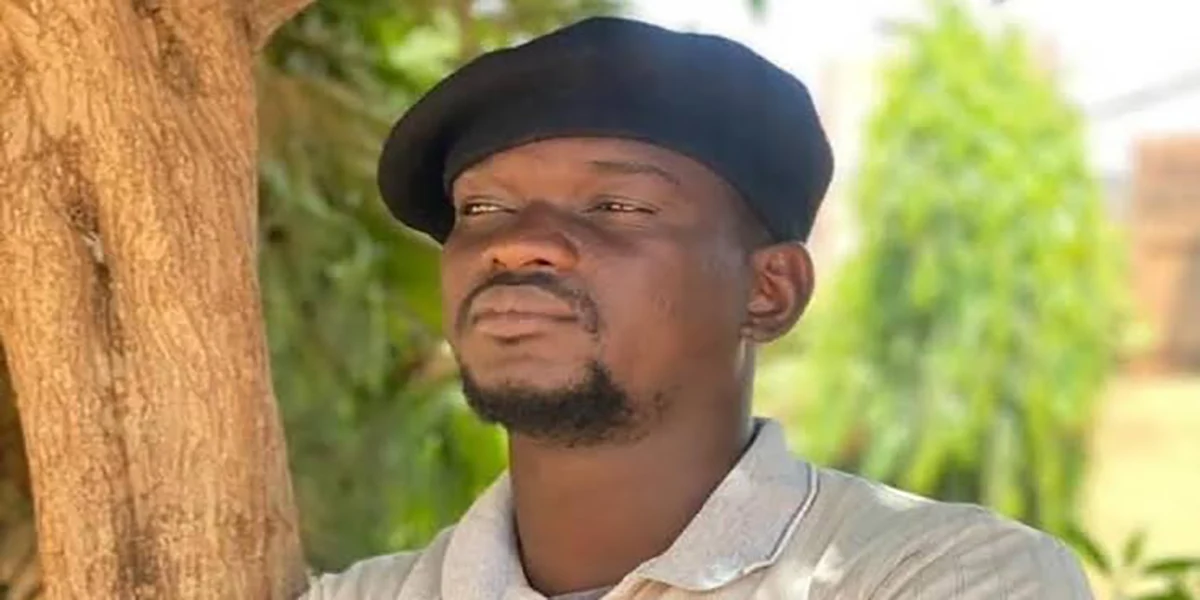
Malian political activist Bachir Thiam, in testimony to Radio France Internationale (RFI), has detailed his detention of nearly five months inside the headquarters of the National Directorate of State Security in Mali. He spoke of harsh detention conditions, the torture of detainees, the deaths of dozens of detainees due to the absence of medical care, and death threats directed at him to prevent him from disclosing what he witnessed during his detention.
Thiam, a former member of the dissolved party "Yelema", said he was abducted on 8 May 2025 in the city of Kati by masked agents of Malian intelligence services, and released on 25 September of the same year, after about five months of detention outside any legal procedures.
In an interview conducted with him by journalist David Baché, he explained that he currently lives outside Mali, noting that his abduction came at a time when a number of pro-democracy activists were abducted under similar circumstances, coinciding with the emergence of a temporary protest movement against the current regime, which was quickly suppressed by the series of abductions.
Disputes over his position on the transitional period
Thiam said he knew where he was being held, having recognised the headquarters of the National Directorate of State Security to which he was taken after his abduction.
He added that security personnel blamed him because he is a young man from the city of Kati who does not support the transitional period led by the military, explaining that the city is considered a stronghold of the military figures in power.
He pointed out that they did not understand why he, as a young man from Kati, refused to support a military regime, and that they were deeply frustrated by the possibility of his joining, along with members of his network, the "Yelema" party led by Moussa Mara.
Accusations of receiving funding from France
The Malian activist explained that he was not subjected to a genuine interrogation throughout his detention, except for a single session held on 25 September 2025, the same day he was released.
He said security personnel accused him of receiving funding from France to fight his country, a charge he denied.
He added that he was blindfolded during the questioning, and could hear nothing but the voice of the investigator, who asked him why he was receiving money from France to fight his country.
He explained that the investigator did not allow him to respond, but instead demanded that he remain silent and listen, before repeating his accusation that France was funding him to fight his country, noting that the investigator wanted him to accept those accusations.
Thiam affirmed that the session was not an interrogation in the usual sense and included no questions and answers; rather, he had to sit and listen to statements he described as defamatory, and then accept them.
Five cells and harsh detention conditions
Thiam spoke of his detention conditions inside the State Security headquarters, noting that he was moved between five cells during his time there.
He said that on the day of his abduction, between two and three in the afternoon, security personnel forced him to sit on the ground on a surface that was extremely hot, under the sun, while he was blindfolded, handcuffed and prohibited from moving for hours until sunset.
He added that the first cell he was placed in held 11 people, its floor was extremely dirty, and a bucket used as a toilet was placed in it that constantly overflowed, causing foul odours and mosquitoes to spread.
He explained that detainees slept directly on the ground, before he was moved to a second cell, a room holding 18 people, with no windows and not enough space to sleep on their backs or stomachs, forcing them to sleep on their sides.
Regarding food, he said the meals were unfit for eating, consisting of undercooked rice with very little sauce and a small piece of meat for eighteen people, adding that the quantity was very small.
Electric shock torture and the deaths of dozens of detainees
On the subject of torture, Thiam said he was not personally subjected to it, but he witnessed cases of torture affecting a number of detainees.
He cited the case of a young man who had not yet reached 17 years of age, whom he said was subjected to electric shocks on [blank in source], and that they continued to torture him for several minutes until he confessed.
He added that he was able to see and hear the electric shocks directed at the young man's body, noting that when he returned to the cell and urinated, blood came out instead of urine.
He also spoke of other detainees being severely beaten, affirming that many were struck with sticks.
He pointed out that some detainees fell ill and then died because they did not receive medical care.
He said guards refused to respond to detainees' calls regarding sick cases, and advised them not to report the sick and to wait until they died in order to remove their bodies.
He quoted the guards as telling the detainees: "You must not call us again because of illness. Wait until they die. And when they die, call us, and we will take out their bodies. You are all here to die."
Thiam affirmed that he witnessed the deaths of dozens of people during his detention, explaining that he initially began counting the deaths but later stopped because they were recurring and occurring daily.
He added that a pickup truck would regularly come to collect the bodies, without the detainees knowing where they were taken.
Majority of detainees from the Fulani and Tuareg communities
Thiam said that most of the people he met inside the State Security headquarters were Fulani and Tuareg, explaining that many of them did not know why they had been detained.
He added that some detainees had been held for months, and others for years, noting that some were arrested because of their ethnic affiliation, their style of dress, or their presence in a place where an attack had occurred.
He explained that whenever attacks took place in major cities, or even in the capital Bamako, people found near the sites of the attacks were arrested because they wore clothing of a Fulani style.
He noted that these individuals were not even subjected to investigations meeting minimum required standards.
He also spoke of people arrested in rural areas, including herders and farmers, whose families did not know they had been abducted.
He said many remain detained there to this day, while others have lost their lives.
Death threats after his release
Regarding the circumstances of his release, Thiam said security personnel took him out of the cell on the evening of 25 September 2025, together with three other detainees, all of them blindfolded.
He added that three security personnel threatened him with death, and informed him that what he had lived through and witnessed inside the detention facility was a state secret, warning him against disclosing any details of what he had seen.
He explained that they put him and his companions in a black car, then drove them to a place behind the military camp, near the Kwame Nkrumah monument, less than three minutes from the detention site, where they released them.
Insistence on exposing what happens inside State Security
Despite the threats he received, Thiam affirmed his determination to give his testimony, saying he wants Malians and the international community to know what happens inside the State Security headquarters.
He described the practices taking place there as crimes against humanity, saying they occur in the heart of the capital Bamako under what he called a dictatorship.
He added that his insistence on testifying also fulfils an oath he made to a number of the detainees who were with him.
He accused the State Security service of using him as a tool to intimidate anyone who wants to raise their voice, and said the judiciary is in turn used as a tool of repression against anyone who wants to denounce the country's mismanagement.
Concern over the fate of Montaga Tall and his son
Thiam expressed concern over the detention of lawyer and former minister Montaga Tall and his son, noting that they have been held for more than six months with no one receiving news of them.
He said the detention conditions are extremely harsh, and that the chances of coming out alive diminish the longer detention lasts, adding that those who do come out alive may suffer physical and psychological effects.
He revealed that he still suffers recurring muscle pain, in addition to nightmares that persistently haunt him, noting that he thinks a great deal about the people who died during his detention.
He described the situation of Montaga Tall and his son as worrying, given that six months have passed since their detention with no information available about them.
He stressed the need for a solution that does not only concern them, but includes all Malians whom he said are innocent and detained inside the State Security headquarters.
In its presentation of the interview, Radio France Internationale notes that the State Security service still holds a large number of people, without their identities or numbers being known precisely, and that the Yelema party, like all political organisations in Mali, has been dissolved.
Source: Radio France Internationale (RFI), interview conducted by David Baché with Bachir Thiam.


