


Mali Army Executes Eight Mauritanians
Mauritanian media outlets, citing local residents, reported that the Malian army executed eight Mauritanians of the Fulani ethnic group from Mauritanian villages bordering Mali.
According to relatives of the victims, their sons, who numbered 11, were herding livestock in Mali. One of them returned to Mauritania before the Malian army arrived. When the army arrived, it abducted the rest, including two children who were giving water to the livestock from a well. Residents later found the bodies of eight of them in the Tanatalle area, while the Malian army subsequently released two children.
This incident follows similar incidents in 2026 and 2025, the most recent of which occurred in March of the same month, when Malian army forces abducted three Mauritanians, executed them and burned them.
Mauritanian sources stated that these executions are carried out on a racial and ethnic basis, as the victims are either Arabs, Tuareg or Fulani.
Ethnic Racism Against the Tuareg and Arabs
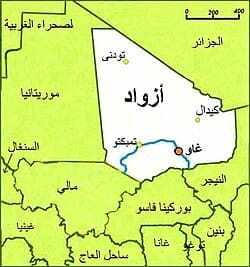
Map of the Azawad region
In 1992, the Tuareg people, a branch of the Amazigh who live in the Azawad region in northeastern Mali, launched a revolt against the Malian government demanding self-rule in Azawad, due to the marginalisation the population suffered, as northern Mali suffered from great poverty and marginalisation unlike the south. During battles between the Tuareg and the Malian army, the "Ganda Koy" militias emerged, whose name means "owners of the land." They set themselves the goal that Azawad is Malian land and that the Tuareg and Arabs there are intruders who must be expelled.
The name of the Ganda Koy militias resurfaced in 2012 after a new war broke out in Azawad, following the success of the Azawadi movements in expelling the Malian army from the region. However, in 2013 the Malian army regained control of the region with the intervention of the French army. Thirty Tuareg and Arabs were documented as killed in violations by Ganda Koy and the Malian army; however, according to residents, had it not been for the presence of the French army, the massacres would have numbered in the hundreds.
It appears that the Ganda Koy militias contributed to spreading ethnic racism within the Malian army, as racist incidents by the Malian army have been documented from 2012 until now.
Ethnic Racism Against the Fulani
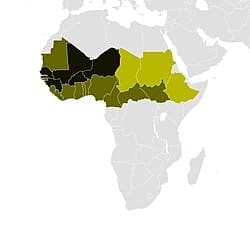
Areas where the Fulani people live
Although the Fulani people are considered an African people, there has been significant incitement against the Fulani not only in Mali but also in Niger and Burkina Faso, on the grounds that the Fulani support Salafi jihadist groups such as Ansar Dine and formerly al-Qaeda, and now Jama'at Nusrat al-Islam wal-Muslimin. Inciters claim that the Fulani are their largest supporters. This incitement led to massacres against the Fulani in 2019, known as the "Fulani massacre," carried out by the Malian army.
In 2024, videos appeared in Burkina Faso showing armed elements executing Fulani individuals. These videos quickly spread in Burkina Faso, received wide support, and calls emerged demanding the extermination of the Fulani people.


