

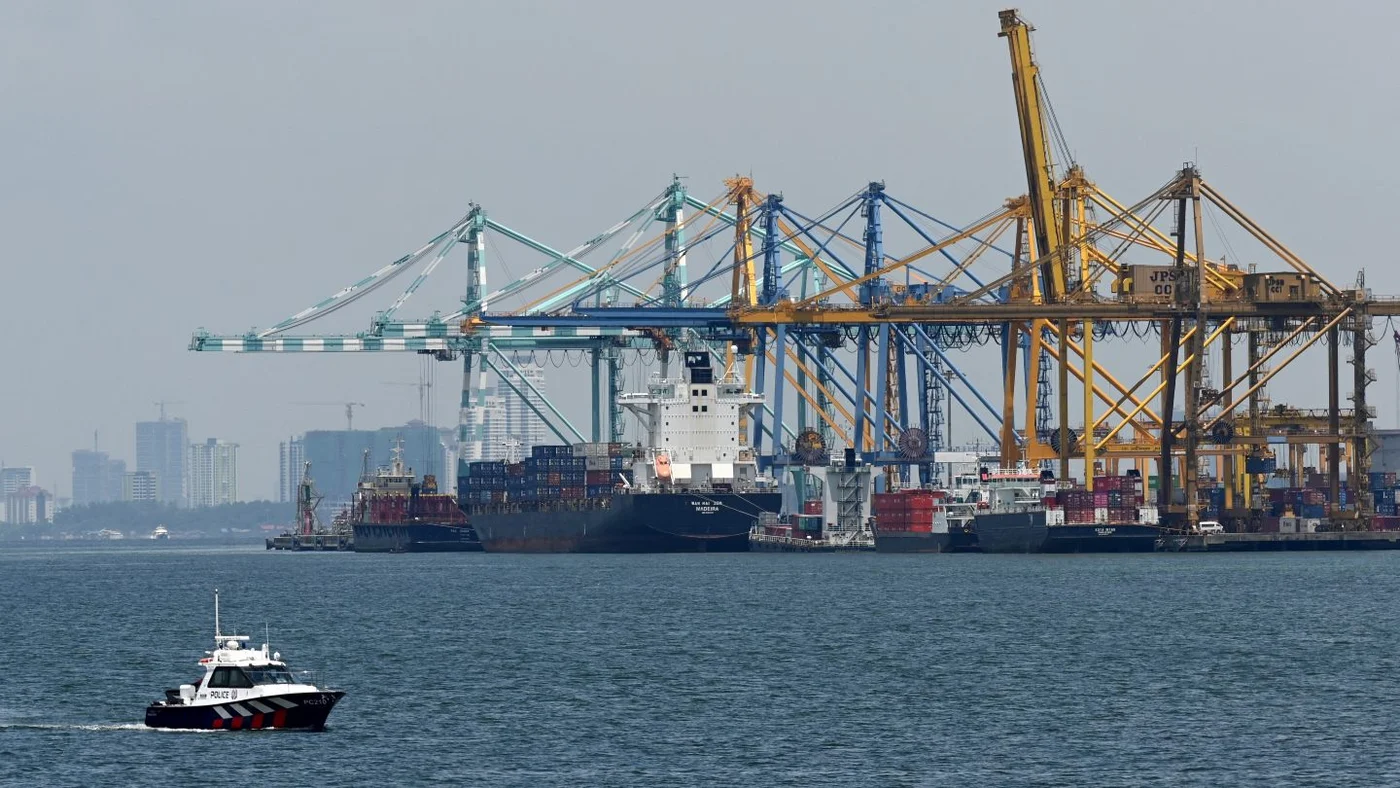
Malaysian authorities seized a container at Tanjung Pelepas port in the state of Johor on suspicion that it contained goods destined for export to what is called "Israel". The move reflects Kuala Lumpur's seriousness in enforcing the trade restrictions it has imposed on the Israeli occupation since the outbreak of war in Gaza.
The seizure took place on Friday, after the Malaysian Border Control and Protection Agency received intelligence information that prompted authorities to inspect the container. The agency explained that preliminary checks indicate the shipment may violate customs laws that prohibit the export of goods to "Israel", whether directly or indirectly.
Malaysian authorities are conducting an investigation to determine the nature, specifications, uses and classification of the goods, including whether they fall within strategic goods subject to the Malaysian Strategic Trade Act.
Anwar Ibrahim: Malaysia will not be a conduit for supporting "Israel"
Malaysian Prime Minister Anwar Ibrahim welcomed the seizure, considering that it confirms his country's rejection of using its territory as a corridor for trade that could contribute to supporting "Israel".
Anwar said the seizure of the container is consistent with Malaysia's position on the war in Gaza, as well as with its commitments within the framework of the Hague Group, which was established to strengthen legal and political measures to prevent the transfer of weapons, military equipment and dual-use materials to "Israel" where there is a risk they may be used in violation of international law.
The authorities stressed that any attempt to export goods to "Israel", directly or indirectly, in violation of Malaysian laws and regulations will face strict measures.
From banning ships to monitoring shipments
The step gains its significance from expanding the scope of Malaysian measures against trade linked to the Israeli occupation.
In December 2023, the Malaysian government announced a ban on the Israeli shipping company ZIM from docking at the country's ports, and also prohibited vessels flying the Israeli flag from entering Malaysian ports.
At the same time, Kuala Lumpur announced that ships bound for "Israel" would not be permitted to load goods at Malaysian ports.
The latest development indicates the application of restrictions to the shipments and goods themselves, even when the vessel is not Israeli or does not fly the Israeli flag, if the goods are suspected of being destined for "Israel" in violation of Malaysian law.
This makes oversight measures broader, shifting the focus from the identity of the vessel or its owner to the destination of the goods, their nature and their potential uses.
The Hague Group: international law in ports and markets
The Hague Group welcomed the seizure, considering it a practical application of international legal obligations.
The group relies on the advisory opinion issued by the International Court of Justice in July 2024, which the group said confirms the obligation of states not to provide aid or assistance in maintaining the unlawful situation arising from the Israeli occupation of the occupied Palestinian territory.
Malaysia is a founding member of the group, which has pledged to prevent the transfer of weapons, ammunition, military fuel, military equipment and dual-use materials to "Israel" when there is a clear risk they will be used in violation of international law.
The group also calls on member states to prevent ships from docking at their ports when they are used to transport such materials to "Israel".
A step beyond political stance
The importance of the seizure does not lie merely in it being a Malaysian political position on the war in Gaza, but in turning that political position into an executive action at one of the country's main ports.
The Malaysian government had clearly declared its support for Palestinian rights and its opposition to Israeli military operations in Gaza, but the seizure of a container suspected of being bound for "Israel" represents a direct application of this policy to trade movement.
Nevertheless, investigations are ongoing, and the authorities have not announced that the goods have been conclusively proven to violate the law, nor have they disclosed their nature, value or the party to which they were to be sent.
Therefore, the final outcome will depend on what the investigations reveal about the contents of the container, its classification, its destination and the intended use.
Malaysia tightens the trade squeeze
The incident reveals a clear direction in Malaysian policy: a move from declaring boycotts and restrictions on Israeli vessels to monitoring trade routes that may reach "Israel" directly or indirectly.
Given Malaysia's membership in the Hague Group, this step also carries an international dimension, as it comes within an effort by a group of states to translate obligations linked to international law into practical measures at ports, in markets and across supply chains.
Accordingly, the seizure of the container at Tanjung Pelepas port may represent a model for what could become a broader trend, especially if other states in the group move to apply similar restrictions on shipments suspected of potentially being used to support the Israeli occupation.


